The 9.0 That Carries Gungrave: How Harry MacDowel Saves a Show Its Back Half Can't
Gungrave scores 8.23 on the Codex rubric, but the number that explains why anyone still talks about a 2003 mob anime is the 9.0 it earns on character — and one antagonist's slow, sympathetic rot.
Gungrave scores 8.23 on the Codex rubric, but the number that explains why anyone still talks about a 2003 mob anime is the 9.0 it earns on character — and one antagonist's slow, sympathetic rot.
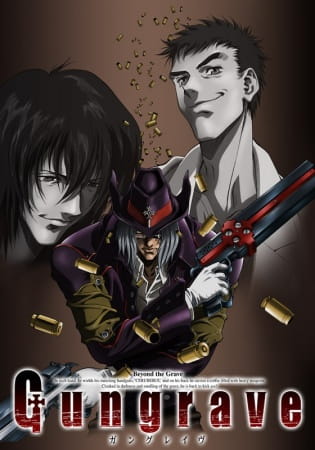
The reason Gungrave survives as a recommendation in 2024 has almost nothing to do with its action animation, its half-built supernatural system, or the back-half lurch into Orgmen and necrolyzation. It survives because Harry MacDowel is one of the most patiently constructed tragic antagonists in seinen, and because Madhouse's 2003 series understood that if you got him right, the rest of the scorecard could afford to be ordinary. The Codex puts Gungrave at 8.23 — and that weighted average masks a show whose character writing (9.0) is doing work two full points heavier than its cultural footprint (6.5).
The Gungrave Character Question, and Why the MyAnimeList Number Misses It
The MyAnimeList crowd scores Gungrave 7.82, which is the number you get when you average a viewer's reaction to the entire 26-episode run without weighting for what the show is actually trying to do. That 7.82 reads the back-half supernatural revenge plot as evidence the show lost its nerve. It treats the slow burn of the first half — Brandon Heat and Harry climbing through Millennion under Big Daddy — as preamble to the resurrection plot, when the opposite is true: the resurrection plot is a delivery mechanism for the human tragedy that precedes it.
Engage that consensus directly and the Gungrave character question reframes the whole show. This is not a 7.82 mob-action hybrid that fumbles its third act. It is a 9.0 character study with a 7.0 wrapper around it, and the wrapper is the part the crowd score is reacting to. Hold the rubric steady and the show looks different — sharper at the core, weaker only where it was always going to be weaker.
Harry MacDowel and the Architecture of Inevitable Corruption
Harry is the load-bearing pillar. The writing — Yousuke Kuroda on both series composition and full-series script — refuses to position him as a villain in the conventional sense. His hunger to climb past Big Daddy is rendered with enough interiority that by the time he crosses the line that fractures him from Brandon, the betrayal feels less like a heel turn than a destination the character was always walking toward. That's not an accident of late-series writing. It's the patience of the early Millennion arc paying its dividend.
The friendship-to-fracture spine is what every other Codex criterion ends up serving. The themes score of 8.5 — the show's meditation on loyalty, ambition, and the unbridgeable gap between two men who wanted different things — doesn't function without Harry being legible as a person who wanted something specific and got it at a specific cost. The story score of 8.5, anchored by the structural gambit of opening with the resurrected, near-mute Beyond the Grave before rewinding into the rise, only lands because the rewind is about watching Harry become someone who would do what we already know he did. The flash-forward isn't a hook. It's a verdict the show then spends twelve or thirteen episodes earning.
This is the kind of antagonist construction that elevates a seinen drama into something durable — the same engine that drives a show like Banana Fish, where the character writing carries criteria the world-building can't.
Brandon's Silence as a Calculated Payoff
The other half of the 9.0 is structural. Brandon Heat in the early arc is expressive — emotionally legible, loyal, plainly in love with Maria, capable of being read off his face. Then the show kills him and brings him back as Beyond the Grave, near-mute, hollowed, an instrument. The emptiness of late Brandon only registers as devastating because the show spent half a series establishing the warmth it's now refusing us.
That's a writers' room and a director — Toshiyuki Tsuru — willing to bet the entire emotional payoff of the back half on a decision made in the first half. It's also why the supernatural conceit, which the world-building justification rightly flags as loosely defined, doesn't sink the character work. Necrolyzation isn't a system in Gungrave. It's a metaphor with rules barely sufficient to hold itself up. The rules don't need to be tighter because the metaphor is doing the work: a man reduced to a weapon, hollowed of self, walking back toward the friend who hollowed him.
What the Supporting Cast Can and Can't Carry
The 9.0 isn't uniform across the cast, and the Codex justification is honest about it. Big Daddy and Bear Walken are given real weight — Big Daddy especially functions as a credible patriarch whose authority over Millennion feels earned rather than declared, which is what makes Harry's ambition legible as transgression rather than ordinary careerism. But some of the second-tier syndicate figures and the late-arc Dr. Tokioka feel thinner, introduced more as plot machinery for the necrolyzation turn than as figures the show actually wants to think about.
This is the scaffolding behind the 7.0 on world-building. Millennion as a criminal organization — its hierarchy, factional politics, the economic logic of how it actually makes money — is one of the more textured mob structures in anime. The unnamed noir-American city around it is atmospheric without being mapped, and the necrolyzation tech that takes over the back half exists to enable conflict rather than reward exploration. That's a genuine ceiling on the show. It's also why the cultural impact score sits at 6.5: Gungrave never broke through to the mainstream because its strongest material is its quietest, and its loudest material is its weakest.
The Strongest Case Against Gungrave
Steelman the 7.82. The argument is this: a show should be judged as a whole, and Gungrave's whole is a 26-episode run whose back half — the Orgmen, the superhuman conflict, the rushed supernatural revenge plot — is materially weaker than its front. Madhouse's action animation in the late episodes is functional rather than dazzling, consistency dips, and the supernatural system never coheres. If you weight every episode equally, the average drops. The 7.82 isn't wrong about what it's measuring.
The Codex reads it differently because the rubric weights criteria, not episodes. A 9.0 on character writing in a seinen — where character carries more than animation or world-building — is allowed to lift the weighted average even when the back half disappoints. That's the methodology working as designed. It's the same logic that lets Maison Ikkoku's 6.5 animation cap a 9.0 cast at "almost great" rather than sink it entirely, or that lets a single criterion explain Cardcaptor Sakura's legacy without the show needing to be uniformly excellent.
Verdict
Gungrave at 8.23 is a show whose memory is held together by one criterion doing exceptional work and three criteria doing competent work around it. Harry MacDowel and the wreckage of Brandon Heat are the reason this 2003 Madhouse production still earns the recommendation, and the 9.0 on character is the only number on the scorecard that explains why. Watch it for the rise. The fall is the price you pay for having watched.
Featured in the Codex


More from The Codex
The Seven Deadly Sins Is a 6.60 Wearing a 7.60 Costume: A One-Point Gap Earned by Groping Gags and Convenient Flashbacks
The Seven Deadly Sins scores 6.60 on the Codex against MyAnimeList's 7.60 because the crowd is grading a Netflix breakout and a Ban-and-King friendship, not the 24 episodes A-1 Pictures actually broadcast in 2014.
The 10.0 That Built a Sunday: How Sazae-san's Cultural Score Carries a 6.58 Scorecard
Sazae-san is a case study in how a single criterion — cultural — can define how a show is remembered, and the 10.0 the Codex hands Eiken's 1969 institution is doing every bit of the heavy lifting its other five scores refuse to.
The Sebastian Problem: Why Black Butler Sits 1.10 Below Its MAL Line and the Crowd Refuses to Notice
Black Butler (Kuroshitsuji) posts a 1.10-point gap between MyAnimeList's 7.65 and the Codex 6.55 because the crowd is grading Sebastian's silhouette and a Phantomhive aesthetic, not the anime-original finale A-1 Pictures actually shipped in 2009.
Discussion
Set a display name above to post.
Loading discussion…