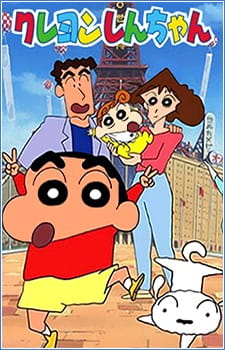
Crayon Shin-chan
Is Crayon Shin-chan worth watching?
Worth a look. Anime Codex rates Crayon Shin-chan 7.36 out of 10 — scored on six criteria (story, characters, themes, world-building, animation, and cultural impact), not crowd votes. 105th of 226 on the Codex rubric — top 46% of the catalogue. The crowd rates it 0.46 higher than the rubric does — the Codex is harder on it than on 44% of the catalogue.
Where to watch
Streaming availability varies by region — check your local services.
What the data says
Computed from the Codex rubric across the whole catalogue.
Summary
Crayon Shin-chan stands as one of kodomomuke's most enduring and influential properties, and its brilliance lies in a deceptively layered approach: a crude, gag-driven children's comedy that simultaneously functions as warm social satire of working-class Japanese family life. Shin-chan is a fearless comic invention whose unfilterable shamelessness drives every episode, while the Nohara family — exhausted Misae, devoted salaryman Hiroshi, and baby Hima — grounds the chaos in recognizable domestic texture that rewards adult viewers. The Kasukabe setting is concrete and consistent, and the show's comic timing, particularly the iconic 'elephant' and butt-dance gags, is sharp. Its limitations are structural rather than failures: the episodic format keeps narrative and emotional payoffs intermittent, character growth is intentionally negligible, and the weekly TV animation is economical and flat compared to the more ambitious theatrical films. Judged against the best of children's anime, it excels at exactly what the format demands — repeatable, accessible humor with surprising heart — while its astonishing multi-decade global cultural footprint cements its status as a true institution. It is not aiming for sustained dramatic depth, and shouldn't be measured by it; on its own terms, it is a near-definitive example of the form.
Criterion breakdown
Story & narrative
Crayon Shin-chan is fundamentally an episodic gag comedy, and its narrative ambitions are deliberately modest — most segments resolve in a few minutes around a single absurd premise like Shin-chan's 'elephant' gag or the Kasukabe Defense Force's imaginary missions. This structure serves the kodomomuke format perfectly and never overstays its welcome, but it limits cumulative storytelling; the genuinely affecting arcs (Hima's birth, the family's financial struggles, seasonal episodes) are the exception rather than the rule. The theatrical films, by contrast, demonstrate far stronger plotting, which highlights how lightweight the TV episodic baseline is.
Character writing & growth
Shin-chan himself is a remarkably consistent comic creation whose shamelessness never softens into sentimentality, and the supporting cast carries unusual depth for the demographic — Misae's exhausted housewife frustration, Hiroshi's salaryman fatigue and devotion, and the running gag of his foot odor all read as genuine adult characterization. Growth is intentionally near-zero by design, which is the point, but the show compensates with relational texture, especially the Nohara family dynamic and Shiro the dog. The kindergarten friends remain thinner archetypes by comparison.
Themes & emotional resonance
Beneath the crude humor sits a surprisingly warm portrait of working-class Japanese family life — the Noharas' mortgage anxieties, Misae's small indulgences, and Hiroshi's quiet pride function as gentle social commentary aimed over children's heads at the watching parents. Episodes touching on Hima's arrival or the family's everyday tenderness land with real emotional resonance. However, the relentless gag cadence means these themes are intermittent rather than sustained, keeping emotional weight from accumulating across the run.
World-building & power system
Kasukabe in Saitama is rendered with concrete, lived-in specificity — the Nohara home, the Action Department Store, Futaba Kindergarten, and recurring neighborhood spaces give the show an internally consistent everyday geography rare in kodomomuke. The premise's originality lies in its inversion: a children's show whose comic engine is an unfilterable child puncturing adult social decorum. This setting depth and the consistent logic of Shin-chan's chaos rippling outward to 'solve' adult problems gives it genuine structural cleverness.
Animation & direction
The deliberately simple, rounded character designs and Shin-chan's iconic thick-browed face are economical and instantly readable, prioritizing comic timing over visual richness. Direction excels at the snap and pause of gag delivery — the elephant dance and Shin-chan's deadpan stares are timed with real precision. As a long-running weekly production, however, the TV animation is functional and often flat, with the theatrical films carrying the franchise's actual visual ambition.
Cultural impact
Few anime have penetrated global popular consciousness as deeply as Shin-chan, becoming a multi-decade institution with massive followings across Japan, India, Southeast Asia, Latin America and Spain. Shin-chan's butt-dance and 'elephant' gag are culturally iconic, and the franchise has sustained dozens of feature films and continuous broadcast since 1992. Within and beyond its demographic it is a genuine cultural landmark.
Synopsis (from MAL)
There is no such thing as an uneventful day in the life of kindergartener Shinnosuke "Shin-chan" Nohara. The five-year-old is a cut above the most troublesome, perverted, and shameless kid one can imagine. Shin-chan is almost always engaged in questionable activities such as forgetting about a friend during hide and seek, sumo wrestling for love, performing various gags including the notorious "elephant" in public, and flirting with college girls. The exemplary troublemaker has done it all and has no plans to stop anytime soon. Crayon Shin-chan follows the daily shenanigans of Shin-chan with his group of friends, parading around as the self-proclaimed "Kasukabe Defense Force." The adults witnessing these shenanigans unfold can't help but adore Shin-chan, as he keeps them entertained while unintentionally solving their daily troubles through his mindless antics—leaving himself as the only problem they do not know what to do with. [Written by MAL Rewrite]
Ranked nearby




Explore rankings
Discussion
Set a display name above to post.
Loading discussion…