The 10 Best Anime for Power Systems & World-Building, Ranked by the Codex Rubric
Most "best anime" lists rank by overall vibe. This one isolates a single axis — power systems & world-building — and lets the rubric pick the winners.
Most "best anime" lists rank by overall vibe. This one isolates a single axis — power systems & world-building — and lets the rubric pick the winners.
The shows below are not the ten best anime. They are the ten anime that score highest on a single criterion: the architecture of the worlds they build and the rules by which power operates inside them. Some carry Codex scores that would not crack a general top fifty. That is the point. A 9.5 on world-building does not have to come with a 9.5 on character, and ranking those two axes together — as MyAnimeList and most fan polls effectively do — buries the work of writers and designers whose strongest asset is structural, not emotional.
What the Consensus Misses
MyAnimeList's top tier is a popularity-weighted aggregate. Fullmetal Alchemist: Brotherhood sits at 9.11, Hunter × Hunter (2011) at 9.03, Vinland Saga at 8.78 — and the ordering reflects sentiment about the whole package, not the specific question of whether the world holds up under pressure. Anime Codex weights the six rubric criteria per genre and publishes the breakdown, which means a show like JoJo's Bizarre Adventure can land an 8.11 on MAL, a 7.55 on the Codex overall, and still earn a 9.0 on world-building because Stand mechanics are a genuine formal achievement regardless of what you think of the writing around them.
The list that follows is ordered strictly by the power systems & world-building number. Where two shows tie, the Codex overall score is used as the tiebreaker but does not override the world score itself.
The 9.5 Tier: Rule-Sets That Carry Entire Genres
1. Hunter × Hunter (2011) — world 9.5 (Codex 9.23)
Madhouse's 148-episode adaptation is the modern benchmark for a power system that is both legible and generative. Nen is built from six categories arranged on a hexagon, a personal-affinity test, and a vow-and-restriction tax that converts narrative cost into combat math. Chimera Ant escalates it without breaking it: Meruem's coronation arc works because Netero's Zero Hand, the Rose, and Pitou's En are all priced in the same currency. The 9.5 reflects a system that scales from Heavens Arena to Greed Island to East Gorteau without retconning its own physics. MAL has it at 9.03; the Codex agrees on the overall package and isolates this criterion at the ceiling.
2. Mushishi — world 9.5 (Codex 8.68)
Artland's 26-episode anthology is the inverse argument: a 9.5 not for combinatorial depth but for ecological coherence. Mushi are described with the patience of a field guide. Each episode introduces an organism, its life cycle, the human pathology it produces, and the limits of Ginko's intervention. There is no power-scaling because there is no protagonist to scale. MAL's 8.65 reflects how niche this register is; the Codex isolates the world-building because the show's central claim — that the supernatural can be observed without being controlled — is fully load-bearing.
3. Made in Abyss — world 9.5 (Codex 8.60)
Kinema Citrus's 13-episode first season earns its 9.5 on a single design conceit executed without flinching: the curse of the abyss scales geometrically with descent, and every layer is illustrated with a topography, fauna, and economy that obeys the rule. As the Made in Abyss review on the site argues, the show is carried by world and taxed by character — a 9.5 against an 8.0 — and ignoring that split produces the wrong reading of why it works.
The 9.2 Outlier
4. Tongari Boushi no Atelier — world 9.2 (Codex 8.50)
BUG FILMS' 2026 adaptation of Kamome Shirahama's manga earns 9.2 because the magic system is procedural rather than declarative: spells are drawn, ink and circle are mechanical, and the prohibition on body-altering magic is the law that generates every conflict. MAL has it at 8.69. The 9.2 is below the 9.5 tier because the show is still mid-serialisation, and the system has not yet been stress-tested at the scale that Nen or the abyss have. Structurally, it is the most rigorous new magic system in seinen this decade.
The 9.0 Tier: Foundational Systems
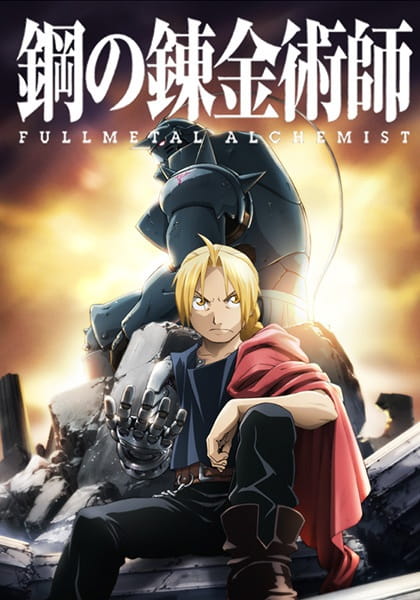
5. Fullmetal Alchemist: Brotherhood — world 9.0 (Codex 9.25)
Bones's 64-episode adaptation gets a 9.0, not a 9.5, because equivalent exchange is, finally, a metaphor as much as a mechanism. The Amestris–Xing distinction matters; the Philosopher's Stone economy is coherent; Father's homunculi correspond to the seven deadly sins in a way that is more thematic than systemic. Strong, not seamless.
6. JoJo's Bizarre Adventure — world 9.0 (Codex 7.55)
David Production's run earns 9.0 on world-building entirely because Stands are one of the most generative combat-design grammars in the medium. The Codex overall of 7.55 reflects weaker character and themes scores; the world number is the criterion this list is built to surface.
The 8.7–8.8 Tier: Worlds That Do Quieter Work
7. Monster — world 8.8 (Codex 9.24)
Madhouse's 74-episode Naoki Urasawa adaptation has no power system in the genre sense. The 8.8 is for the post-Cold War European geography — Düsseldorf, Prague, the Czech orphanage network, the Kinderheim 511 backstory — built with the density of a procedural. The world is the conspiracy.
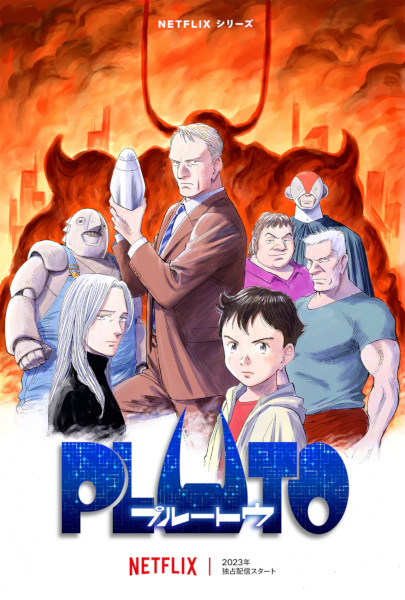
8. Pluto — world 8.7 (Codex 8.96)
Studio M2's 8-episode adaptation of Urasawa's Astro Boy retelling builds a near-future of robot rights, Persian Gulf war analogues, and the seven world-class robots as both characters and geopolitical instruments. The world is constrained by the runtime; the 8.7 reflects density inside that constraint.
9. Heavenly Delusion — world 8.7 (Codex 8.26)
Production I.G's 13-episode adaptation earns 8.7 because the two timelines — the post-collapse outside and the engineered nursery — are constructed as mysteries whose rules are deliberately withheld but internally consistent. The show's review on the site makes the case that the season ends with one act delivered; the world score holds anyway because the geography, the hiruko, and the children's powers are all priced in the same economy.
The 8.5 Floor
10. Vinland Saga — world 8.5 (Codex 8.88)
Wit Studio's 24-episode first season earns 8.5 for historical world-building rather than fantastical: the political economy of 11th-century Jomsviking mercenaries, the Danish court, Anglo-Saxon England. Not a "power system" in the genre sense — which is exactly why it sits at the floor of this list rather than higher.
The Strongest Objection
The honest counter-argument is that ranking world-building in isolation rewards systems over stories. Mushishi at 9.5 sits above Brotherhood at 9.0, but no serious reader would claim Mushishi is the better-built show overall — its character score is 7.5, and the Codex overall reflects that at 8.68 versus 9.25. The list is not claiming otherwise. It is claiming that if you specifically want to study how anime constructs rule-sets and inhabited worlds, the ordering above is what the rubric produces when the other five criteria are held out.
Verdict
The top three are tied at 9.5 and represent three different theories of what world-building means: combinatorial (Hunter × Hunter), ecological (Mushishi), and topographical (Made in Abyss). Below them, the list separates shows whose worlds are mechanisms from shows whose worlds are settings. Read it as a syllabus, not a canon.
Featured in the Codex






More from The Codex
The Seven Deadly Sins Is a 6.60 Wearing a 7.60 Costume: A One-Point Gap Earned by Groping Gags and Convenient Flashbacks
The Seven Deadly Sins scores 6.60 on the Codex against MyAnimeList's 7.60 because the crowd is grading a Netflix breakout and a Ban-and-King friendship, not the 24 episodes A-1 Pictures actually broadcast in 2014.
The 10.0 That Built a Sunday: How Sazae-san's Cultural Score Carries a 6.58 Scorecard
Sazae-san is a case study in how a single criterion — cultural — can define how a show is remembered, and the 10.0 the Codex hands Eiken's 1969 institution is doing every bit of the heavy lifting its other five scores refuse to.
The Sebastian Problem: Why Black Butler Sits 1.10 Below Its MAL Line and the Crowd Refuses to Notice
Black Butler (Kuroshitsuji) posts a 1.10-point gap between MyAnimeList's 7.65 and the Codex 6.55 because the crowd is grading Sebastian's silhouette and a Phantomhive aesthetic, not the anime-original finale A-1 Pictures actually shipped in 2009.
Discussion
Set a display name above to post.
Loading discussion…