Anime Like The Seven Deadly Sins: 5 the Rubric Says You'll Love
Fans of The Seven Deadly Sins respond to its strongest criteria — animation, cultural reach, and the texture of its ensemble — and these five picks deliver the same qualities, ranked by how close their critical profile sits to it, not by vibes.
Fans of The Seven Deadly Sins respond to its strongest criteria — animation, cultural reach, and the texture of its ensemble — and these five picks deliver the same qualities, ranked by how close their critical profile sits to it, not by vibes.
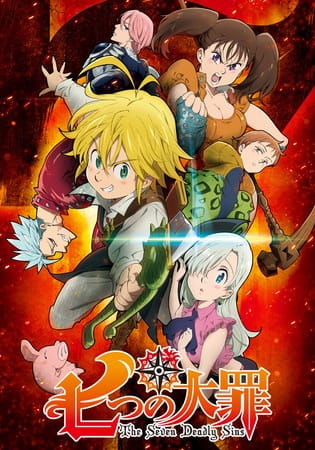
The thing The Seven Deadly Sins gets right isn't the moral architecture, the power-scaling, or the worldbuilding — it's the texture of a found-family quest told brightly, fluidly, and with character-ability creativity that makes every fight legible. That's the load-bearing wall. If you're looking for anime like The Seven Deadly Sins and you've been served the usual blender of medieval-fantasy shonen, the recommendations below are sorted by how closely each title's critical profile sits next to Tensai Okamura's 2014 A-1 Pictures adaptation — Codex 6.60, MyAnimeList 7.60 — not by surface resemblance.
What the Codex Actually Rewards About The Seven Deadly Sins
The 6.60 isn't a dismissal; it's an honest read of a show whose ceiling is its production and whose floor is its plotting. A-1 Pictures earns the highest mark on the card at 7.2 for animation — bright palette, fluid bouts, the Vaizel Fighting Festival staged with real kinetic punch — and 7.0 for cultural impact, courtesy of Netflix's global push and Kodansha's manga sales muscle. Story (6.8) and character (6.5) are pulled down by the same recurring crutches: the "secretly far stronger" reveal that drains tension, Meliodas's groping gag flattening Elizabeth into a harassment target rather than a lead, Diane's one-note crush.
What survives all of that is the ensemble work around Ban, King, and Gowther — the Elaine flashback, King's guilt arc, Gowther's deadpan strangeness — plus the legibility of the magic system: Ban's Snatch, King's Chastiefol, Meliodas's Full Counter, Diane's Creation. That's what to chase. The MyAnimeList consensus of 7.60 over-rewards the franchise's reach; the Codex rubric is stricter about whether the thematic gestures actually land. Recommendations below are ordered closest-fit to furthest-reach, ascending in critical quality.
Anime Like The Seven Deadly Sins, Ranked by Critical Profile
Fairy Tail — Codex 6.25
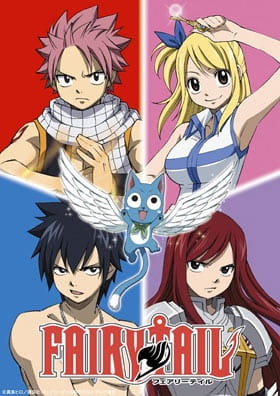
Satelight's 175-episode behemoth is the closest sibling on this list, and the Codex score reflects it: 6.25 against The Seven Deadly Sins' 6.60, with a near-identical story mark of 6.0 versus 6.8. Both shows run on guild-as-family warmth, magical ability systems with distinct flavors per fighter, and tournament arcs that pay off character introductions episodes in advance. Both also lean on the same plot reflex — escalating threats by revealing previously hidden tiers of strength — and both undercut emotional beats with comedy that doesn't always know when to stop. If The Seven Deadly Sins' Vaizel festival was the part you replayed, Fairy Tail is the closest fit by critical profile, full stop. It's the lateral move, not the upgrade.
Dragon Quest: The Adventure of Dai — Codex 7.40
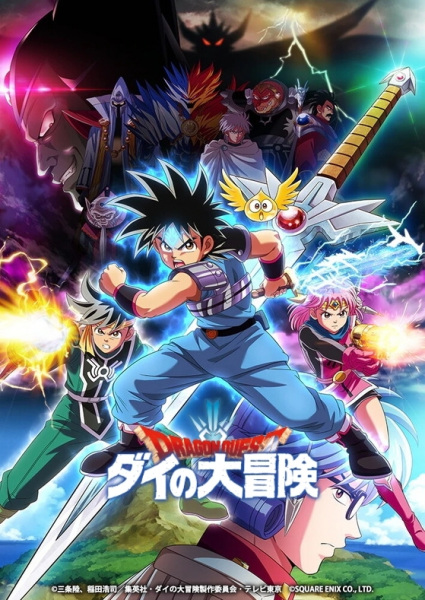
Toei Animation's 2020 remake of Dai is what The Seven Deadly Sins keeps gesturing at and rarely reaches: 100 episodes of pseudo-Arthurian fantasy with a clean good-versus-tyranny spine that actually commits. The Codex puts it at 7.40 against The Seven Deadly Sins' 6.60, and the gaps are exactly where you'd expect — story 7.5 (against 6.8), character 8.0 (against 6.5), themes 7.3 (against 6.0). Dai earns those numbers by refusing the "secretly stronger" reveal as a substitute for stakes and by giving its ensemble — Popp's cowardice arc especially — the room The Seven Deadly Sins gives only to Ban and King. The worldbuilding score (6.8) is barely above Britannia's 6.3 because Dragon Quest's setting is, like the Sins', familiar genre furniture. You're here for the people inside it.
Magi: The Labyrinth of Magic — Codex 7.40
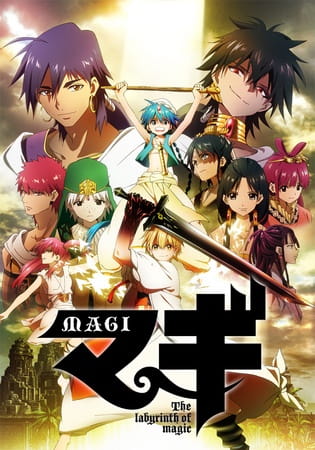
Magi sits at the same Codex 7.40 as Dai but earns it on different criteria, which is what makes it the smarter recommendation for a specific kind of The Seven Deadly Sins fan: the one who liked the magic system more than the swordplay. A-1 Pictures — the same studio — pushes worldbuilding to 8.5 here against Britannia's 6.3, building a rukh-and-magi cosmology with actual internal rules rather than power-level numerology that breaks under scrutiny. Themes hit 7.5 against The Seven Deadly Sins' 6.0; the fall of nations, the ethics of conquest, Sinbad's slow corruption all land harder than the Holy Knights coup ever does. The animation mark (7.0) is a touch below A-1's work on the Sins (7.2), but the trade is worth it.
One Piece — Codex 8.58
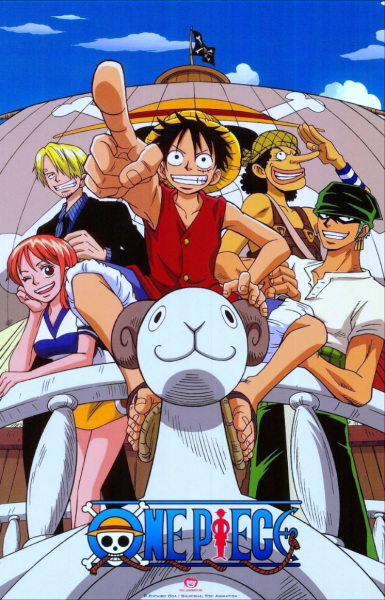
This is the recommendation where the gap between The Seven Deadly Sins and a genre landmark becomes legible in numbers. Toei's 1999 adaptation sits at Codex 8.58, MAL 8.73, and the criteria that pull it there — story 8.5, character 9.0, themes 8.7 — are precisely the ones The Seven Deadly Sins under-delivers. The found-family-of-outcasts engine that powers Meliodas's tavern is the same engine that powers the Going Merry; the difference is that Oda's crew earns their backstories across hundreds of episodes rather than catching them via convenient flashback. If you want the deeper read on why One Piece's profile sits where it does, the One Piece recommendations companion piece maps it in detail. This is the upgrade path, not the lateral one.
Hunter × Hunter (2011) — Codex 9.23
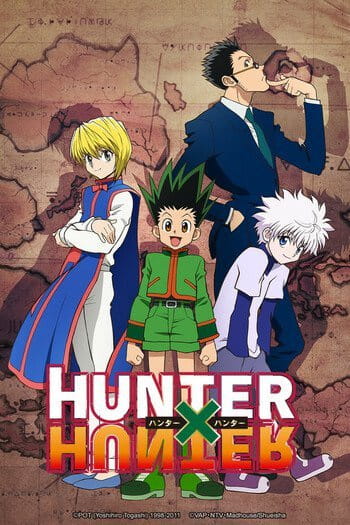
Madhouse's 148-episode reconstruction is the ceiling of the shonen form, and putting it next to The Seven Deadly Sins isn't an insult — it's a map of what the genre can do when its strongest criteria all fire at once. Codex 9.23, MAL 9.03, with story at 9.5, character at 9.5, worldbuilding at 9.5, and themes at 9.0. Where The Seven Deadly Sins resolves combat with Full Counter as a plot-convenient invincibility, Hunter × Hunter's Nen system imposes rules that constrain the protagonist and pay off across arcs. Where Britannia's Holy Knights are a coup waiting to be reversed, the Chimera Ant arc dismantles the show's own moral framing in real time. The Codex puts Hunter × Hunter in the same critical conversation as the form's landmarks for a reason — every criterion that drags The Seven Deadly Sins down is one this show converts into strength.
The Counter-Argument: Tone Is the Point
The strongest defense of The Seven Deadly Sins against this list is that its register is part of the appeal — the brightness, the broad comedy, the willingness to be silly between fights — and that recommending Hunter × Hunter to someone who liked Meliodas's tavern is like recommending Berserk to someone who liked Fairy Tail. There's something to that. Tone matters, and tonal fit isn't a rubric criterion.
But the rubric is measuring craft, not mood, and the question this post answers is which titles deliver more of what The Seven Deadly Sins actually does well — ensemble texture, ability-system creativity, fluid combat staging, found-family stakes. Fairy Tail matches the tone almost exactly at a slightly lower ceiling. Dai and Magi keep the fantasy register while raising the floor on character and theme. One Piece and Hunter × Hunter ask you to accept higher ambition in exchange for delivering, at scale, the things The Seven Deadly Sins only sketches.
Verdict
The Seven Deadly Sins is a 6.60 because its production carries it further than its writing earns; the five shows above are sorted by how much of that production-and-ensemble pleasure each preserves while fixing what the rubric flags. Start with Fairy Tail if you want the same register, end with Hunter × Hunter if you want to see what the form is capable of, and don't skip Magi on the way. The list is the argument.
Featured in the Codex

More from The Codex
The Seven Deadly Sins Is a 6.60 Wearing a 7.60 Costume: A One-Point Gap Earned by Groping Gags and Convenient Flashbacks
The Seven Deadly Sins scores 6.60 on the Codex against MyAnimeList's 7.60 because the crowd is grading a Netflix breakout and a Ban-and-King friendship, not the 24 episodes A-1 Pictures actually broadcast in 2014.
The 10.0 That Built a Sunday: How Sazae-san's Cultural Score Carries a 6.58 Scorecard
Sazae-san is a case study in how a single criterion — cultural — can define how a show is remembered, and the 10.0 the Codex hands Eiken's 1969 institution is doing every bit of the heavy lifting its other five scores refuse to.
The Sebastian Problem: Why Black Butler Sits 1.10 Below Its MAL Line and the Crowd Refuses to Notice
Black Butler (Kuroshitsuji) posts a 1.10-point gap between MyAnimeList's 7.65 and the Codex 6.55 because the crowd is grading Sebastian's silhouette and a Phantomhive aesthetic, not the anime-original finale A-1 Pictures actually shipped in 2009.
Discussion
Set a display name above to post.
Loading discussion…