Akira at 7.98: The Character Score That Keeps Otomo's Landmark Out of the Top Tier
Akira is a case study in how a single criterion — character — can define how a show is remembered, and Kaneda's thinness is the reason a 9.8 on animation only gets you to 7.98.
Akira is a case study in how a single criterion — character — can define how a show is remembered, and Kaneda's thinness is the reason a 9.8 on animation only gets you to 7.98.
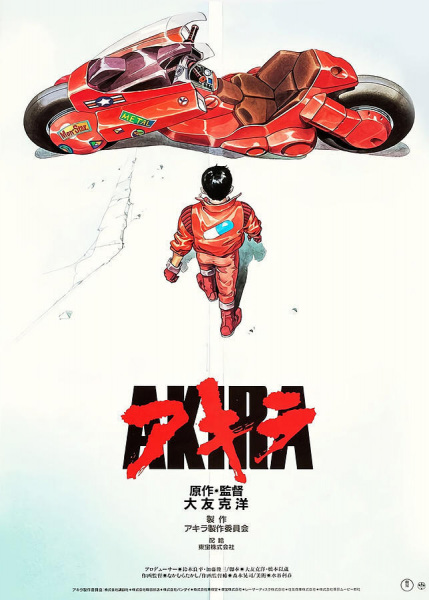
The most influential anime ever exported to the West has a hollow center, and his name is Shoutarou Kaneda. Strip away the bike slide, the gamelan score, the 2,000 hand-drawn shots, and what remains of Katsuhiro Otomo's 1988 film at the level of character is a megalomaniac with a great arc and a protagonist defined entirely by a jacket. That is the gap the Codex's 7.98 is measuring, and it is the only conversation about Akira worth having in 2024.
The Akira character problem the consensus refuses to name
The MyAnimeList crowd parks Akira at 8.16, and most of that number is built on reverence for what Tokyo Movie Shinsha put on screen — the animation, the world, the cultural shockwave. Fair enough; those criteria score 9.8, 9.0, and a maximum 10.0 on the Codex rubric respectively. But the aggregate score flattens a real fault line. Treat Akira as a complete work of dramatic fiction — which is what a seinen film with this much ambition is asking to be treated as — and the character writing is the weakest leg of the table by a full point and a half. The 7.0 the Codex gives character is not a slight. It is the number that explains why Akira is studied more often than it is rewatched, and why every homage to it borrows the silhouette of Kaneda's bike rather than anything he says or does.
The consensus position — that Akira is a top-tier film because it changed everything — confuses cultural impact with internal craft. Those are two different criteria for a reason. A film can rewrite the medium's grammar and still leave its second lead a sketch. Akira does both.
Tetsuo is the film. Everyone else is set dressing.
Give the rubric its due where it earns it: Tetsuo Shima is one of the great seinen character studies of the 1980s. The arc from the bullied kid who can't keep up with Kaneda's bike to the screaming, mutating monument to resentment in the Olympic stadium climax is the film's emotional spine, and Otomo directs it with a precision the rest of the cast never receives. The hospital sequences where Tetsuo first registers his own power — the hallucinations of the milk-bottle teddy bear, the toys engorging across the floor — track inferiority hardening into appetite with no wasted frame. By the time he is tearing through the Harukiya bar looking for someone, anyone, to acknowledge what he has become, the film has built a coherent psychological pathology out of body horror.
This is the work that earns Akira an 8.0 on themes. Tetsuo's flesh literally outgrowing his ability to govern it is one of anime's cleanest metaphors for adolescence, and the body-horror climax — the ballooning prosthetic arm, the cellular sprawl swallowing Kaori — lands as character writing and thematic argument simultaneously. When the rubric works on Akira, it works through Tetsuo.
Kaneda is a jacket with a voice actor
And then there is Kaneda. The Codex's character justification is blunt about it: charismatic, propulsive, largely static, defined by swagger rather than growth. Watch the film with Tetsuo's arc in mind and the asymmetry becomes embarrassing. Kaneda begins the film as the cocky leader of a bōsōzoku gang. He ends the film as the cocky leader of a bōsōzoku gang who has watched his best friend die. There is no interior shift. He grieves, briefly, in a way the storyboards barely register; he picks up the laser rifle; he rides out. The screenplay — co-written by Otomo and Izo Hashimoto — never asks him to reckon with the resentment Tetsuo has been carrying, never lets him understand that his swagger is the thing that built the monster. He is a camera the audience rides behind.
This is the structural problem the manga's six volumes had the room to address and the film's two hours did not. The compression that the Codex flags on the story criterion (7.5) hits Kaneda hardest of anyone. The result is a protagonist who functions as kinetic energy rather than as a person — and a buddy tragedy where only one of the buddies is written.
The Colonel and Kei: functional, underwritten, sacrificed to runtime
Beneath the leads, the supporting cast is worse off. Colonel Shikishima is one of the most interesting figures Otomo created on the page — a military hardliner who genuinely understands the esper program's catastrophic logic and who carries the manga's argument about state failure on his shoulders. In the film he is a barking authority figure who stages a coup off-screen and then largely stands around the SOL console looking grim. Kei, nominally the female lead, exists to deliver resistance exposition and to be the body Tetsuo threatens. Neither character grows. Neither has an interior. They are load-bearing in plot terms and nonexistent in dramatic ones.
This is the cost of compressing a 2,000-page manga into 124 minutes, and it is the same cost the Codex flagged on Devilman Crybaby's compression problem — though Yuasa at least had ten episodes to give his side characters a pulse. Otomo had two hours and spent most of them, correctly, on Tetsuo and on Neo-Tokyo itself.
The world does more character work than the characters
Here is the perverse compensation that keeps Akira's score as high as 7.98: Neo-Tokyo carries the dramatic weight the human cast cannot. The 9.0 on world-building is doing character-criterion labor. The religious cultists wailing about Akira's return, the student protestors getting clubbed by riot police, the child espers Kiyoko, Takashi and Masaru with their withered faces and bedroom of toys — these populate the film with specificity that the named leads don't get. You leave Akira remembering the city. You do not leave it remembering a conversation between Kaneda and Kei.
That inversion — setting outperforming cast — is rare in seinen, and it is the inverse of what carries a show like Cross Game, where one character relationship lifts a thin production. Akira is the opposite case: a peerless production lifting a thin character ledger.
The steelman: maybe character isn't the point
The strongest defense of Akira's character writing is that it isn't trying to be character writing in the conventional sense. Otomo, the argument goes, is making a film about systems — military, political, metaphysical — and the human figures are deliberately schematic so the audience reads them as types caught in forces larger than themselves. Tetsuo is power; Kaneda is loyalty; the Colonel is the state. Asking Kaneda to grow is asking the film to be a different film.
This is a real argument and the rubric gives it real credit — that's why themes scores an 8.0 and not lower. But the schematic reading collapses the moment Tetsuo gets the interiority he gets. If Akira were genuinely operating at the level of allegory, Tetsuo would be as flat as Kaneda. He isn't. Otomo wrote one full character and one icon, and the inconsistency is a craft failure, not a stylistic choice.
Akira is a 9.8 on animation, a 10.0 on cultural impact, and a 7.0 on character, and any honest scorecard has to hold those three numbers in the same hand. The film is a landmark and a half-finished drama, and the 7.98 is the exact arithmetic of that contradiction. Watch it for what Otomo and Tokyo Movie Shinsha built; do not pretend the people inside it are doing the work the city is.
Featured in the Codex



More from The Codex
The Seven Deadly Sins Is a 6.60 Wearing a 7.60 Costume: A One-Point Gap Earned by Groping Gags and Convenient Flashbacks
The Seven Deadly Sins scores 6.60 on the Codex against MyAnimeList's 7.60 because the crowd is grading a Netflix breakout and a Ban-and-King friendship, not the 24 episodes A-1 Pictures actually broadcast in 2014.
The 10.0 That Built a Sunday: How Sazae-san's Cultural Score Carries a 6.58 Scorecard
Sazae-san is a case study in how a single criterion — cultural — can define how a show is remembered, and the 10.0 the Codex hands Eiken's 1969 institution is doing every bit of the heavy lifting its other five scores refuse to.
The Sebastian Problem: Why Black Butler Sits 1.10 Below Its MAL Line and the Crowd Refuses to Notice
Black Butler (Kuroshitsuji) posts a 1.10-point gap between MyAnimeList's 7.65 and the Codex 6.55 because the crowd is grading Sebastian's silhouette and a Phantomhive aesthetic, not the anime-original finale A-1 Pictures actually shipped in 2009.
Discussion
Set a display name above to post.
Loading discussion…