Ushio to Tora at 7.44: Where a Faithful 90s Revival Actually Lands on the Shonen Map
MAPPA and Studio VOLN's 2015 adaptation clears the shonen middle-tier on character chemistry and folkloric world-building, but pays for a compressed 26-episode runtime and a cultural footprint that arrived twenty years late.
MAPPA and Studio VOLN's 2015 adaptation clears the shonen middle-tier on character chemistry and folkloric world-building, but pays for a compressed 26-episode runtime and a cultural footprint that arrived twenty years late.
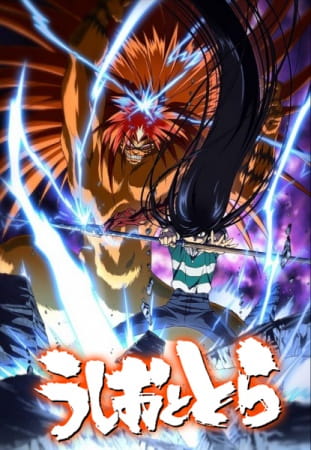
Ushio to Tora is the rare shonen adaptation that fails upward: a 26-episode compression of 33 volumes that shouldn't work on paper, held together almost entirely by the fact that Kazuhiro Fujita wrote a buddy dynamic strong enough to survive triage. The Anime Codex rubric scores it 7.44 — squarely in shonen's crowded middle, above the seasonal churn, well below the tier that defines the genre. Ranking a show only means something relative to its peers, so the useful question isn't whether Ushio to Tora is good. It's where on the shonen map it lands, and which coordinates put it there.
The Consensus Score and Why It Overshoots
MyAnimeList sits at 7.58, which puts the show 0.14 points above the Codex read. That's a small gap by MAL-vs-rubric standards — nothing like the 0.63 spread on Blue Lock or the 0.83 on Oshi no Ko — but it's directionally honest about what the consensus is rewarding. The MAL crowd is scoring a legacy revival: fans who waited two decades for a competent Ushio to Tora adaptation, plus newcomers grading the Ushio-Tora chemistry in isolation from the pacing damage. Both responses are legitimate. Neither survives a per-criterion breakdown that has to account for the animation, the compression, and a cultural score that can't retroactively reward the manga.
The rubric doesn't grade nostalgia and it doesn't grade what the show could have been at 50 episodes. It grades what MAPPA and Studio VOLN put on screen between July 2015 and June 2016, and that thing is a competent, structurally disciplined shonen that never breaks into the top bracket because it can't afford to slow down.
What the Character Score Is Actually Buying
The highest number on the card is character at 7.8, and it's the reason the show functions at all. Tora spends thirty-nine episodes announcing that he's going to eat Ushio and thirty-nine episodes doing the opposite, and the joke never wears thin because Fujita anchored it in a specific structural irony: the Beast Spear enforces obedience, but Tora's actual restraint is voluntary long before the compulsion matters. That's a character bond built on stated antagonism and demonstrated loyalty, and it earns the finale rather than assuming it.
Ushio himself is the archetype done straight — stubborn altruism, no interiority to speak of — but the writing has the discipline to demonstrate the trait through action instead of declaring it in monologue. Hyou, the rival spear-bearer, gets enough time to matter. Asako and Mayuko clear the bar for supporting shonen leads. The trade-off, and it's the reason the score isn't higher, is that the compressed runtime turns most of the secondary youkai allies into a roster. They show up, they contribute a power, they exit. Compared to the character work carrying Toradora at 8.43 or the ensemble diffusion problem the rubric flagged on Ramparts of Ice, Ushio to Tora sits in the honest middle: two protagonists worth the runtime, a supporting cast that pays for the schedule.
World-Building That Refuses to Invent a System
World at 7.6 is the show's second-highest score and its most quietly distinctive quality within the shonen field. Fujita didn't build a power system. He built a folkloric setting — Japanese youkai cosmology, drawn straight from source rather than reinvented — and let the Beast Spear's curse mechanic provide the mechanical stake. The spear strengthens Ushio and slowly consumes him. That's it. No stat sheets, no elemental rock-paper-scissors, no tournament bracket structuring the escalation. The Hakumen no Mono, an ancient nine-tailed apex evil, exists from the opening episodes as the terminal threat, and the mythology tightens around it coherently.
This is where Ushio to Tora looks most unlike the shonen that dominate the leaderboard. It's not building a novel system to be studied; it's inheriting a dense retro folklore and trusting the audience to read it. The score doesn't crack 8.0 because the setting isn't inventive — it's faithful, which is a different virtue and one the rubric rewards more modestly.
Story Discipline, Compressed to a Fault
Story at 7.5 is where the adaptation's constraint becomes visible. The structural discipline is real: the Hakumen no Mono threat is seeded through the Beast Spear's origins and the spear-bearer lineage in the first cour, not held back as a late reveal. The youkai-of-the-week format — Asako's possession, the Reverend's curse, the Stone Mirror — is doing genuine escalation work, feeding into the arc structure rather than filling time. That's more than most 90s manga adaptations of this length manage.
The cost is pacing damage that the rubric can't ignore. Emotional beats that Fujita earned across dozens of volumes arrive in a single episode. Side characters get introduced and deployed inside the same cour. The classic structure shows its age in predictability, but the throughline lands — the finale pays off what the premiere set up, which is more than can be said for the Skip Beat problem of an adaptation that simply stops. Ushio to Tora finishes. It just finishes at a sprint.
Themes That the Compression Undercuts
Themes at 7.3 is the criterion where the runtime cost hurts most. The show is about trust forged with an enemy, and about inherited duty — the spear-bearer bloodline, Ushio's mother's fate. The recurring motif that monsters are often more humane than humans lands genuinely, particularly in the underground youkai-killer arc. Tora's backstory is the emotional peak of the series and the moment where the buddy dynamic converts into something that resembles tragedy.
The manga earns that catharsis gradually. The anime earns it in one episode and moves on. That's not a failure of writing; it's a failure of runtime, and the rubric grades what was aired.
The Steelman: A 26-Episode Adaptation That Actually Works
The strongest case for scoring Ushio to Tora higher is that most 26-episode compressions of 33-volume manga are structural disasters, and this one isn't. MAPPA and Studio VOLN preserved the shape of Fujita's story, kept the Ushio-Tora dynamic legible, hit the Hakumen no Mono climax, and delivered creature designs that honored the chunky expressiveness of the source art. Judged against the baseline of "manga adaptations that respect their source," this clears the bar cleanly.
The rubric reads it differently because the rubric doesn't grade against baseline. Animation at 7.0 reflects inconsistent production — flat compositing in secondary battles, limited animation between key cuts, direction that prioritizes momentum over atmosphere. Cultural at 6.5 reflects modest 2015 impact: a respectful revival of an important Shonen Sunday classic, not a trend-setter in its own right. Both scores are accurate to what the 2015 broadcast actually accomplished, not to what the property means historically.
Verdict
Ushio to Tora is a competent shonen adaptation of an important manga, weighted 7.44 by a rubric that rewards its character writing and folkloric world, penalizes its production ceiling and its late-arriving cultural footprint, and refuses to grant nostalgia points MAPPA didn't animate. Place it on the shonen map and the coordinates are clear: above the seasonal noise, below the genre's defining works, exactly where a faithful revival of a 1990 manga should sit when the rubric grades what aired.
Featured in the Codex



More from The Codex
The Seven Deadly Sins Is a 6.60 Wearing a 7.60 Costume: A One-Point Gap Earned by Groping Gags and Convenient Flashbacks
The Seven Deadly Sins scores 6.60 on the Codex against MyAnimeList's 7.60 because the crowd is grading a Netflix breakout and a Ban-and-King friendship, not the 24 episodes A-1 Pictures actually broadcast in 2014.
The 10.0 That Built a Sunday: How Sazae-san's Cultural Score Carries a 6.58 Scorecard
Sazae-san is a case study in how a single criterion — cultural — can define how a show is remembered, and the 10.0 the Codex hands Eiken's 1969 institution is doing every bit of the heavy lifting its other five scores refuse to.
The Sebastian Problem: Why Black Butler Sits 1.10 Below Its MAL Line and the Crowd Refuses to Notice
Black Butler (Kuroshitsuji) posts a 1.10-point gap between MyAnimeList's 7.65 and the Codex 6.55 because the crowd is grading Sebastian's silhouette and a Phantomhive aesthetic, not the anime-original finale A-1 Pictures actually shipped in 2009.
Discussion
Set a display name above to post.
Loading discussion…