Anime Like Fairy Tail: 5 the Rubric Says You'll Love, Ranked by Critical Proximity
Fans of Fairy Tail respond to its strongest criteria — cultural weight, found-family themes, and Erza-tier character work — and these five picks deliver the same qualities, ranked by how close their critical profile sits to it, not by vibes.
Fans of Fairy Tail respond to its strongest criteria — cultural weight, found-family themes, and Erza-tier character work — and these five picks deliver the same qualities, ranked by how close their critical profile sits to it, not by vibes.
Fairy Tail is not a great anime, and pretending otherwise is what makes recommendation posts about it useless. It is a 6.25 on the Codex and a 7.57 on MyAnimeList — a shonen that lives and dies on a 7.5 cultural score and a guild-as-family thesis strong enough to survive 175 episodes of Satelight's uneven production. Recommend from that reality, and the list of anime like Fairy Tail sharpens fast.
What Fairy Tail Actually Scores On
The catalogue is blunt: story 6.0, character 6.2, themes 6.5, world 6.3, animation 6.0, cultural 7.5. Every criterion sits in the shonen midrange except the last one, which is the load-bearing wall. Fairy Tail became one of the "big three"-adjacent phenomena of its era, and its guild concept — the idea that loyalty to a chosen family is the source of every power-up Natsu pulls out of nowhere — is why the show still gets defended in threads where the animation absolutely cannot be.
Popular discourse treats Fairy Tail as a rite-of-passage watch, then hands newcomers a list of shows that share its cover art rather than its rubric profile. That's a category error. What people actually love about Hiro Mashima's guild — the Tower of Heaven's earned catharsis, Erza's armor-swap set pieces, Tenrou Island's stand against Hades, the way Yasuharu Takanashi's score keeps carrying scenes the animation can't — maps to specific criteria. Recommendations should track those criteria. The five below are ordered by how tight that fit is, from a near-neighbor at 6.60 up to a 9.23 apex that will retire the entire genre for you.
The Seven Deadly Sins: The Nearest Neighbor on the Map
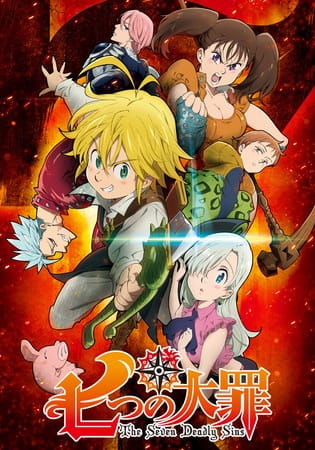
The Seven Deadly Sins is the closest analogue Anime Codex has catalogued. A-1 Pictures' 2014 adaptation scores a 6.60 — a 0.35 nudge above Fairy Tail — and the shape of its scorecard is almost identical: story 6.8, character 6.5, themes 6.0, world 6.3, animation 7.2, cultural 7.0. It is, structurally, another Hiro Mashima-adjacent guild fantasy: a chosen-family unit of specialists with signature magics, a kingdom-scale threat, ensemble comedy that undercuts stakes in the same beats Fairy Tail does. A-1 Pictures gives it a full point of animation Fairy Tail never receives, which is the only real reason it grades higher. The MyAnimeList numbers (7.60 vs. Fairy Tail's 7.57) confirm what the rubric already knew — this is the same audience being served the same meal on cleaner plates.
Dragon Quest: The Adventure of Dai: The Character Score You Actually Wanted
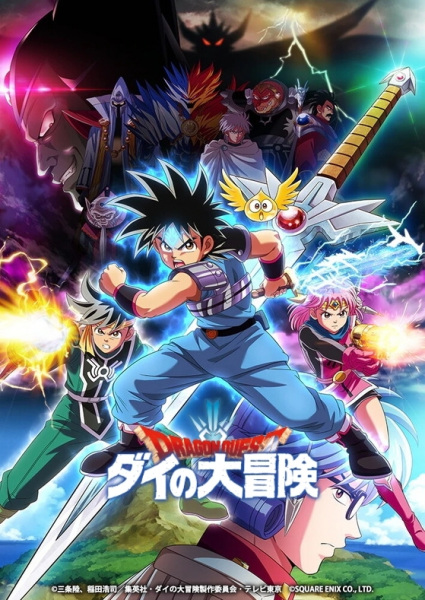
If Erza's Tower of Heaven arc is the reason you kept watching Fairy Tail, Dragon Quest: The Adventure of Dai is the recommendation the rubric will fight for. Toei Animation's 2020 remake posts a Codex 7.40 (MyAnimeList 7.73) across 100 episodes, and its criterion breakdown reads like Fairy Tail with the character axis fixed: story 7.5, character 8.0, themes 7.3, world 6.8. The 8.0 on character is not accidental — Popp's coward-mage arc is the growth curve Natsu never gets, and the honorable-villain reversal at the top of the Dark Army is the payoff Zeref keeps teasing without delivering. The full review lays out why Popp carries the scorecard even when the world-building underperforms. Same shonen sincerity, same party-of-specialists shape, meaningfully better character work.
Magi: The Labyrinth of Magic: When the World-Building Actually Loads
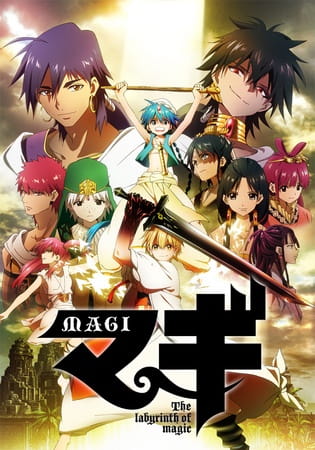
Fairy Tail's world scored a 6.3 because Fiore's guild system is charming but the magic rules stretch on demand. Magi: The Labyrinth of Magic fixes exactly that. A-1 Pictures' 2012 adaptation posts a Codex 7.40 (MyAnimeList 8.01) on the back of a spectacular 8.5 world-building score — the highest single criterion in this entire list outside Hunter × Hunter. Its scorecard reads story 7.5, character 7.0, themes 7.5, world 8.5, animation 7.0. The Arabian Nights framework, the djinn-equip system, the political scaffolding under the dungeon-diving — this is what Requip and Celestial keys could have been if Fairy Tail had cared to formalize its magic. Fair warning: the Codex has argued Magi is overrated because the back half doesn't sustain what Balbadd sets up. But the parts that work sit right in Fairy Tail's wheelhouse — a young protagonist, a magical world with real interior logic, and set-piece dungeons that feel like the tournament arcs Fairy Tail kept reaching for.
One Piece: The Guild Concept, Scaled to Grand Line Size
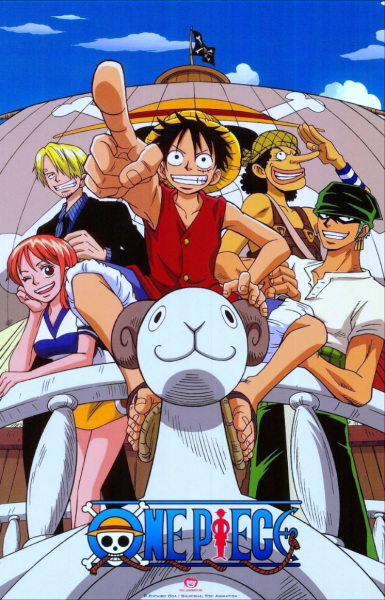
The step up from 6.60 to 8.58 is a cliff, and it should be. One Piece is what happens when the found-family thesis Fairy Tail hammered — loyalty, refusing to abandon comrades, guild-as-home — is executed by a mangaka who trusts scenes to earn their emotion instead of shouting it. Toei Animation's 1999 run posts a Codex 8.58 (MyAnimeList 8.73) with story 8.5, character 9.0, themes 8.7. That character score is the number Fairy Tail's 6.2 is chasing every time Natsu roars about his friends. The Straw Hats are the crew Fairy Tail's guild wants to be — every member gets an arc, every backstory pays off, and Oda seeds his mysteries with the consistency Zeref and Acnologia never receive. If Tenrou Island's stand against Hades hit you, Enies Lobby will end you.
Hunter × Hunter (2011): The Apex the Rubric Sends You To
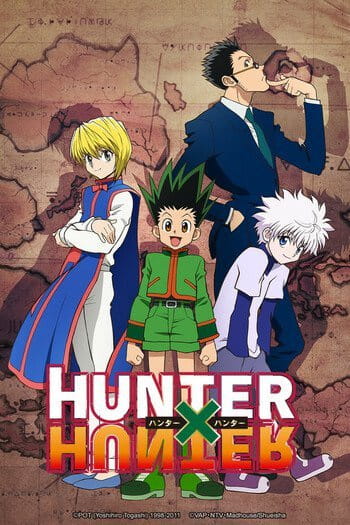
At the top of the list is Hunter × Hunter (2011), Madhouse's 148-episode adaptation, Codex 9.23 (MyAnimeList 9.03). Every single criterion outscores Fairy Tail by three points or more: story 9.5, character 9.5, themes 9.0, world 9.5, animation 8.5, cultural 8.5. This is the shonen the rubric considers effectively unimpeachable, and the reason it belongs on a Fairy Tail recommendation list is simple — Yoshihiro Togashi is doing what Mashima gestures at. Nen is the power system Fairy Tail's magic wanted to be: rigorously ruled, exploited creatively, honored when characters lose. Chimera Ant is the villain arc Zeref should have earned. The Phantom Troupe is the ensemble Fairy Tail's guild couldn't develop past its four leads. If you love Fairy Tail for what it tried to do, Hunter × Hunter is what it looks like when the attempt lands.
The Case for Just Rewatching Fairy Tail
The honest counter: none of these five are Fairy Tail. Mashima's specific comic register — the guild-hall brawls, the Happy interjections, the Takanashi horn-blast whenever Natsu ignites — is not something Hunter × Hunter or Magi tries to replicate, and a viewer chasing exact tonal match may find even Seven Deadly Sins too grim in stretches. That's fair, and the rubric doesn't pretend otherwise. But Fairy Tail's cultural 7.5 is doing work the other criteria can't sustain across 175 episodes, and every show above trades some of that comfort for scorecard points where Fairy Tail bleeds. The rubric picks the trade every time.
Verdict
Ordered by critical proximity — Seven Deadly Sins, Dai, Magi, One Piece, Hunter × Hunter — this is the list that treats Fairy Tail as what it actually is: a 6.25 with a 7.5 cultural score, a guild thesis worth chasing, and five better executions of the same idea waiting on the other side. Start at the nearest neighbor. Finish at the apex. Don't come back.
Featured in the Codex

More from The Codex
The Seven Deadly Sins Is a 6.60 Wearing a 7.60 Costume: A One-Point Gap Earned by Groping Gags and Convenient Flashbacks
The Seven Deadly Sins scores 6.60 on the Codex against MyAnimeList's 7.60 because the crowd is grading a Netflix breakout and a Ban-and-King friendship, not the 24 episodes A-1 Pictures actually broadcast in 2014.
The 10.0 That Built a Sunday: How Sazae-san's Cultural Score Carries a 6.58 Scorecard
Sazae-san is a case study in how a single criterion — cultural — can define how a show is remembered, and the 10.0 the Codex hands Eiken's 1969 institution is doing every bit of the heavy lifting its other five scores refuse to.
The Sebastian Problem: Why Black Butler Sits 1.10 Below Its MAL Line and the Crowd Refuses to Notice
Black Butler (Kuroshitsuji) posts a 1.10-point gap between MyAnimeList's 7.65 and the Codex 6.55 because the crowd is grading Sebastian's silhouette and a Phantomhive aesthetic, not the anime-original finale A-1 Pictures actually shipped in 2009.
Discussion
Set a display name above to post.
Loading discussion…