The Ramparts of Ice Review: A 7.55 That Lives on Koyuki and Pays for It in Ensemble Diffusion
Studio KAI's 2026 shoujo posts a 0.43-point gap with MyAnimeList because the rubric grades what the crowd forgives — a diffuse ensemble and a familiar stage.
Studio KAI's 2026 shoujo posts a 0.43-point gap with MyAnimeList because the rubric grades what the crowd forgives — a diffuse ensemble and a familiar stage.
Studio KAI's adaptation is the rare shoujo whose direction does more character work than its script does. That is a compliment and an indictment at once, and it's the reason The Ramparts of Ice review that follows lands at 7.55 instead of the number the crowd wants.
The Ramparts of Ice Review Against the Consensus
The MyAnimeList crowd scores it 7.98. The Codex has it at 7.55. That 0.43-point gap isn't noise — it's the predictable result of two different scoring instincts. MAL is rewarding identification: an anxiety-forward heroine, a soft palette, and a slow-burn romance that isn't insulting anyone's intelligence. The rubric is doing something else. Judged against one consistent scorecard, The Ramparts of Ice is best understood by which criteria carry it and which drag it down — not by a single number that flattens the argument.
The consensus reading treats Koyuki Hikawa as the show, and on that narrow point the crowd is right. Where it's wrong is in extending her precision outward to the ensemble, the setting, and the structural spine. The rubric refuses to do that. It grades what's on screen at 6.5 for world and 7.2 for story regardless of how sharply the lead has been drawn, and the resulting profile — a genuine 8.0 on character sitting next to a merely competent contemporary-school backdrop — is what the composite score is describing.
Where Koyuki Carries the Show
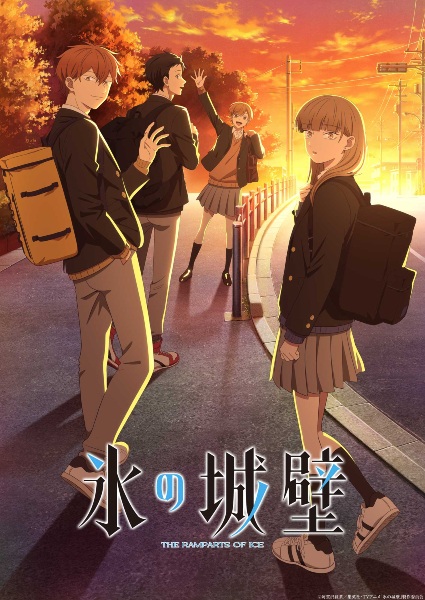
The 8.0 on character is the highest mark on the scorecard, and it's earned in a very specific place: the gap between how Koyuki is perceived and how she experiences herself. Director Mankyuu's staging in the opening episodes builds the entire premise off that gap — classmates flinching, averting eyes, misreading her resting expression as hostility while her internal monologue is running a full-tilt panic loop. This is character acting doing plot work, and Studio KAI commits to it: the micro-flinches, the stiff shoulders, the beat-too-long pauses before she answers a direct question.
Miki Azumi is the second reason the character score holds. She functions as a grounded foil rather than the standard-issue supportive best friend, and the show earns real mileage from letting her be observant without being a therapist. Koyuki's defensiveness decompresses gradually across the run, and the writing resists the instant-fix trap that lesser shoujo reaches for in the third episode. That patience is why the character score sits where it does.
The problem is the boys. Minato Amamiya is warmer than he is deep, and Youta Hino reads underwritten next to the precision the show extends to its women. When the rubric grades character at 8.0 rather than 8.5, that gap is what it's seeing — a lead written with genuine specificity next to male co-leads written to round out an ensemble.
Where the Story Structure Diffuses
Story lands at 7.2, and the reason is structural. The slow-burn framework around Koyuki's hesitant entry into the friend group is well-paced — this is not a show that manufactures melodrama, and its refusal to reach for incident is a real virtue in a demographic that too often mistakes crying for feeling. But the parallel 'each friend quietly struggles' architecture that the middle stretch leans on doesn't cohere. Minato and Youta's threads feel introduced to fill ensemble space rather than to advance a central engine, and the result is an arc structure that reads episodic when it should read cumulative.
The comparison the rubric quietly makes is to genre standouts — Kimi ni Todoke's patient tracking of a single relationship, Fruits Basket's compounding weight — and Ramparts doesn't clear that bar. It's a first cour that ends without accumulating. That the manga runs to 14 tankōbon and a second season is already scheduled for October 2026 helps explain the deferral, but the rubric grades what aired, not what's coming.
Where the Themes Hedge
Themes at 7.5 is close to earned, and the show's handling of social anxiety and the fear of attachment is recognizably accurate rather than performatively so. Koyuki's terror of getting close because closeness invites loss is treated with restraint, and the middle-school backstory that seeds her present behavior is internally consistent enough that the psychology never feels borrowed from a checklist.
The half-point that the theme score leaves on the table is about nerve. The show softens its sharper observations into reassurance more often than the best coming-of-age dramas would. It knows how to sit in Koyuki's discomfort in a single scene; it doesn't quite know how to sit there for a full episode without offering the audience a warm exit. That's the difference between a strong shoujo and a landmark one.
Where the World and the Culture Sit Flat
The 6.5 on world is the lowest number on the card, and it's the least controversial. The contemporary high-school setting is competently realized but unremarkable — Studio KAI is not using the backdrop to surprise, and the most original bit of world-logic on offer is the social-perception premise itself: being feared for a resting expression. That's a character device more than a setting one. Backgrounds are polished rather than ambitious, and the show never uses its stage to do anything the demographic hasn't done before.
Cultural sits at 6.8 for a reason the crowd score can't outrun. A MAL score near 8.0 with a hundred-thousand-plus members on an ongoing title is real traction, and the anxiety-forward heroine is finding an audience that identifies hard with her. But the rubric grades established footprint, not promising footprint. This is a currently airing 2026 adaptation of a webtoon that finished serialization in 2022 — the influence tail hasn't happened yet, and the show hasn't redefined anything the way the shoujo canon has.
Animation at 7.8 is where Studio KAI does its best work. The direction commits to expressive character acting as the primary tool, and the soft palettes and well-judged silences support the register. What keeps it from the demographic's animation elite is the absence of a signature visual identity — nothing here you'd immediately attribute to KAI on a blind viewing, unlike the studio's more distinctive current work on Sentenced to Be a Hero.
The Case for 7.98
The strongest steelman for the crowd score is that identification-forward shoujo should be graded on how precisely it lands its central emotional target, and Ramparts lands Koyuki with more accuracy than most of its recent peers — including Tamon's B-Side, which the rubric slots one-tenth of a point higher on structural grounds. On that specific axis, the crowd is reading the show correctly.
The rubric reads it differently because character precision doesn't extend the world, doesn't tighten the story architecture, and doesn't accumulate cultural weight on its own. A 7.55 is what a show with one criterion at 8.0, three in the 7s, and two in the 6s composes to. The gap with MAL isn't the crowd being wrong — it's the crowd weighting Koyuki at eighty percent of the scorecard when the rubric weights her at closer to twenty-five.
Verdict
The Ramparts of Ice is a genuinely well-directed character study wearing an ensemble it hasn't fully written, sitting on a stage that doesn't earn its keep. Worth the 14 episodes for Koyuki alone — and worth watching the second cour carefully for whether the boys catch up before the rubric revisits the number.
Featured in the Codex





More from The Codex
The Seven Deadly Sins Is a 6.60 Wearing a 7.60 Costume: A One-Point Gap Earned by Groping Gags and Convenient Flashbacks
The Seven Deadly Sins scores 6.60 on the Codex against MyAnimeList's 7.60 because the crowd is grading a Netflix breakout and a Ban-and-King friendship, not the 24 episodes A-1 Pictures actually broadcast in 2014.
The 10.0 That Built a Sunday: How Sazae-san's Cultural Score Carries a 6.58 Scorecard
Sazae-san is a case study in how a single criterion — cultural — can define how a show is remembered, and the 10.0 the Codex hands Eiken's 1969 institution is doing every bit of the heavy lifting its other five scores refuse to.
The Sebastian Problem: Why Black Butler Sits 1.10 Below Its MAL Line and the Crowd Refuses to Notice
Black Butler (Kuroshitsuji) posts a 1.10-point gap between MyAnimeList's 7.65 and the Codex 6.55 because the crowd is grading Sebastian's silhouette and a Phantomhive aesthetic, not the anime-original finale A-1 Pictures actually shipped in 2009.
Discussion
Set a display name above to post.
Loading discussion…