Anime Like Dragon Ball: 5 the Rubric Says You'll Love, Ranked by Critical Proximity
Fans of Dragon Ball respond to its strongest criteria — a 10.0 cultural footprint, a 7.5 story spine built on escalating arcs, a 7.0 world of scouters and Namekian lore — and these five picks deliver the same qualities, ranked by how close their critical profile sits to it, not by vibes.
Fans of Dragon Ball respond to its strongest criteria — a 10.0 cultural footprint, a 7.5 story spine built on escalating arcs, a 7.0 world of scouters and Namekian lore — and these five picks deliver the same qualities, ranked by how close their critical profile sits to it, not by vibes.
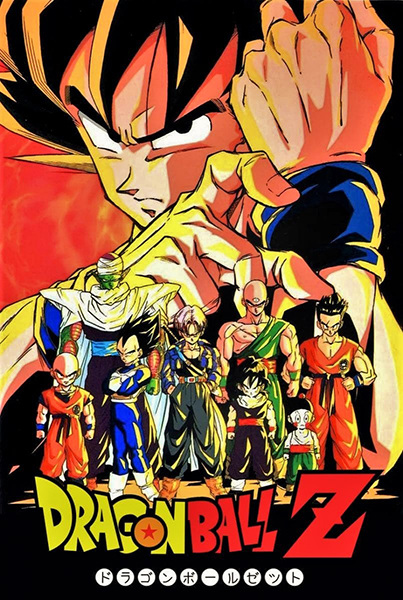
Dragon Ball doesn't earn its 6.93 on the Codex because it's a perfect martial-arts epic; it earns it because Toei's 1989 production, across 291 episodes, sits on a cultural score of 10.0 and a story score of 7.5 that almost no shonen since has matched on either axis simultaneously. Recommending anime like Dragon Ball isn't a matter of pointing at other spiky-haired protagonists — it's a matter of finding the shows whose critical profile actually rhymes with the Frieza arc's momentum, Vegeta's evolution, and the ki-system worldbuilding that Toriyama codified into genre grammar.
What the Consensus Gets Wrong
MyAnimeList lands Dragon Ball at 8.21. The Codex has it at 6.93 — a 1.28-point gap that our full review of the show breaks down in detail. The crowd is scoring the Super Saiyan transformation against Frieza and a generational footprint; the rubric has to sit through the Namek "five minutes," recycled motion-line standoffs, and Krillin's slow decline into a spectator. The show's genuine strengths — cultural gravity, arc structure, ki-system worldbuilding, Vegeta and Gohan as character spines — are what people are actually responding to. Any recommendation that doesn't hit at least two of those criteria hard is a recommendation for a different show, not for Dragon Ball's audience.
So the five below are ranked by critical proximity to Dragon Ball's Codex scorecard — closest first.
Naruto: The Direct Cultural Heir
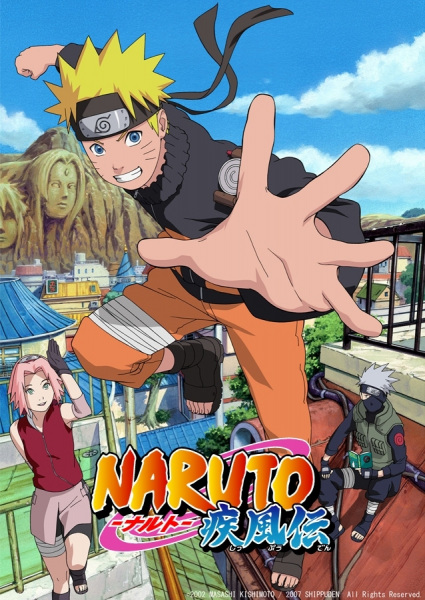
Naruto (Codex 7.28) is the closest match on the shelf, and it's not close. Studio Pierrot's 500-episode 2007 production inherits Dragon Ball's exact template — escalating villains, transformations, tournament structure — because Kishimoto was working directly from the DNA Toriyama laid down. The rubric confirms it: Naruto's cultural score of 9.5 sits directly downstream of Dragon Ball's 10.0, and its story score of 6.8 lives in the same neighborhood as Dragon Ball's 7.5, hit for the same reasons — sustained arc momentum through the Chuunin Exams and Pain's assault on Konoha, undercut by the same anime-original padding disease.
Where Naruto pulls ahead is on character (7.5 vs. Dragon Ball's 6.5) and themes (7.8 vs. 6.0). Sasuke's descent through the Uchiha massacre reveal, Jiraiya's death against Pain, and Itachi's actual motive give the show interior stakes Dragon Ball never bothers to interrogate. If you loved Vegeta's evolution and Gohan at the Cell Games, Naruto is doing that work at feature length, repeatedly.
The Seven Deadly Sins: The Animation Upgrade Dragon Ball Deserved
The Seven Deadly Sins (Codex 6.60) is the pick for anyone who ever watched a charged Kamehameha standoff on a motion-line background and wondered what a proper budget looked like. A-1 Pictures' 24-episode 2014 first season posts a 7.2 on animation — well above Dragon Ball's 6.5 — and it uses that budget on exactly the beats Dragon Ball trades in: transformations, power revelations, and the sudden reveal that a companion is orders of magnitude stronger than the fight suggested. Meliodas's Full Counter against Helbram, the Ban vs. Meliodas tavern brawl, Diane's growth reveal against Guila — this is Dragon Ball's escalation grammar with clean key animation and no recycled footage.
Its cultural score of 7.0 doesn't touch Dragon Ball's 10.0, obviously, but it doesn't need to. What it shares is the arc-momentum instinct — a story score of 6.8 built on the Baron Arc into the Vaizel Fighting Festival, the same tournament-into-invasion pivot Toriyama ran with the World Martial Arts Tournament rolling into Piccolo Daimao. Same instinct. Cleaner execution.
Rave Master: Hiro Mashima's Direct Homage
Rave Master (Codex 6.00) is where the recommendation gets specific — Studio Deen's 2001, 51-episode adaptation of Hiro Mashima's manga, written by a man who has never hidden his Toriyama debt. The world score of 6.5 tracks close to Dragon Ball's 7.0 because Mashima built a magical-artifact quest structure — the Rave Stones — that mirrors Dragon Ball's original seven-artifact hunt beat-for-beat, then bolts on Dark Bring as an escalating power system that behaves suspiciously like ki. Haru Glory's sword transformations are power-level jumps with a fantasy paint job.
Its 6.3 on character and 5.8 on themes sit exactly where Dragon Ball's do — sincere, functional, not deep. That's the point. If what worked for you was the pre-Namek Dragon Ball adventure register — Bulma, Gokuu, a wish-granting quest, weird companions — this is that show, dressed in a slightly different world.
MÄR (Märchen Awakens Romance): The Tournament-Arc Purist Pick
MÄR (Codex 5.93) exists for one reason: SynergySP's 102-episode 2005 adaptation is one of the most committed tournament-arc structures in shonen after Dragon Ball itself. The War Games arc — team-based, escalating opponent tiers, revealed backstories mid-bracket — is the World Martial Arts Tournament pushed to its logical extreme. Its world score of 6.7 is genuinely close to Dragon Ball's 7.0, built on the ÄRM weapon system that codifies transformations and elemental power tiers with the same "here are the numbered levels" instinct Toriyama used with scouters.
The rubric doesn't reward it kindly on animation (5.0) or cultural footprint (4.5), and it shouldn't. But the story score of 6.3 and character score of 6.0 land right where a Dragon Ball fan's tolerance is already calibrated. This is a pick for the Namek-arc completist — the viewer who watched every episode of the five minutes and enjoyed it.
Toriko: The Worldbuilding Sibling
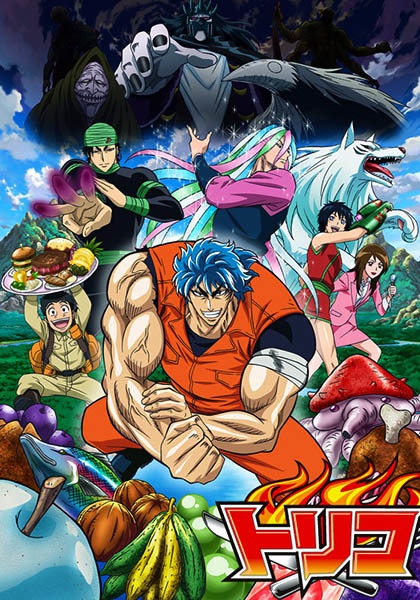
Toriko (Codex 5.90) is the deep cut, and it's on this list because of a single number: a 7.5 on world, actually beating Dragon Ball's 7.0. Toei Animation ran the 2011, 147-episode adaptation — same studio, incidentally, that made Dragon Ball — and Mitsutoshi Shimabukuro's Gourmet Age setting is the most inventively built shonen ecosystem of its decade. The Human World / Gourmet World split, the Capture Level rating system for beasts, the Eight Kings — this is Toriyama's power-level codification applied to a food chain instead of a fight chain.
Character (5.5), themes (5.5), and cultural (5.0) all sit below Dragon Ball's line. But the crossover special that aired on Fuji TV in 2013 — a two-part hour with Dragon Ball Z and One Piece — wasn't accidental. Toei knew what Toriko was echoing. If the Namekian saga's alien-planet worldbuilding was your favorite mode of Dragon Ball, this is where to go next.
The Case Against Ranking by Rubric
The honest counter is that Dragon Ball fandom isn't a rubric-driven audience. People love Dragon Ball because a seven-year-old saw Gokuu go Super Saiyan on Toonami and it rewired them — the 10.0 cultural score is doing more work than any other number on the card, and no recommendation, however critically proximate, will replicate that formative shock. By that logic, telling someone to watch MÄR because its ÄRM system rhymes with scouters is beside the point.
That's fair, but it's also why Naruto sits at the top of this list and not at the bottom. Cultural proximity matters — Naruto's 9.5 is the only score on any of these five cards that even approaches Dragon Ball's footprint, and that's not an accident of the rubric. It's the rubric reading the room correctly. The other four picks are graded on structural echo, not cultural weight, and they're ranked accordingly.
Verdict
Naruto is the only one of these that competes on Dragon Ball's own cultural terrain; the other four echo specific criteria — Seven Deadly Sins on animation, Rave Master on quest structure, MÄR on tournament grammar, Toriko on worldbuilding. Watch them in that order and you'll be watching Dragon Ball's scorecard, broken into its component parts and rebuilt across five different shonen. That's what the rubric is for.
Featured in the Codex

More from The Codex
The Seven Deadly Sins Is a 6.60 Wearing a 7.60 Costume: A One-Point Gap Earned by Groping Gags and Convenient Flashbacks
The Seven Deadly Sins scores 6.60 on the Codex against MyAnimeList's 7.60 because the crowd is grading a Netflix breakout and a Ban-and-King friendship, not the 24 episodes A-1 Pictures actually broadcast in 2014.
The 10.0 That Built a Sunday: How Sazae-san's Cultural Score Carries a 6.58 Scorecard
Sazae-san is a case study in how a single criterion — cultural — can define how a show is remembered, and the 10.0 the Codex hands Eiken's 1969 institution is doing every bit of the heavy lifting its other five scores refuse to.
The Sebastian Problem: Why Black Butler Sits 1.10 Below Its MAL Line and the Crowd Refuses to Notice
Black Butler (Kuroshitsuji) posts a 1.10-point gap between MyAnimeList's 7.65 and the Codex 6.55 because the crowd is grading Sebastian's silhouette and a Phantomhive aesthetic, not the anime-original finale A-1 Pictures actually shipped in 2009.
Discussion
Set a display name above to post.
Loading discussion…