Re:Zero Is the Codex's Most Misread Isekai: Subaru Is the Point, Not the Problem
Tappei's deconstruction works precisely because Subaru is insufferable on purpose — and Season 2 is the moment the rubric stops grading the show as genre and starts grading it as character study.
Tappei's deconstruction works precisely because Subaru is insufferable on purpose — and Season 2 is the moment the rubric stops grading the show as genre and starts grading it as character study.
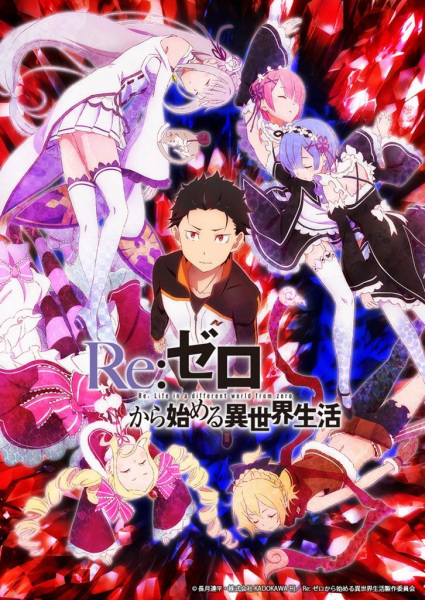
Re:Zero kara Hajimeru Isekai Seikatsu is the only post-2010 isekai whose protagonist is structurally designed to be hated, and the discourse has spent eight years pretending otherwise. Subaru Natsuki is not a power fantasy compromised by bad writing — he is a power fantasy methodically dismantled in front of you, then rebuilt across three seasons into something the genre has no other example of. The Wikipedia page pulls steady monthly traffic, AniList has it trending at rank 1 again with Season 3 in flight, and yet Reddit's top-week chart is empty of substantive Re:Zero posts. That silence is the tell: the show is being watched, not argued about. It should be argued about.
What the Consensus Gets Wrong About Re:Zero Kara Hajimeru Isekai Seikatsu
The MAL number — hovering in the low 8s depending on which season you're looking at — encodes a specific misreading. Viewers who bounced in the early episodes filed Re:Zero next to Sword Art Online and KonoSuba as "the isekai with the dying gimmick," and the ones who stayed often defend it on the wrong grounds: Rem's confession in episode 18, the Petelgeuse fight, the suffering Olympics framing. These are real high points, but they are not what the show is about, and they are not what the rubric rewards.
Anime Codex scores Re:Zero in the high 8s — specifically because the character criterion does heavy lifting that story and animation cannot match. White Fox is a competent studio; Masaharu Watanabe is a competent director; neither is in the conversation with Ufotable or Madhouse on a per-cut basis. What Re:Zero has, and what the rubric is built to catch, is a protagonist arc that survives the genre it's parodying. The same logic that places Death Note's late decline on the table in the Codex's Death Note verdict — that you cannot grade a show on its first arc alone — cuts the opposite direction here. Re:Zero gets stronger past episode 25. Most isekai do not.
The Subaru Problem Is the Subaru Solution
The single most-repeated complaint about Re:Zero is that Subaru is annoying, entitled, and overreacts. Correct. That is the show. The Roswaal mansion loop in the first cour exists to establish a protagonist who believes he is owed Emilia's affection because he died for her — and then the show spends the next forty episodes pulling that assumption apart on camera. The diner scene with Rem in episode 18 is not the emotional payoff people remember it as; it is the midpoint of an indictment. Rem tells Subaru she will run away with him precisely because he has admitted he is worthless, and the narrative immediately punishes him for accepting the offer. He goes back. He has to.
Season 2's Sanctuary arc is where the rubric's character score crystallizes. The Echidna tea party sequence — five or six episodes of Subaru being walked through every Witch's particular flavor of selfishness — is structurally the same device as the God Tongue interrogation in Monogatari, but with consequences. Echidna offers him a contract that would functionally end the suffering loop. He refuses, and the show makes him articulate why, in dialogue that runs longer than most anime allow. Director Watanabe stages it as a static conversation because the drama is internal. That is a confident choice, and it works.
Themes: Trauma as Mechanic, Not Aesthetic
Return by Death is one of the most overused metaphors in anime criticism — every Reddit essay reaches for "it's a metaphor for depression" — but Tappei's actual handling is more specific than that. The cost of the ability is articulated, season by season, as compounding psychological damage that the narrative refuses to let Subaru off-ramp from. Episode 15 of Season 1, the basement breakdown after the fourth Rem-and-Ram death loop, is filmed in real time. Yusuke Kobayashi's vocal performance there is the single best piece of voice acting in the franchise, and it is unbearable on purpose.
Season 2's revelation that Satella has been watching, that the death state is observed, recontextualizes every prior loop as a violation rather than a tool. This is the thematic argument the rubric scores highly: power in Re:Zero is never neutral, never a number on a screen, never the kind of bloodless leveling that makes the genre embarrassing. Compare this to how Demon Slayer leans on Ufotable's compositing to disguise thematically inert stakes — Re:Zero has the inverse problem and the inverse virtue. The animation is fine. The themes are doing the work.
World-Building: The Royal Selection Is the Spine Nobody Talks About
The Royal Selection arc is treated as Season 1 connective tissue, and it shouldn't be. Crusch, Priscilla, Anastasia, and Felt are not rivals in the shonen sense — they are four competing political theses about what Lugnica should become, and the show takes each one seriously. Anastasia's mercantile pragmatism, Crusch's meritocratic militarism, Priscilla's explicit aristocratic cruelty: these are positions the narrative argues with, not flavors of waifu. The Water Gate City arc in Season 2 Part 2 spends real screen time on Anastasia and Echidna's possession dynamic because Tappei is building a world where succession actually matters.
This is the kind of structural seriousness the rubric tends to reward in seinen, not isekai, and it's why Re:Zero scores closer to something like the worldbuilding tier discussed in the Hunter × Hunter misfiling argument than to its genre peers. The Witch Cult, the Sin Archbishops, the Dragon's pact — these are not lore dumps. They are constraints on what the plot can do, which is the only definition of worldbuilding that matters.
The Counter-Argument: It's Still Too Long, and the Cult Fights Sag
The strongest case against Re:Zero is pacing, and it is not a weak case. Season 2 Part 1's opening four episodes are some of the slowest television the franchise has produced, and the Sin Archbishop encounters — particularly Sirius and Regulus — are written as monologues that the animation cannot afford to stage at full intensity. White Fox's budget shows. The Petelgeuse fight in Season 1 episode 25 is the franchise's animation ceiling, and nothing in Season 2 clears it. A viewer who weights animation and story-tightness equally with character and theme will land lower than the Codex does, and that viewer is not wrong on the data. They are weighting a different rubric.
The Codex rubric, for psychological-isekai specifically, weights character and themes above animation. Re:Zero clears that bar. A show that weighted animation primary would penalize it, correctly, and Re:Zero would slide into the mid-8s where most of its detractors already place it.
Verdict
Re:Zero earns its high-8 placement on the strength of a protagonist arc that the genre has not replicated and a thematic argument about power that refuses the easy exit at every junction. The animation ceiling is real, the pacing complaints are real, and the show is still better than ninety percent of what surrounds it because Tappei wrote a character he was willing to make unlikeable for forty hours. That is the rarest thing in modern anime, and the rubric sees it.
Featured in the Codex

More from The Codex
The Seven Deadly Sins Is a 6.60 Wearing a 7.60 Costume: A One-Point Gap Earned by Groping Gags and Convenient Flashbacks
The Seven Deadly Sins scores 6.60 on the Codex against MyAnimeList's 7.60 because the crowd is grading a Netflix breakout and a Ban-and-King friendship, not the 24 episodes A-1 Pictures actually broadcast in 2014.
The 10.0 That Built a Sunday: How Sazae-san's Cultural Score Carries a 6.58 Scorecard
Sazae-san is a case study in how a single criterion — cultural — can define how a show is remembered, and the 10.0 the Codex hands Eiken's 1969 institution is doing every bit of the heavy lifting its other five scores refuse to.
The Sebastian Problem: Why Black Butler Sits 1.10 Below Its MAL Line and the Crowd Refuses to Notice
Black Butler (Kuroshitsuji) posts a 1.10-point gap between MyAnimeList's 7.65 and the Codex 6.55 because the crowd is grading Sebastian's silhouette and a Phantomhive aesthetic, not the anime-original finale A-1 Pictures actually shipped in 2009.
Discussion
Set a display name above to post.
Loading discussion…