The 9.0 That Built the Franchise: How Lupin III Part 1's Cultural Score Rewrote a 7.26 Scorecard
Lupin III Part 1 is a case study in how a single criterion — cultural — can define how a show is remembered, a 1971 Tokyo Movie Shinsha production whose influence outran its own scorecard by five decades.
Lupin III Part 1 is a case study in how a single criterion — cultural — can define how a show is remembered, a 1971 Tokyo Movie Shinsha production whose influence outran its own scorecard by five decades.
Fifty-four years after its cancellation at 23 of a planned 26 episodes, Lupin III Part 1 is still the reason the franchise exists — and that sentence contains almost everything worth arguing about the show. Every other criterion on the Anime Codex rubric lands in the sevens or below. The cultural score hits 9.0. The gap between those numbers is the whole story.
The MyAnimeList Consensus and the Lupin III Part 1 Cultural Question
MyAnimeList scores it 7.63. Anime Codex scores it 7.26. That 0.37-point gap looks small, but it hides a much more interesting disagreement: the crowd is grading a founding document with reverence discounts baked in, while the rubric is grading 23 episodes as if they aired last week. Both are useful. Neither is the whole picture. What the consensus tends to elide — and what this piece exists to argue — is that the entire case for Lupin III Part 1 rests on one axis: the Lupin III Part 1 cultural score, and whether that single 9.0 is enough to carry a scorecard that is otherwise a solid, unremarkable seinen from the early 1970s.
The honest answer is: yes, but only because "cultural" here isn't a participation trophy. It's earned in a specific, defensible way — and the rest of the rubric is more compromised than the consensus wants to admit.
What the 9.0 Actually Represents
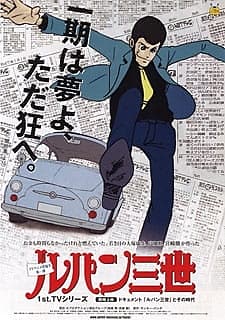
The cultural line on the Codex reads it plainly: Lupin III Part 1 is the origin point of one of anime's longest-running franchises, a property still producing films and television more than fifty years on, and it served as an early proving ground for Hayao Miyazaki and Isao Takahata before Ghibli existed as a concept. The theme, the silhouette, the ensemble — Lupin's green jacket, Jigen's tilted fedora, Fujiko's constantly renegotiated loyalties, Goemon's blade, Zenigata's inspector-shaped monomania — became the permanent shorthand for what a heist ensemble looks like in Japanese animation.
That's not vague influence. It's traceable. The mid-season directorial handoff, forced when Masaaki Osumi's mature tone drew network scrutiny, put Miyazaki and Takahata on prime-time action animation years before Castle of Cagliostro or Future Boy Conan. Watch the tighter comedic timing and cleaner action choreography from the Miyazaki-Takahata episodes onward and you're watching the DNA of Ghibli adventure cinema being sequenced in real time. That's what a 9.0 pays for. This is the same pattern seen with Futari wa Precure's 9.0 cultural weight — a foundational text whose downstream influence dwarfs its own scorecard.
Where the Rest of the Scorecard Actually Sits
Strip the cultural weight away and the numbers get honest. Story lands at 7.0. The episodic heist structure is genuinely inventive — the prison-break caper in episode 5 and the casino con games work because they lean on cleverness rather than escalation — but the tonal split between Osumi's hardboiled early run and the lighter, gag-driven back half from "Twilight Gemini" onward damages narrative cohesion across the 23-episode order. You can feel the seam. It's not fatal, but it's a seam.
Character at 7.5 is the second-strongest number, and it's earned by establishment rather than growth. This is the text where the ensemble dynamic is fixed: Lupin's roguish charm, Jigen's terse loyalty, Fujiko's untrustworthy seduction, Goemon's introduction as an enemy who becomes an ally, Zenigata's obsessive pursuit. The chemistry is real. The archetypes are refined to a point that later Lupin properties would spend decades barely improving on. But nobody develops here — these are portraits, not arcs — and Fujiko in particular is written more as a plot device than a person, a limitation Monkey Punch's source material shares.
World-building at 7.5 credits the jazz-inflected, internationally textured setting and its "no superpowers, just skill" framework, which keeps the stakes anchored in ingenuity rather than the arms-race escalation that would define later heist anime. Animation at 7.8 credits the fluid car chases, expressive character acting, and the visible directorial handoff — but honestly grades the repeated cels and inconsistent per-episode quality that any 1971 A Production budget would show.
Themes at 6.5 is the number that hurts. The show trades in cynical adult material — betrayal, greed, the gentleman-thief code, loyalty among criminals who cannot fully trust each other — but keeps emotional resonance intentionally muted in service of cool detachment. The occasional flicker of melancholy between Lupin and Fujiko is exactly that: a flicker. Style over pathos is a choice, and it's the choice that keeps this from cracking eight overall.
Why the Cultural Score Isn't Doing Charity Work
Here is where the argument sharpens. A cultural score of 9.0 that props up a mediocre show would be a puff-piece maneuver — the rubric equivalent of grading on reverence. That isn't what's happening here. The 9.0 is doing structural work because Lupin III Part 1 didn't just spawn sequels; it defined the vocabulary those sequels are still speaking. Every subsequent Lupin property — Cagliostro, Part 2's red jacket, the Fujiko Mine recontextualization, the annual TV specials — inherits its blocking, its ensemble rhythm, and its refusal to let stakes escalate past human skill. That's not nostalgia. That's a template.
Compare this to shows where the cultural line functions as a memory tax rather than a design credit. Beck's soundtrack-driven reputation rides a Nirvana namecheck and coming-of-age warmth the rubric can't verify frame by frame. Lupin III Part 1's cultural weight is verifiable: the Miyazaki-Takahata episodes exist, the franchise's fifty-year continuity exists, the theme is the theme.
The Counter-Argument: Grade the Episodes, Not the Legacy
The strongest opposing case is procedural: the rubric shouldn't reward a show for what its descendants accomplished. Grade Part 1 on its 23 episodes. On that reading — Osumi's tonal whiplash, the budget-visible animation dips, the archetype-locked characters, the muted themes — you land closer to a 7.0 flat than a 7.26, and the MyAnimeList 7.63 starts looking like sentimental inflation.
That's a coherent position, and it's why story, character, themes, world, and animation all sit where they sit. The rubric already grades the episodes honestly. But cultural is a distinct criterion for a reason. Denying that Miyazaki and Takahata's animation apprenticeship happened inside this show, or that the franchise's entire visual grammar was fixed here, isn't rigor — it's amnesia dressed as rigor.
Verdict
Lupin III Part 1 is a 7.26 that behaves like an 8 in memory because one criterion out of six is doing legitimate, verifiable heavy lifting. Neither hit piece nor puff piece: the 9.0 is real, the 6.5 on themes is real, and the show is exactly the sum of its parts once you accept that "founding a franchise that outlives you by half a century" is a part.
Featured in the Codex


More from The Codex
The Seven Deadly Sins Is a 6.60 Wearing a 7.60 Costume: A One-Point Gap Earned by Groping Gags and Convenient Flashbacks
The Seven Deadly Sins scores 6.60 on the Codex against MyAnimeList's 7.60 because the crowd is grading a Netflix breakout and a Ban-and-King friendship, not the 24 episodes A-1 Pictures actually broadcast in 2014.
The 10.0 That Built a Sunday: How Sazae-san's Cultural Score Carries a 6.58 Scorecard
Sazae-san is a case study in how a single criterion — cultural — can define how a show is remembered, and the 10.0 the Codex hands Eiken's 1969 institution is doing every bit of the heavy lifting its other five scores refuse to.
The Sebastian Problem: Why Black Butler Sits 1.10 Below Its MAL Line and the Crowd Refuses to Notice
Black Butler (Kuroshitsuji) posts a 1.10-point gap between MyAnimeList's 7.65 and the Codex 6.55 because the crowd is grading Sebastian's silhouette and a Phantomhive aesthetic, not the anime-original finale A-1 Pictures actually shipped in 2009.
Discussion
Set a display name above to post.
Loading discussion…