Is Beck: Mongolian Chop Squad Overrated? A 7.40 That Rides Nostalgia and a Nirvana Namecheck Into Numbers the Guitar Animation Can't Sustain
Madhouse's 2004 rock adaptation posts a 0.90-point gap with MyAnimeList because the crowd is grading a soundtrack and a coming-of-age memory, not the still-frame concerts the rubric has to actually watch.
Madhouse's 2004 rock adaptation posts a 0.90-point gap with MyAnimeList because the crowd is grading a soundtrack and a coming-of-age memory, not the still-frame concerts the rubric has to actually watch.
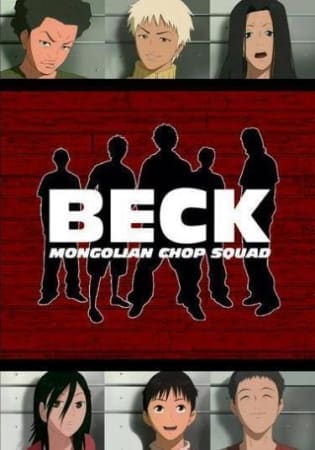
The show about a rock band cannot animate a rock band. That is the sentence around which every honest reading of Beck: Mongolian Chop Squad has to organize itself, and it is the sentence the 8.30 on MyAnimeList refuses to say out loud. The Anime Codex rubric lands at 7.40 — a 0.90-point gap — and the story of that gap is not that the show is bad. It is that the crowd is scoring a memory of adolescence set to a Dying Breed cover, while the rubric is scoring twenty-six episodes of guitar necks that don't move.
The Consensus Is Grading a Feeling, Not a Production
The MyAnimeList 8.30 is a consensus built around three things: Koyuki's arc, the Dylan-Nirvana-Chili Peppers wall of references the show wears on its sleeve, and the specific frisson of watching a shonen that treats the underground live-house circuit as its stakes instead of a tournament bracket. All three are real. None of them are twenty-six episodes of production quality. The gap between Beck's reputation and its rubric score is the story, and naming what the crowd is rewarding that the rubric won't is the whole assignment.
Codex departs from the consensus because the rubric has an animation criterion and refuses to grade it on the curve of "well, it was 2004." Madhouse in 2004 was also making Monster. The comparison is not unfair — it is the point.
The 5.5 on Animation Is Where the 8.30 Falls Apart
The animation criterion posts a 5.5, and it is doing more work in the weighted average than casual defenders want to admit. The failure mode is specific: guitar animation across the series is a rotation of static hand positions and repeated loops, and Madhouse leans on still frames, crowd cutaways, and slow pans across the stage when the score demands actual performance. This is a show whose thesis is that live music transfigures the people playing it. The camera has to sell the transfiguration. It does not.
The dub-over problem compounds it. Koyuki's singing is famously suppressed or muted across key performance beats, and the English vocal work — including the Greatful Sound climax — arrives with an awkwardness the show never solves. For a series about sound, engineering around the vocal is a structural indictment, not a footnote. This is not the same failure as, say, the flat production on Bokura ga Ita, where Artland's economy at least matches the melancholy. Beck's economy is fighting the premise.
The 7.5 Story Is Real, and Its Final Episodes Undo Part of It
Where the rubric does credit the show — and it does — is in the patient shape of the coming-of-age arc. The Codex story score of 7.5 rewards a structure that lets Koyuki pick up the guitar, fail at it, get better through the kind of small victories that a tournament shonen would compress into a training montage, and eventually front a band at the Greatful Sound festival without the writing ever pretending the outcome was fated. Compare the pacing philosophy to what carries Yawara! at 7.55 — a protagonist worth watching accumulate skill across an unreasonable runtime — and you get the shape of what Beck's first two-thirds does correctly.
Then the show reaches its final stretch and rushes the American breakthrough into a handful of episodes. The manga's longer arc — Harold Sakuishi ran the source from 1999 to 2008 and 103 chapters — cannot compress into twenty-six episodes without violence, and the adaptation performs that violence in a truncated finale that reads more like a placeholder than a resolution. Ran's gang harassment and the Eddie/Leon Sykes copyright subplot lean melodramatic even in the middle stretch; by the end, the writing is stacking obstacles instead of resolving them.
The 8.5 on Character Is the Best Case for the Show — and the Crowd Is Grading It Correctly
Where Codex and MyAnimeList actually agree is on Koyuki. The character score of 8.5 is the highest number on the scorecard, and it is earned. Yukio "Koyuki" Tanaka's transformation from a passive, directionless middle-schooler into a vocalist-guitarist with quiet interior authority is one of the more believable arcs the shonen demographic has produced, and Ryuusuke Minami works as a mentor figure specifically because the show refuses to make him a flawless idol. Saku and Chiba get genuine interiority; Taira reads as a person.
The character writing has soft spots. Maho Minami's romance with Koyuki stalls in a loop of will-they-won't-they beats that the runtime cannot justify, and Izumi never crosses the line from disposable rival into a character with weight. But an 8.5 accounts for the soft spots. The crowd is right to feel the character work. The rubric agrees.
The 6.5 on Cultural Impact Is Where Reputation Outruns Reach
Here is the number that most directly names the consensus inflation. Codex marks cultural impact at 6.5. Beck was a touchstone for music-anime fans, its English-language soundtrack accrued a cult, and it predates the later band-drama boom by enough years to claim gateway status. That is a real footprint. It is not the footprint of an 8.30.
The action-shonen juggernauts of the mid-2000s reshaped the demographic; Beck reshaped a subgenre. It is consistently cited as a benchmark for grounded musical storytelling and rarely cited outside that frame. When one criterion has to explain a reputation gap, it is usually cultural, and it is here — the same mechanic that carries Chibi Maruko-chan's scorecard in the opposite direction. Beck's cultural score is honest about a niche. The 8.30 is not.
The Steelman: The Soundtrack Is the Show
The strongest defense of the MyAnimeList number is that Beck's soundtrack — the actual music, the Beat Crusaders contributions, the cover work, the show's willingness to structure whole scenes around a needle-drop — is doing the work the animation cannot. On this reading, the still frames and repeated guitar loops are irrelevant because the ears are engaged even when the eyes are idle. The show is a rock album with anime attached.
The rubric does not reject that reading. It refuses to let it launder the production. Animation is a criterion because a musical anime that cannot animate its music is failing the specific job it took. A show can be moving and still be under-produced; a soundtrack can be great and still not compensate for a Greatful Sound sequence held together by reaction shots. The rubric grades the show. The crowd is grading the album.
Verdict
Beck: Mongolian Chop Squad is a 7.40 because a strong character spine and an honest coming-of-age structure carry a production that never solves the problem its premise demands solved. The 8.30 is what happens when a soundtrack and a memory of being fourteen do the heavy lifting the rubric assigns to Madhouse. Credit the character work; do not pretend the guitar animation exists.
Featured in the Codex


More from The Codex
The Seven Deadly Sins Is a 6.60 Wearing a 7.60 Costume: A One-Point Gap Earned by Groping Gags and Convenient Flashbacks
The Seven Deadly Sins scores 6.60 on the Codex against MyAnimeList's 7.60 because the crowd is grading a Netflix breakout and a Ban-and-King friendship, not the 24 episodes A-1 Pictures actually broadcast in 2014.
The 10.0 That Built a Sunday: How Sazae-san's Cultural Score Carries a 6.58 Scorecard
Sazae-san is a case study in how a single criterion — cultural — can define how a show is remembered, and the 10.0 the Codex hands Eiken's 1969 institution is doing every bit of the heavy lifting its other five scores refuse to.
The Sebastian Problem: Why Black Butler Sits 1.10 Below Its MAL Line and the Crowd Refuses to Notice
Black Butler (Kuroshitsuji) posts a 1.10-point gap between MyAnimeList's 7.65 and the Codex 6.55 because the crowd is grading Sebastian's silhouette and a Phantomhive aesthetic, not the anime-original finale A-1 Pictures actually shipped in 2009.
Discussion
Set a display name above to post.
Loading discussion…