Is School Rumble Overrated? A 7.20 That Rides Harima and a Love Polygon Into Numbers the Sketch-Comedy Structure Won't Defend
School Rumble posts a 0.69-point gap between MyAnimeList's 7.89 and the Codex 7.20 because the crowd is grading Harima Kenji and a rooftop confession, not the twenty-six episodes of parody detours that surround them.
School Rumble posts a 0.69-point gap between MyAnimeList's 7.89 and the Codex 7.20 because the crowd is grading Harima Kenji and a rooftop confession, not the twenty-six episodes of parody detours that surround them.
The gap between School Rumble's reputation and its rubric score is the story. Studio Comet's 2004 adaptation of Jin Kobayashi's manga is remembered as a comedy benchmark of the mid-2000s romcom boom, but the number the crowd assigns it — 7.89 on MyAnimeList — is a number that rewards Harima Kenji, a curry-cooking gag, and a rooftop misfire. It is not a number the twenty-six-episode structure actually earns.
The Consensus Is Grading a Character, Not a Season
MyAnimeList's 7.89 is the position to name. It places School Rumble in the neighborhood of shows with tighter throughlines, better production budgets, and more coherent thematic reach — and the Codex 7.20 exists precisely because the rubric refuses to let a beloved second lead carry five other criteria on his back. This is the same pattern that flagged KonoSuba's 0.81-point gap and One Punch Man's 1.19: the crowd scores an unforgettable character or a signature bit, and the rubric has to grade the whole cour.
Name what the crowd is rewarding that the rubric won't. Harima. The love polygon's premise. Two or three episodes anyone who watched in 2005 can still quote. That is a 7.89 argument only if character is the sole criterion. It isn't.
The Story Score Is a 7.5 and It's Being Generous
The 7.5 the Codex hands the narrative is the ceiling, not the floor. What works is genuinely clever: Tenma Tsukamoto pining for the oblivious Karasuma Ooji, Harima pining for the equally oblivious Tenma, and misunderstandings compounding through set pieces like the curry-cooking sequence and the amnesia gag. That symmetrical obliviousness is a structural engine, and when the show lets it run, the comedic momentum is real.
The problem is that the show does not let it run. School Rumble is a sketch-comedy program wearing a romcom's clothes, and across twenty-six episodes the parody detours — a survival-game riff, an X-Files-style investigation — actively derail forward motion. These aren't tonal pivots that enrich the whole; they are vignettes that pause the love polygon to indulge Kobayashi's genre-parody habit. Episodes end and the emotional needle hasn't moved. The lack of an overarching plot is by design for the gag-romance format, but design intent doesn't rescue a rubric score. The season plays as a collection, not a build.
Tenma Doesn't Grow, and the Show Doesn't Notice
The character score of 8.0 is the highest number on the sheet and it exists almost entirely because of Harima. His delinquent exterior and his secret manga-artist subplot give him real interiority — the kind of texture a romcom "second lead" almost never receives, and the reason he endures as an archetype cited alongside the format's other lovable-brute male leads.
The season's actual protagonist is a different problem. Tenma's ditziness is engineered for gag mileage, and across twenty-six episodes it does not modulate. Her fixation on Karasuma is presented in episode one and is essentially unchanged in episode twenty-six. Karasuma himself is a curry-obsessed cipher whose deadpan is the joke and only the joke. The rubric rewards the supporting bench — Eri Sawachika's tsundere arc quietly seeded as the season's emotional throughline, Yakumo Tsukamoto's mind-reading gag paid off with unusual care, Mikoto Suou given a life outside the classroom — but a romcom cannot post an 8.0 if the ostensible female lead is static across a full-year broadcast. The 8.0 is Harima and Eri. Everyone else is the reason it isn't a 9.
The Themes Are Warm, Not Deep
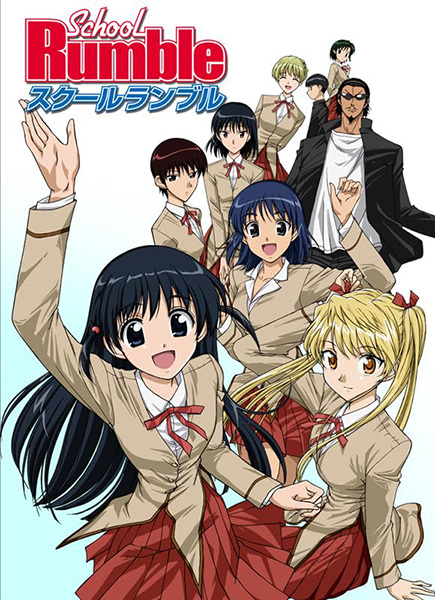
Under the slapstick sits a sincere idea: nearly every character in Class 2-C is paralyzed by the inability to say "I love you," and the opening framing states this outright. Harima's recurring near-confessions — the festival sequence, the rooftop scene — do land. They land because Studio Comet's direction knows how to hold a beat when the gag rhythm briefly stops, and because Harima has been given enough interior life to make the failure sting.
But the rubric hands themes a 7.0 because the show never digs past its premise. "Communication is hard" is the thesis on page one and the thesis on page twenty-six. There is no interrogation of why these teenagers can't speak, no structural critique of the social codes that keep them silent, no darker mirror to the cowardice the title flags. The resonance is warm. It isn't profound, and warmth is a 7 in a rubric that reserves higher numbers for shows willing to argue something.
Studio Comet Draws Faces, Not Motion
Animation at 6.5 is where the fan memory diverges most sharply from the tape. Studio Comet's production is serviceable mid-2000s TV work, and the direction leans hard on exaggerated reaction faces, chibi distortions, and rapid cuts that sell gag rhythm effectively. When Harima's face contorts, the joke works. When the show pastiches a genre — the survival-game episode, the mystery riff — the visual language switches cleanly.
That is the ceiling. Fluid motion is rare. Background art is unremarkable. The character designs are appealing and expressive but the show never attempts visual ambition, and the parody segments that fans remember as inventive are inventive in concept, not in draftsmanship. Comparing this production to what Madhouse or Bones were shipping in 2004 is not a fair fight, and the Codex 6.5 reflects it.
The Counter-Argument: The Polygon Itself Is the Achievement
The strongest defense of the 7.89 is that School Rumble's relationship web is denser and more interconnected than nearly any romcom of its era, and that this structural achievement deserves credit the rubric spreads too thinly across six criteria. Almost every node in Class 2-C connects to another — Hanai to Yakumo, Imadori to Karen, Eri to Harima, Mikoto orbiting the whole — and the show tracks its running gags with genuine consistency. Harima's reputation, Karasuma's curry, Yakumo's mind-reading: all seeded, all paid off. That is craft, and it is why the world score, despite the conventional high-school setting, still lands at 6.5 rather than lower.
The rubric reads it differently because a clever structural engine is not the same as a story that uses the engine. The polygon is a premise. What the show does with the premise — the sketch detours, the static protagonist, the thematic ceiling at "communication is hard" — is what the numbers grade. A love web is scaffolding. Scaffolding without a building on top is a 7.20.
Verdict
School Rumble is a good show with a great supporting character and a structural premise more interesting than the twenty-six episodes it produces. The Codex 7.20 is not a rejection of what works — Harima earns his archetype status, Eri's arc is quietly excellent, the curry and rooftop beats do what they set out to do — it is a refusal to let those things paper over a static lead, a parody habit that keeps stalling the polygon, and a production that draws faces well and everything else adequately. The crowd's 7.89 is a Harima score. The rubric grades the season.
Featured in the Codex


More from The Codex
The Seven Deadly Sins Is a 6.60 Wearing a 7.60 Costume: A One-Point Gap Earned by Groping Gags and Convenient Flashbacks
The Seven Deadly Sins scores 6.60 on the Codex against MyAnimeList's 7.60 because the crowd is grading a Netflix breakout and a Ban-and-King friendship, not the 24 episodes A-1 Pictures actually broadcast in 2014.
The 10.0 That Built a Sunday: How Sazae-san's Cultural Score Carries a 6.58 Scorecard
Sazae-san is a case study in how a single criterion — cultural — can define how a show is remembered, and the 10.0 the Codex hands Eiken's 1969 institution is doing every bit of the heavy lifting its other five scores refuse to.
The Sebastian Problem: Why Black Butler Sits 1.10 Below Its MAL Line and the Crowd Refuses to Notice
Black Butler (Kuroshitsuji) posts a 1.10-point gap between MyAnimeList's 7.65 and the Codex 6.55 because the crowd is grading Sebastian's silhouette and a Phantomhive aesthetic, not the anime-original finale A-1 Pictures actually shipped in 2009.
Discussion
Set a display name above to post.
Loading discussion…