The 9.0 That Built an Empire: How Futari wa Precure's Cultural Score Rewrote a 7.41 Scorecard
Toei's 2004 magical-girl reboot is a case study in how a single criterion — cultural — can define how a show is remembered, punches-and-kicks choreography carrying a scorecard the rest of the rubric merely tolerates.
Toei's 2004 magical-girl reboot is a case study in how a single criterion — cultural — can define how a show is remembered, punches-and-kicks choreography carrying a scorecard the rest of the rubric merely tolerates.
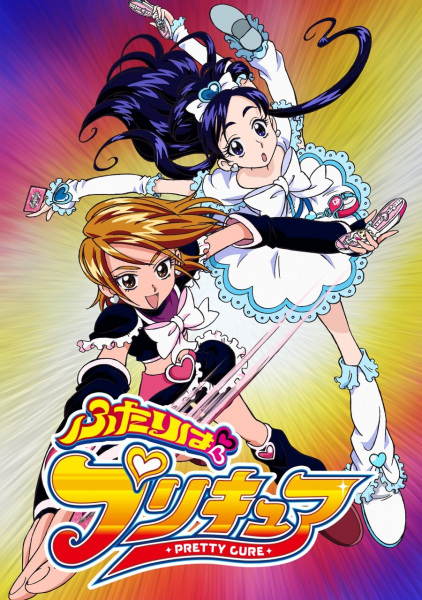
Every magical girl who has thrown a punch since February 2004 owes Nagisa Misumi a royalty check. That's not sentiment; it's genre history. Pretty Cure (Futari wa Precure) posts a Codex 7.41 that would read as unremarkable Toei kodomomuke work if the cultural axis weren't sitting at 9.0 — a full point-and-a-half above the show's own averages, and the reason the franchise this seeded has cleared a thousand episodes and shows no sign of stopping.
Engaging the 7.15 Consensus
The MyAnimeList crowd scores it 7.15, which is roughly what the Codex would land on if cultural weight were stripped out of the rubric entirely. That's not a coincidence. Aggregate scoring rewards the moment-to-moment experience of watching 49 episodes of monster-of-the-week structure, and the moment-to-moment experience is, honestly, a mixed bag — filler-heavy in the front half, cosmologically vague, animated to TV budget outside of set-pieces. A 7.15 is what happens when you grade the episodes and ignore the franchise. The Codex, by contrast, insists that cultural footprint is a criterion, not a footnote, and Futari wa Precure is the cleanest possible test case for that insistence — the same principle at work in the 9.5 that carries Chibi Maruko-chan's 7.51 scorecard and the 8.5 that made Zatch Bell unforgettable. One criterion, correctly weighted, rewrites the memory of a show whose other axes sit politely mid-tier.
Why the Cultural Score Lands at 9.0
Consider what this show actually did. Before Futari wa Precure, the dominant Toei magical-girl grammar — inherited from Sailor Moon and its descendants — was ranged, ornamental, wand-based. Attacks were incantations. Combat was a light show. Izumi Todo's premise flipped the table: the Cures fight hand-to-hand. Cure Black and Cure White throw kicks. They grapple. The Marble Screw, the signature finisher, is a beam attack, but everything preceding it is physical contact, and Toei's action team stages it with real weight and follow-through. This is the single most consequential formal decision in twenty-first-century magical-girl anime, and every Precure season since — every Cure, every finisher, every choreographed brawl in a shopping-district setting — is downstream of it.
The commercial dimension matters too. The Card Commune transformation device — Mepple and Mipple slotted into a fairy-PDA — is a toy-first design that established the merchandising template Toei has run every February since. The show didn't just start a franchise; it engineered one. A 9.0 on cultural undersells nothing here. If anything, it might be a hair conservative.
The Character Score Is Doing More Work Than You'd Guess
The show's second-strongest criterion, at 8.2, is character, and this is where the argument that Futari wa Precure is only a franchise seed collapses. Nagisa and Honoka are not the interchangeable pastel duo the demographic conventions would predict. Nagisa is a lacrosse-club hothead who reads shonen instincts; Honoka is a science-club introvert who reads seinen instincts. The show puts them in the same skirt and lets the friction generate the drama.
The episodes where they bicker before reconciling — where Honoka's measured restraint reads as coldness to Nagisa, or Nagisa's impulsiveness reads as thoughtlessness to Honoka — give the central friendship a texture that most kodomomuke shows can't be bothered with. The mandatory dual-transformation gimmick, where neither girl can henshin alone, is a formal expression of the theme, and it works because the character writing earns it. Even Mepple and Mipple's constant squabbling functions as a comic mirror of the leads. This is not the animation of the year, but it is genuine character craft — the kind that shows up years later in the Ao Haru Ride register, where Production I.G's reunion romance also lives on character while the rest of the rubric compensates.
Kiriya Is the Story's One Real Argument
The story score is 6.8, and it earns that number honestly — the Prism Stone quest is a MacGuffin structure, the monster-of-the-week rhythm is filler-heavy, and the Dotsuku Zone commanders fall in a predictable order (Pisard, then Gekidrago, then Poisony). The metaphysics of the Garden of Light and Garden of Rainbows never resolve into anything more coherent than transformation-justification, which is why world-building sits at 6.0.
But Kiriya. The Kiriya defection subplot — an antagonist whose relationship with Honoka introduces genuine empathy across the enemy line — is the one narrative thread with real stakes and real payoff. It's also where the show's themes score of 7.5 stops being about partnership platitudes and starts being about something harder: that the enemy is not always the enemy, that connection can cross the moral line the show has drawn. It's a surprisingly mature note in a series otherwise content with earnestness, and it hints at the ambition Toei would develop across later Precure seasons.
The Animation Is Solid, Not Sung About
At 7.3, animation is the criterion where the punches-and-kicks decision pays its clearest dividend. The transformation sequences and Marble Screw are well-staged and reused with the economy TV production demands. Set-pieces have physical conviction — a body hitting another body, momentum transferred, weight landed. Outside those moments, though, the show is Toei on budget: stock footage, functional key animation, backgrounds that do their job. Nothing here reaches for the sakuga register. This is the same problem Genshiken's 6.0 animation ceiling illustrates from the other direction — production values will cap how a show is remembered, unless another axis is loud enough to override the ceiling. Here, cultural is that axis.
The Steelman
The strongest case against weighting cultural this heavily: influence is not quality, and awarding a 9.0 for franchise progenitor status essentially credits a show for what other shows did afterward. By that logic, a mediocre pilot for a great series inherits the series's greatness. Fair objection. And if the cultural score were the only thing propping this scorecard up, it would be a hit piece waiting to happen.
But the rubric doesn't read the show that way. The character score is legitimately 8.2 on its own merits — Nagisa and Honoka work regardless of what came after. The Kiriya arc is a real narrative achievement regardless of what came after. The hand-to-hand combat choreography is a formal innovation within this specific 49-episode run, not something retroactively bestowed. Cultural isn't carrying the show alone; it's amplifying strengths that are already present. That's the difference between a puff piece and a defensible reading.
Futari wa Precure is a 7.41 that will be remembered as more than 7.41 because the cultural criterion caught what the episode-level experience obscures — a formal innovation, a merchandising template, and two leads whose friction still holds up. The rubric doesn't need to apologize for that number, and neither does the show.
Featured in the Codex



More from The Codex
The Seven Deadly Sins Is a 6.60 Wearing a 7.60 Costume: A One-Point Gap Earned by Groping Gags and Convenient Flashbacks
The Seven Deadly Sins scores 6.60 on the Codex against MyAnimeList's 7.60 because the crowd is grading a Netflix breakout and a Ban-and-King friendship, not the 24 episodes A-1 Pictures actually broadcast in 2014.
The 10.0 That Built a Sunday: How Sazae-san's Cultural Score Carries a 6.58 Scorecard
Sazae-san is a case study in how a single criterion — cultural — can define how a show is remembered, and the 10.0 the Codex hands Eiken's 1969 institution is doing every bit of the heavy lifting its other five scores refuse to.
The Sebastian Problem: Why Black Butler Sits 1.10 Below Its MAL Line and the Crowd Refuses to Notice
Black Butler (Kuroshitsuji) posts a 1.10-point gap between MyAnimeList's 7.65 and the Codex 6.55 because the crowd is grading Sebastian's silhouette and a Phantomhive aesthetic, not the anime-original finale A-1 Pictures actually shipped in 2009.
Discussion
Set a display name above to post.
Loading discussion…