Is Inazuma Eleven Overrated? A 6.65 That Rides God Hand and a Coro Coro Empire Into Numbers 127 Episodes of Recycled Hissatsu Won't Earn
Inazuma Eleven posts a 1.13-point gap between MyAnimeList's 7.78 and the Codex 6.65 because the crowd is grading a childhood, a merchandise empire, and Endou Mamoru's gauntlet — not the 127 episodes OLM actually shipped.
Inazuma Eleven posts a 1.13-point gap between MyAnimeList's 7.78 and the Codex 6.65 because the crowd is grading a childhood, a merchandise empire, and Endou Mamoru's gauntlet — not the 127 episodes OLM actually shipped.
The gap between Inazuma Eleven's reputation and its rubric score is the story. A show that leans on stock hissatsu cut-ins for roughly a hundred and twenty-seven episodes cannot be graded by the goosebump you got when Gouenji first burned a Fire Tornado into a net in 2008, and yet that is exactly the transaction MyAnimeList's 7.78 is honoring. The Codex sits at 6.65 for a reason, and the reason is not that the rubric hates soccer.
The Consensus Is Grading a Franchise, Not a Broadcast
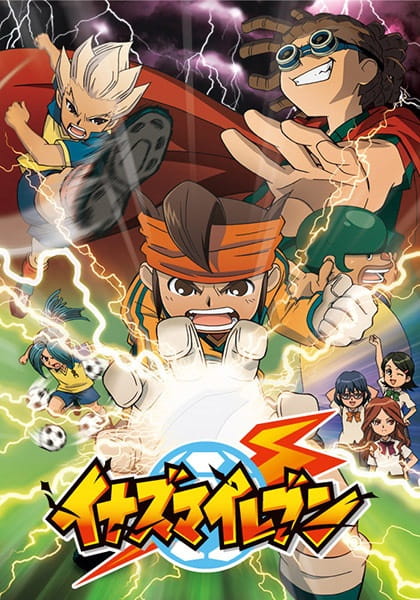
Ask why Inazuma Eleven scores 7.78 on MyAnimeList and the honest answer names three things that live outside the OLM broadcast: the Level-5 DS games, the European dub cycle that made this a playground language in Spain, Italy, and France, and the sequels — GO, Ares, Orion — that kept the property warm for a decade. That is not a critique of taste. It is a diagnosis. The crowd is scoring a media object; the rubric is scoring an anime. Those are different measurements, and when they diverge by more than a point, the divergence itself is the interesting artifact.
The question "is Inazuma Eleven overrated" only reads as inflammatory if you assume overrated means bad. It doesn't. It means the number is bigger than the show earns on the axes a rubric can measure, and the delta gets absorbed somewhere else — usually childhood, usually merchandise, usually a Nintendo DS cartridge. The same pattern shows up in KochiKame's 373-episode reputation gap and in Keroro's Sunrise-mascot inflation. Long-running kodomomuke inherits affection the way property inherits value: passively, and mostly from time.
The Story Loses Its Spine After Football Frontier
Codex story score: 6.8. The first-season Football Frontier arc is genuinely well-motivated — Raimon climbing from a barely-functional club, past Occult, past Zeus, up through the national bracket, is the tightest sports structure the show ever assembles. Each rival school is designed with a distinct gimmick, the escalation is legible, and Endou's goalkeeping philosophy has something concrete to push against.
Then Aliea Academy arrives and the show stops being about soccer. The stakes escalation works in the short term — meteor-powered teams reading as invaders is a genuine tonal pivot — but it introduces power creep the rest of the series never controls. By the Football Frontier International stretch the structure has collapsed into match-of-the-week, each opponent nation cycling through a signature hissatsu and a fresh evolution of the Raimon roster's counter-move. That is not narrative; that is a video-game boss ladder in animated form, which — given the Level-5 DS release schedule the property was engineered to feed — is exactly what it was contracted to be. Director Katsuhito Akiyama is running franchise consistency, not authorial escalation.
The Character Roster Is Too Big to Grow
Codex character score: 6.5. Endou Mamoru works. His relentless "soccer is fun" through-line is a genuinely strong kodomomuke protagonist stance and holds together the emotional shape of a show that otherwise fragments. Gouenji's abandonment-of-soccer arc, driven by his sister's accident, gives the first two dozen episodes real spine. Kidou's shift from Teikoku antagonist to Raimon strategist is the standout secondary movement — a heel turn earned by his relationship with the coach reveal rather than by episodic convenience.
Everyone else pays the price of an eleven-plus roster. Kabeyama's cowardice gag runs for the entire series without meaningful development. Kurimatsu never graduates from comic relief. The defenders and midfielders exist to be slotted into formations the games needed you to buy. When a show has this many named players, the writing has to decide which ones grow and which ones are equipment — Inazuma Eleven decides in favor of equipment. This is the same architectural problem Kaiju No. 8's Defense Force roster runs into, minus the Production I.G polish that lets Kaiju partially disguise it.
The Animation Is the Load-Bearing Weakness
Codex animation score: 6.3. OLM built this show on a specific and defensible economic bet: cut once, use forever. Endou's God Hand, Gouenji's Fire Tornado, Kidou's Pinguin no Mai — every signature technique gets a fully-animated cut-in the first time, and then that cut-in is deployed across the rest of the broadcast whenever the move surfaces. Across 127 episodes this is not a stylistic choice; it is a spreadsheet. The dramatic camera spins and impact zooms give matches a punch that reads to a child audience, and the character designs are clean and readable at TV resolution. That is the ceiling. The floor is the CG-blended stock loops that begin to feel like screensavers by the Aliea stretch, and the direction is franchise-safe throughout — no ambition analogous to Production I.G's court work on Kuroko or MAPPA's set pieces on Jujutsu, because ambition would cost money the game division needed.
The World Stops Being About Soccer
Codex world score: 6.0. Hissatsu-moves-inside-a-real-sport is a clever premise, and the first-season application respects the frame — God Hand is exaggerated goalkeeping, Fire Tornado is an exaggerated shot, but they remain shooting and stopping shots. Aliea Academy detonates that frame. Once the roster includes teams powered by fictional meteors and the game logic yields to sci-fi retcon, the setting stops being a soccer world with a supernatural flourish and starts being a shonen-battle world that happens to keep a ball on-screen. The rubric penalizes internal consistency, and Inazuma Eleven trades its consistency for franchise runway.
The Case for the Consensus
The strongest defense of the 7.78 is that Inazuma Eleven does what it set out to do, which was serve a specific audience: children reading Coro Coro in 2008, buying the DS games, watching the broadcast, and building a cross-media attachment the anime industry rarely replicates outside Pokémon. The Codex acknowledges this with an 8.5 on cultural — the highest score on the card, and correctly so. The manga's Kodansha and Shogakukan Children's category wins in 2010 and 2011 are not accidents. Endou's optimism, the Aliea arc's manufactured-talent-versus-genuine-passion theme, the joy-of-play insistence — all of it lands for the target reader, and the themes score of 6.7 reflects a genuine strength that the "is it overrated" framing shouldn't erase.
The rubric reads it differently because the rubric is not a childhood. Cultural weight of 8.5 does not erase story padding, animation recycling, or a roster the writing can't service. It contextualizes them.
Verdict
Inazuma Eleven is a 6.65 that the crowd remembers as a 7.78 because affection accrues around merchandise, dubs, and a DS release schedule the anime was engineered to sell. The show is not bad — Endou is a real protagonist, the Football Frontier arc holds, and the cultural footprint is genuine — but the delta between reputation and rubric is exactly the shape of a franchise being scored as an anime. Name what the crowd is rewarding, and the number stops being a mystery.
Featured in the Codex


More from The Codex
The Seven Deadly Sins Is a 6.60 Wearing a 7.60 Costume: A One-Point Gap Earned by Groping Gags and Convenient Flashbacks
The Seven Deadly Sins scores 6.60 on the Codex against MyAnimeList's 7.60 because the crowd is grading a Netflix breakout and a Ban-and-King friendship, not the 24 episodes A-1 Pictures actually broadcast in 2014.
The 10.0 That Built a Sunday: How Sazae-san's Cultural Score Carries a 6.58 Scorecard
Sazae-san is a case study in how a single criterion — cultural — can define how a show is remembered, and the 10.0 the Codex hands Eiken's 1969 institution is doing every bit of the heavy lifting its other five scores refuse to.
The Sebastian Problem: Why Black Butler Sits 1.10 Below Its MAL Line and the Crowd Refuses to Notice
Black Butler (Kuroshitsuji) posts a 1.10-point gap between MyAnimeList's 7.65 and the Codex 6.55 because the crowd is grading Sebastian's silhouette and a Phantomhive aesthetic, not the anime-original finale A-1 Pictures actually shipped in 2009.
Discussion
Set a display name above to post.
Loading discussion…