Is Drifters Overrated? The 6.63 That Rides Nobunaga's Grin and Hirano's Cool Into Numbers Hoods Entertainment's 12 Episodes Refuse to Earn
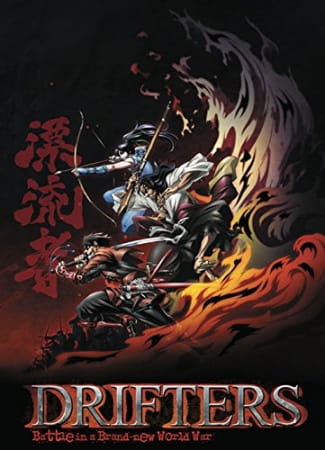
Drifters posts a 1.25-point gap between MyAnimeList's 7.88 and the Codex 6.63 because the crowd is grading Kouta Hirano's swagger and a Shimazu Toyohisa charge, not the mid-arc prologue Hoods Entertainment actually broadcast in 2016.
Drifters posts a 1.25-point gap between MyAnimeList's 7.88 and the Codex 6.63 because the crowd is grading Kouta Hirano's swagger and a Shimazu Toyohisa charge, not the mid-arc prologue Hoods Entertainment actually broadcast in 2016.
Drifters ends after the Battle of Carneades fortress and calls that a season. Twelve episodes in, the demihuman genocide is unresolved, the Black King is a silhouette with a grudge, and the Octobrist organization has delivered more exposition than payoff. The question of whether Drifters is overrated isn't a question about taste — it's a question about what a MyAnimeList 7.88 is measuring when the thing being measured is a prologue with a Hellsing pedigree.
The Consensus Is Grading a Vibe, Not a Season
The MyAnimeList crowd scores Drifters 7.88. The Codex weighted score is 6.63. The 1.25-point gap isn't a rounding error or a genre-weighting quirk — it's the difference between rewarding Kouta Hirano's authorial voice and rewarding what Hoods Entertainment actually put on screen between October and December 2016. The consensus treats Drifters as a spiritual continuation of Hellsing: same heavy-lidded character designs, same gallows humor, same swaggering nihilism, same monologues delivered with theatrical bloodlust. Grade that lineage and 7.88 makes sense. Grade the twelve-episode object, and it doesn't.
This is a recurring pattern the rubric keeps flagging. Hellsing Ultimate sits 1.49 below its MAL line for related reasons — the crowd rewards Alucard's silhouette and the Major's speech, not the ten-OVA structure three studios stitched together. Drifters inherits both the goodwill and the structural problem. The premise is loud; the delivery is incomplete.
The Story Score Is a Prologue Problem
Codex hands Drifters a 6.5 on story, and the reasoning is structural rather than conceptual. The premise — historical warriors yanked from their deathbeds into a fantasy proxy war, Drifters versus Ends, with a demihuman genocide as the underlying stakes — is one of the more inventive setups seinen action has offered this decade. Hirano knows how to frame a conflict. What he and series composer Hideyuki Kurata don't do, across these twelve episodes, is finish one.
The show ends mid-arc at Carneades. The larger war between Toyohisa's coalition and the Black King's Ends remains a matter of political positioning and prophecy. Olminu and the Octobrists deliver dense expository dumps about magic and history that would land as scene-setting in a 24-episode run and land as filler in a 12-episode one, because the payoff never arrives. The pacing lurches: an explosive Shimazu charge, then twenty minutes of magicians explaining bureaucracy, then another set-piece, then a hard stop. The manga's notoriously glacial serialization schedule at Young King Ours is the practical reason no second season materialized, but the rubric doesn't grade on excuses. It grades what shipped.
The Character Score Rides Two Men and Stops
Character earns a 6.8 — the highest non-worldbuilding mark on the sheet — and it earns it almost entirely on the backs of Toyohisa Shimazu and Nobunaga Oda. Toyohisa is a genuinely refreshing protagonist: an uncomplicated feudal battle-junkie whose Sekigahara-era ethics grind against every modern sensibility around him, generating both the show's comedy and its most honest violence. Nobunaga is better still — a gleeful strategist who treats nation-building as a strategy game, importing matchlock tactics and propaganda into a fantasy war with the enthusiasm of a man who finally got a second turn.
Beyond those two, the roster hardens into static archetypes. Yoichi Nasu no Suketaka is a design and a bow. The Ends are more thematically promising than dramatically developed — the Black King is a mystery box, Joan of Arc is a weeping pyromaniac whose trauma is stated more often than dramatized, and Gilles de Rais is a delivery mechanism for her rage. Twelve episodes is not enough runway for anyone to have an arc, and no one does. The crowd is grading the historical-figure roster as if the concept alone confers depth. The rubric grades whether they change on screen.
The Themes Score Is Where the Bombast Wins
Themes take the hardest hit — a 6.0 — because Hirano keeps setting up ideas his direction won't sit with. The Ends are humans broken by the cruelty of their original worlds, radicalized into nihilistic vengeance against a humanity that abandoned them. That is a real thematic move: it collapses the hero/villain binary and asks whether the Drifters, who are also victims of their historical deaths, are meaningfully different from the Ends beyond temperament. The demihuman persecution running through Orte Empire politics gives that question institutional weight. Joan's grief is genuinely painful in the moments the show lets it breathe.
But the show rarely does. Every time a thematic beat threatens to land, the direction cuts to a chibi comedy face or a Toyohisa decapitation gag. The tonal whiplash is a Hirano signature, and it works as texture. It does not work as emotional architecture. This is a familiar failure mode — Fire Force sits 1.04 below its MAL line partly because Ohkubo's mystery keeps deferring its own thematic stakes for the next sakuga cut. Drifters does the same thing with gallows humor.
The World Score Is Where the Show Actually Earns Its Reputation
Worldbuilding pulls a 7.5, the highest mark on the rubric, and this is where the crowd's enthusiasm is closest to defensible. The conceit of a fantasy world stocked with Hannibal, Scipio, Anastasia, Gilles de Rais, and Rasputin isn't just novelty — it's a coherent power system. Each historical figure imports period-accurate tactics as a de facto magic set. Yoichi's archery, Toyohisa's Shimazu cavalry doctrine, Nobunaga's matchlock discipline: these read as researched rather than costumed. The Orte Empire's anti-demihuman politics function as a real setting rather than a backdrop. Even the tantalizing loose ends — the white-hallway summoning corridor, Murasaki's bureaucratic role — feel like withheld information rather than absent information.
The animation score of 7.0 is honest work from Hoods Entertainment. Hirano's designs translate faithfully, the gore choreography has weight, and the abrupt cuts to flat comedy faces are timed with genuine craft. It is solid direction, not spectacular. The CG stiffness in crowd scenes is real and worth naming.
The Steelman: A Prologue Can Still Be Excellent
The strongest opposing case is that Drifters was never trying to be a complete narrative — it's a mood piece, a Hirano flex, an act one that trusts its manga to eventually finish the job. On those terms, the character work on Toyohisa and Nobunaga is genuinely superior to most seinen action peers, the worldbuilding does more in twelve episodes than most isekai manage in fifty, and Hoods Entertainment renders the source material with more fidelity than the property strictly deserved. Grade Drifters as an appetizer and 7.88 is defensible.
The rubric doesn't grade appetizers. It grades what a viewer receives when the credits roll on episode twelve. What they receive is an incomplete war, undeveloped villains, a thematic frame the direction refuses to inhabit, and two very good characters carrying a cast of static ones. The cultural score of 6.5 reflects exactly this: real recognition, real memes, real Hellsing lineage — and no genre-defining follow-through, because the manga hasn't delivered one and the anime never got a second cour to try.
Drifters is a good-looking prologue with two great characters and a worldbuilding conceit that deserved a finished show. The 6.63 is what happens when you grade the object instead of the promise, and the 1.25-point gap is the exact size of Hirano's reputation doing work his director couldn't finish.
Featured in the Codex


More from The Codex
The Seven Deadly Sins Is a 6.60 Wearing a 7.60 Costume: A One-Point Gap Earned by Groping Gags and Convenient Flashbacks
The Seven Deadly Sins scores 6.60 on the Codex against MyAnimeList's 7.60 because the crowd is grading a Netflix breakout and a Ban-and-King friendship, not the 24 episodes A-1 Pictures actually broadcast in 2014.
The 10.0 That Built a Sunday: How Sazae-san's Cultural Score Carries a 6.58 Scorecard
Sazae-san is a case study in how a single criterion — cultural — can define how a show is remembered, and the 10.0 the Codex hands Eiken's 1969 institution is doing every bit of the heavy lifting its other five scores refuse to.
The Sebastian Problem: Why Black Butler Sits 1.10 Below Its MAL Line and the Crowd Refuses to Notice
Black Butler (Kuroshitsuji) posts a 1.10-point gap between MyAnimeList's 7.65 and the Codex 6.55 because the crowd is grading Sebastian's silhouette and a Phantomhive aesthetic, not the anime-original finale A-1 Pictures actually shipped in 2009.
Discussion
Set a display name above to post.
Loading discussion…