Is One Punch Man Overrated? A 7.28 That Rides Madhouse Sakuga and a Meme Into Numbers the Story Won't Defend
One Punch Man posts a 1.19-point gap between MyAnimeList's 8.47 and the Codex 7.28 because the crowd is scoring a Boros episode and a cultural footprint, not the twelve-episode structure the rubric has to actually grade.
One Punch Man posts a 1.19-point gap between MyAnimeList's 8.47 and the Codex 7.28 because the crowd is scoring a Boros episode and a cultural footprint, not the twelve-episode structure the rubric has to actually grade.
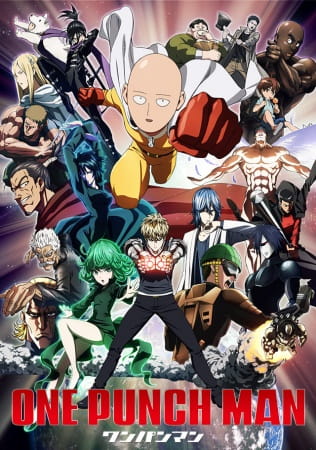
The Boros exchange in episode 12 is one of the best minutes of TV action animation Madhouse ever shipped, and it is doing more work than any twelve-episode series should reasonably ask of a single sequence. Strip that sequence away — strip Shingo Natsume's direction and Yuusuke Murata's monster designs away — and what you have is a genre-parody sketch stretched to season length, hanging on a static protagonist whose entire arc is the refusal to have one. That is a defensible artistic choice. It is not an 8.47.
The consensus and where it breaks
The MyAnimeList crowd scores One Punch Man 8.47. The Anime Codex weighted score is 7.28. That 1.19-point gap is the widest we've published on a show this culturally central, and asking whether One Punch Man is overrated is really asking which criteria the aggregate is over-weighting. The honest answer is two of them: animation and cultural impact. Both are legitimately elite here — 9.5 and 9.0 in the Codex rubric — and both are exactly the axes a crowd score is structurally biased toward. Spectacle is memorable. Memes are memorable. Story architecture and character interiority are not, especially when the show's premise is engineered to make the absence of interiority feel like the point.
The gap between One Punch Man's reputation and its rubric score is the story. Naming what the crowd is rewarding that the rubric won't is the whole exercise. So let's do it.
The story is a single build-up dressed as a season
Story lands at 7.0. The premise — a hero already past every stake shonen usually generates — is genuinely witty, and inverting the power-fantasy contract is the kind of structural move most action series don't attempt. Credit that. But the twelve-episode season is essentially one long ramp to the Boros fight, padded with villain-of-the-week sketches that exist to reset the joke rather than build toward anything. The Hero Association ranking subplot is the closest thing to a spine, and it's introduced late and barely developed by the finale. Compare this to how the rubric handles other shows whose crowd scores outrun their structure — the same pattern shows up in Blue Lock's Codex writeup, where a strong hook and an ideological sermon paper over a plot that doesn't actually move. One Punch Man is the higher-craft version of the same problem: the premise is genuinely smart, but a smart premise repeated for twelve episodes is still repetition.
The cast is one thesis, held at arm's length
Character scores 6.5, and this is where the rubric departs most visibly from crowd sentiment. Saitama is deliberately static. That flatness is the joke and the thematic instrument — treating his boredom as characterization rather than as a flaw is the sharpest writerly choice the show makes. Fine. But recognizing that a decision is intentional doesn't exempt it from being graded. The season commits to one note on its protagonist and never digs beneath it. Genos does most of the actual arc work, with his revenge quest and hero-worship providing the emotional through-line the show would otherwise lack. Mumen Rider and Speed-o'-Sound Sonic land as memorable silhouettes. Everyone else is a gag archetype with negligible interior life. A cast built almost entirely from parody vessels is doing exactly what parody demands and exactly what a 6.5 says: functional, occasionally inspired, thin.
Themes are sharp for the genre, shallow for the demographic
Themes score 7.5, the second-highest of the writing criteria, and this is where One Punch Man earns real credit. The satire of hero culture, celebrity, and post-achievement ennui is genuinely sharper than most action series will attempt. Mumen Rider's stand against the Deep Sea King is the season's clearest thesis statement — heroism as will rather than strength — and it works precisely because Saitama's presence in the frame makes the contrast legible. That episode is doing what the rest of the season only gestures at. But 7.5, not 9. The show is classified as seinen and it doesn't push its ideas anywhere near the interrogative depth that classification implies. It states a thesis about purpose after victory and lets the comedy pull it back before the meditation gets uncomfortable. Sharp for action television. Modest for the demographic it's competing in.
World-building is a bureaucratic joke, not a setting
World scores 6.5. The Hero Association ranking system and the Wolf-to-Dragon monster classification are clever pieces of scaffolding — they generate comedy, they give fights legible stakes, they satirize meritocracy without lecturing about it. What they don't do is build a coherent world. The setting is a generic-city canvas designed to be punched through, and the show's originality lives entirely in tone and premise rather than lore. This is not a failure in the way that, say, Magi's back-half worldbuilding collapse is a failure — One Punch Man never promises depth it doesn't deliver. But a crowd score of 8.47 is grading against shows that do build worlds, and this one didn't try.
The animation is doing work no other axis is asked to do
Animation at 9.5, cultural impact at 9.0. These are the numbers holding the weighted score above 7. Madhouse's production — Natsume's direction, Murata's design pedigree, Mahiro Maeda's key animation on episode 12, Yoshiaki Kawajiri storyboarding episodes 8 through 11 — is the season's defining strength. The Saitama–Genos versus Deep Sea King sequence and the Boros exchange are legitimate benchmarks for TV action animation of the decade. And the direction is smarter than the spectacle suggests: switching between exaggerated sakuga detail for serious fights and deliberately flat, deadpan gag-art for Saitama's own scenes is a visual joke that carries a thematic argument. Cultural impact is likewise real. Saitama's design and the one-punch concept crossed into mainstream recognition in a way almost no post-2010 anime has managed, and the overpowered-satire subgenre it popularized is now a durable category. Both scores are earned.
The steelman
The strongest defense of the crowd score is that the rubric is grading One Punch Man against criteria it was never trying to satisfy. Story tightness and character growth are exactly what the show is parodying. Judging Saitama's arc for its flatness is like judging a joke for its punchline being predictable — the predictability is the mechanism. On this reading, an 8.47 is honest recognition that One Punch Man executed its intended project at an elite level, and the rubric's 7.28 is a category error. This argument has force. It also has a limit: no rubric can grade a show only on the criteria the show volunteers for. Animation and cultural impact scored 9.5 and 9.0 precisely because the show did excel on axes it opted into. On story, character, and world, it opted out — and opting out is not the same as scoring high.
Verdict
One Punch Man is not overrated as a piece of animation or as a cultural object; on those axes the Codex agrees with the crowd. It is overrated as a total work, because the crowd is weighting spectacle and footprint against a rubric that also has to grade twelve episodes of narrative structure and a cast built to be thin. 7.28 is what happens when you refuse to let episode 12 pay for episodes 1 through 11.
Featured in the Codex

More from The Codex
The Seven Deadly Sins Is a 6.60 Wearing a 7.60 Costume: A One-Point Gap Earned by Groping Gags and Convenient Flashbacks
The Seven Deadly Sins scores 6.60 on the Codex against MyAnimeList's 7.60 because the crowd is grading a Netflix breakout and a Ban-and-King friendship, not the 24 episodes A-1 Pictures actually broadcast in 2014.
The 10.0 That Built a Sunday: How Sazae-san's Cultural Score Carries a 6.58 Scorecard
Sazae-san is a case study in how a single criterion — cultural — can define how a show is remembered, and the 10.0 the Codex hands Eiken's 1969 institution is doing every bit of the heavy lifting its other five scores refuse to.
The Sebastian Problem: Why Black Butler Sits 1.10 Below Its MAL Line and the Crowd Refuses to Notice
Black Butler (Kuroshitsuji) posts a 1.10-point gap between MyAnimeList's 7.65 and the Codex 6.55 because the crowd is grading Sebastian's silhouette and a Phantomhive aesthetic, not the anime-original finale A-1 Pictures actually shipped in 2009.
Discussion
Set a display name above to post.
Loading discussion…