Cyborg 009 Review: A 6.92 That Rides Ishinomori's Themes and a Cultural 8.0 Into Numbers the Middle Episodes Won't Actually Earn
Judged against one consistent rubric, the 2001 Cyborg 009 is best understood by which criteria carry it and which drag it down — not by the 7.39 MyAnimeList handed it.
Judged against one consistent rubric, the 2001 Cyborg 009 is best understood by which criteria carry it and which drag it down — not by the 7.39 MyAnimeList handed it.
The 2001 Cyborg 009 is a show whose ceiling and floor sit further apart than its final number suggests. Its themes are the most philosophically ambitious in Ishinomori's canon and its cultural footprint predates half the tokusatsu shelf, but the middle third of its fifty episodes is enemy-of-the-week machinery that would embarrass a lesser property. That contradiction is the whole review.
The Cyborg 009 Review the Consensus Won't Write
MyAnimeList lands this at 7.39. That's the number the crowd defends when a newcomer asks whether the Japan Vistec revival is worth fifty episodes of their life, and it's the number that gets cited when Ishinomori's name comes up next to Tezuka's in a lineage argument. The Codex has it at 6.92 — a 0.47-point gap that isn't a hit-piece delta but a real disagreement about what the show is being asked to do.
The consensus position, as far as it can be reconstructed without hand-waving at fan sentiment, treats Cyborg 009 as a package: pioneering premise plus late-arc metaphysics plus Joe Shimamura's acceleration mode, weighted by the affection owed to Shotaro Ishinomori as an institution. That reading is not wrong. It's incomplete. It grades the peaks and forgives the plateau. The rubric can't do that, and the plateau in this show is long enough — roughly the middle stretch of enemy-of-the-week Black Ghost skirmishes before the Mythos cyborgs arrive — that ignoring it means grading a different, shorter show.
Themes Are Doing More Work Than Any Other Criterion
The 7.5 on themes is the ceiling of this scorecard, and it's earned in specific places, not as a general vibe. Ishinomori's anti-arms-dealer material — the war-profiteering episodes, the treatment of 0010 and 0011 as tragic mirrors rather than fodder — carries a moral seriousness that most shonen of any era won't attempt. The recurring question of whether a cyborg is a weapon or a person is not just asserted; it's dramatized in Joe's reluctance, in Dr. Gilmore's paternal guilt over what he built, in Albert Heinrich's refusal to move past the woman he lost.
Then the show pushes further. The 'Battle with the Gods' arc and the final angel/demon material interrogate fate, free will, and the self-destructive impulse of a species that keeps rebuilding itself as its own executioner. That is genuinely rare territory for the demographic — the earnestness is the point — and the rubric rewards it. The caveat is honest: the late arcs preach more than they dramatize. Speeches substitute for choreography in the final stretch, and the show's philosophical reach outruns its ability to stage its own conclusions.
The Ensemble Is Nine Deep and Fifty Episodes Isn't Enough
Character lands at 6.5, and this is where the run-time math turns against the show. Joe Shimamura's reluctant-soldier conscience is the spine and it works. Jet Link's hotheadedness gives the group its internal friction. Albert Heinrich carries a stoic grief the adaptation actually respects. Dr. Gilmore is the show's guilt engine, and the writing understands that.
But nine cyborgs across fifty episodes means someone eats the deficit, and it's the same names every time: Chang, Great Britain, Pyunma get gimmick powers and little interior life. Growth is thematic — the collective learns what it means to refuse being a weapon — not arc-driven. Individual cyborgs do not change the way a modern shonen ensemble would demand. This is a structural problem the Japan Vistec adaptation inherited from the source and did not solve. Compare the way the rubric grades a smaller cast where every member gets real interior work, and the six-point-five reads as generous, not stingy. It's the same math problem Katekyo Hitman Reborn! runs into with its Guardian roster — ensembles priced by headcount collect gimmicks faster than they collect people.
The Story Structure Is Two Shows Stapled Together
The 6.8 on story is the honest number for a season that opens episodic and closes cosmic. The origin/Black Ghost arc is functional setup. The problem is the long middle: enemy-of-the-week Black Ghost operatives whose defeat resets the board rather than escalates it. This is 1960s manga structure faithfully transcribed for a 2001 broadcast, and fidelity to source doesn't buy you a pass on pacing.
Then the Mythos cyborgs arrive and the show becomes something else — an escalation into 'Battle with the Gods' and the angel/demon arcs that would look insane on any other shonen scorecard. The tonal jump is real and the ambition is real, but the ending is where the fidelity finally costs the adaptation. It's abrupt. It's ambiguous. It leans on a later OVA to resolve what the fifty-episode broadcast doesn't. For a newcomer arriving at this run cold, that's a genuine narrative failure — the show ends without ending, and the score reflects it.
Animation Is Competent, Not Landmark
The 6.8 on animation names what the Japan Vistec production is and refuses to inflate it. The character designs are faithful to Ishinomori's lineart, which matters — the cast reads as his work, not a redesign. Joe's acceleration-mode sequences are the most memorable visual signature and they're staged with real care in the surreal final arcs, where Souji Yoshikawa's storyboarding pushes into more expressionist territory than the middle episodes ever attempt.
Everywhere else, the production is modest. Action choreography is unspectacular. Animation quality fluctuates across fifty episodes in the way most weekly Toei-era veterans will recognize. Early-digital 2001 compositing has aged less gracefully than cel-era contemporaries — the flat digital finish that felt clean at broadcast now looks its age in a way a 1985 production of the same script wouldn't. This is a competent revival, not a landmark one, and the rubric refuses to grade it as the latter.
The Steelman: The 7.39 Is Grading a Legacy
The strongest version of the consensus case is this: the crowd isn't wrong, it's grading Ishinomori. Cyborg 009 predates and influenced enough team-cyborg and tokusatsu properties that the cultural weight is doing legitimate work in any honest score. The 8.0 on cultural impact concedes exactly this — the franchise's pioneering status is real, the influence on decades of Japanese superhero fiction is real, and refusing to acknowledge it would be its own dishonesty. The Codex has written before about shows whose cultural score reshapes an entire scorecard, and this is one of them.
The rubric departs from the crowd on a narrower point. Cultural weight is one criterion of six, not a multiplier over the others. The 2001 Japan Vistec production is a respectful revival of a foundational manga, not a landmark broadcast in its own right, and grading it as if the two are the same is what produces the 7.39. The Codex 6.92 keeps the cultural 8.0 intact and refuses to let it drag story, character, and animation upward with it — the same discipline the rubric applied when Dragon Ball's cultural footprint met 291 episodes of Toei padding.
Verdict
Cyborg 009 (2001) is a 6.92 because themes and cultural weight carry it and structure, ensemble depth, and animation quality drag it back. The 0.47-point gap with MyAnimeList isn't the crowd being wrong — it's the crowd grading Ishinomori's legacy as if the Japan Vistec adaptation earned it too, and the rubric refusing to.
Featured in the Codex
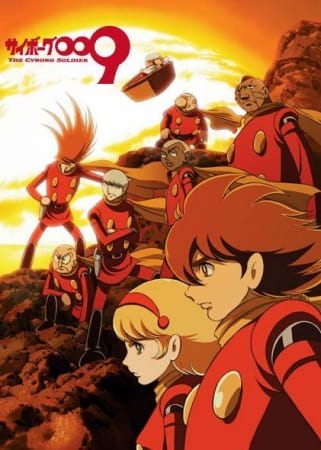



More from The Codex
The Seven Deadly Sins Is a 6.60 Wearing a 7.60 Costume: A One-Point Gap Earned by Groping Gags and Convenient Flashbacks
The Seven Deadly Sins scores 6.60 on the Codex against MyAnimeList's 7.60 because the crowd is grading a Netflix breakout and a Ban-and-King friendship, not the 24 episodes A-1 Pictures actually broadcast in 2014.
The 10.0 That Built a Sunday: How Sazae-san's Cultural Score Carries a 6.58 Scorecard
Sazae-san is a case study in how a single criterion — cultural — can define how a show is remembered, and the 10.0 the Codex hands Eiken's 1969 institution is doing every bit of the heavy lifting its other five scores refuse to.
The Sebastian Problem: Why Black Butler Sits 1.10 Below Its MAL Line and the Crowd Refuses to Notice
Black Butler (Kuroshitsuji) posts a 1.10-point gap between MyAnimeList's 7.65 and the Codex 6.55 because the crowd is grading Sebastian's silhouette and a Phantomhive aesthetic, not the anime-original finale A-1 Pictures actually shipped in 2009.
Discussion
Set a display name above to post.
Loading discussion…