The Best Anime of 2026, Ranked by the Codex Rubric: Ten Shows, One Scorecard
Year-end lists are usually recency-biased popularity polls. This one applies one consistent rubric to everything 2026 produced — and the top of the table isn't where the discourse thinks it is.
Year-end lists are usually recency-biased popularity polls. This one applies one consistent rubric to everything 2026 produced — and the top of the table isn't where the discourse thinks it is.
The best anime of 2026 was not a shonen tentpole, not a sequel, and not the show your timeline spent October arguing about. It was a witch drawing in a book. Two of them, actually — and the gap between the top of this list and the middle of it is measured in world-building and character interiority, not in trailer views.
What the Consensus Gets Wrong About 2026
Every December, the same ritual: aggregate MyAnimeList scores, cross-reference with seasonal engagement numbers, publish a top ten weighted toward whatever finished airing in October. The methodology is invisible because there isn't one. A show that ended two months ago beats a show that ended nine months ago because memory is short and voting is loud.
Anime Codex applies a six-criterion rubric — story, character, themes, world-building, animation, cultural impact — with per-genre weights, then publishes the resulting score. That is the entire editorial position: one consistent rubric applied to everything, the numbers do the ranking, the prose defends the numbers. It produces results that diverge from MAL in predictable ways. The crowd overweights recency and undervalues world-building. The rubric doesn't. Below, ten shows in Codex order, with the criteria that earned each placement.
The Top Tier: Two Shows That Cleared 8.4
Tongari Boushi no Atelier at 8.50 is the year's best anime by the rubric, and the number that decides it is the 9.2 on world-building. BUG FILMS took Kamome Shirahama's manga — a work whose page compositions are essentially architectural drawings of magic as a written craft — and produced a 13-episode seinen adaptation that treats the ateliers, the pointed hats, the ink-and-parchment grammar of spellwork as a coherent design system rather than decoration. Animation lands at 8.7, character at 8.6, and even the weakest criterion — cultural impact at 7.8 — is respectable for a first cour. MyAnimeList has it at 8.69. For once, the crowd and the rubric agree on the shape of the thing, if not the exact altitude.
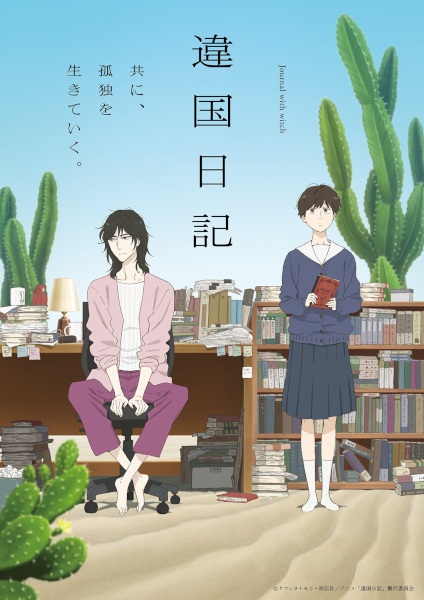
Journal with Witch at 8.46 is the inverse profile: a josei from Shuka that scores 9.0 on character and 8.7 on themes, and gives back ground on world (7.5) and cultural reach (6.5). The 13-episode run is closer to a chamber piece than a fantasy — the diary conceit forces almost every scene through a single interior voice, and the writing sustains that pressure across the full cour. MAL sits at 8.73, notably higher than the Codex number, and the gap is a demographic-weight artifact: the rubric taxes a show this narrow on world-building in a way the crowd doesn't. The show is still the second-best thing that aired this year. The tax is honest.
The 7.50–7.70 Band: Where Genre Ceiling Meets Execution
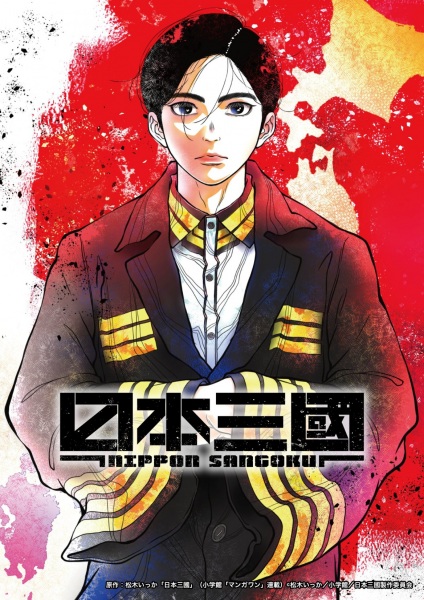
Nippon Sangoku at 7.68 is Studio Kafka's 12-episode seinen, MAL 8.51, and the Codex marks it down for the reason it always marks historical drama down: cultural impact scores 7.0 because the show is too new to have moved the needle yet. Story at 7.8 is the load-bearing beam. This is a show that will re-rate upward in three years or not at all.
Tamon's B-Side at 7.64 is J.C.Staff doing what J.C.Staff does — a 13-episode shoujo carried by a character score of 8.0 and a themes score of 7.8, with animation clocking a workmanlike 7.3. MAL 7.83. It's the kind of profile that reads familiar if you've spent time with the studio's josei character work: interior writing does the heavy lifting, production competence does not embarrass it.
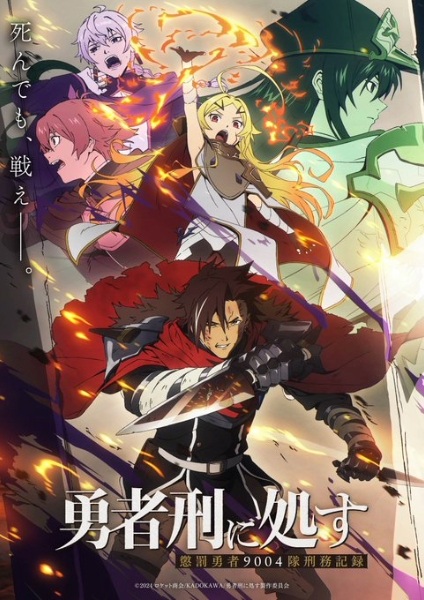
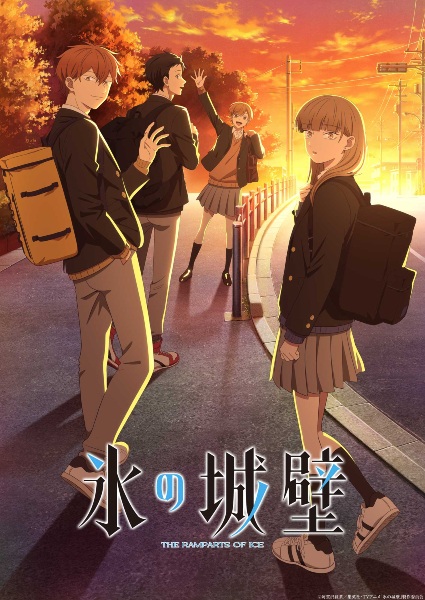
Sentenced to Be a Hero at 7.59 and The Ramparts of Ice at 7.55 are both Studio KAI productions, which is the most interesting studio fact of 2026 — two shows, two demographics (seinen and shoujo), and both land inside four hundredths of each other. Sentenced posts an 8.0 on world-building, which is what a deconstructive seinen premise needs to survive its own logline; MAL has it at 8.14. Ramparts is a shoujo whose story score of 7.2 is doing more work than the rubric usually asks of one criterion. MAL 7.98. KAI is quietly building a house style.
The 7.00–7.40 Band: Competent, Not Definitive
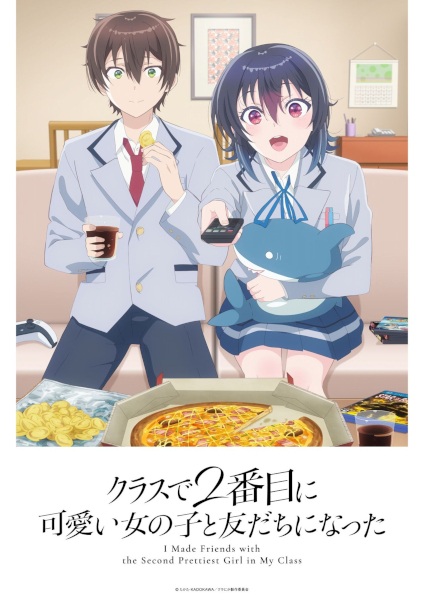
I Made Friends with the Second Prettiest Girl in My Class at 7.38 is Connect's 12-episode seinen, MAL 7.93. Character at 7.8 is the highest number on the card. The title is a thesis statement and the show honors it — the specificity of "second prettiest" is the entire dramatic engine, and the writing knows it.
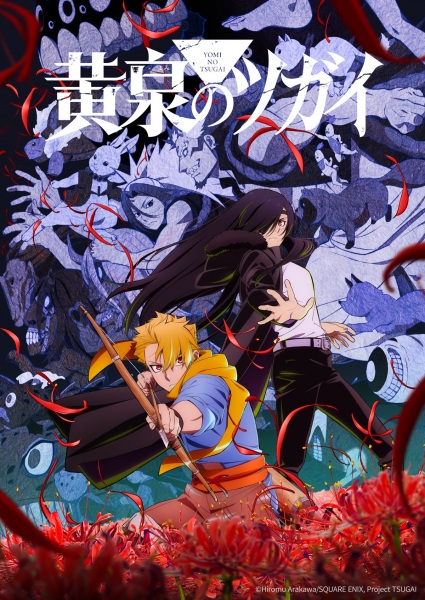
Daemons of the Shadow Realm at 7.35 is Bones Film's 24-episode shonen adaptation of Hiromu Arakawa, animation at 8.0, world at 7.6, character at a disappointing 7.0. MAL 7.93. Arakawa's ensemble writing usually clears 8.0 on character; this adaptation doesn't get there, and the shortfall is a directing problem, not a source problem.
MARRIAGETOXIN at 7.08 is the other Bones Film show on this list, a 13-episode shonen with animation at 7.4 and themes at 6.8. MAL 7.52. The premise — assassin forced to date — is doing more work than the execution, which is the polite way of saying the concept outperforms the cour.
You and I Are Polar Opposites at 6.93 is the show whose MAL-to-Codex gap is loudest: MyAnimeList 8.29, Codex 6.93, a delta of nearly 1.4 points. Lapin Track's 12-episode shonen romance posts a world-building score of 6.0, and the rubric will not forgive that. Character at 7.5 is genuine; the setting is a backdrop with no design behind it. The crowd is rating the ship. The rubric is rating the show.
The Counter-Argument: Popularity Is Signal, Not Noise
The strongest case against this list is that You and I Are Polar Opposites at 8.29 on MAL is telling us something real — that a hundred thousand viewers responded to a chemistry the rubric can't measure, and a scorecard that puts it dead last is missing the point of the medium. The steelman is fair. Chemistry is not a criterion, and it probably should be adjacent to one.
But the rubric's job isn't to predict what will trend. It's to describe what a show is made of. Popularity and quality correlate at r = 0.33 across the catalogue — real, but weak. If the numbers agreed with the crowd every time, publishing them would be pointless.
Verdict
2026 was a year defined by two studios most lists ignored — BUG FILMS and Shuka — producing the only two shows that cleared 8.4, and by Studio KAI quietly landing two productions inside four hundredths of each other in different demographics. Tongari Boushi no Atelier is the best anime of the year because world-building at 9.2 is the criterion this medium is worst at and it did it anyway. Everything else on the list is a variation on how far character writing can carry a production before the rubric asks the other five criteria to show up.
Featured in the Codex


More from The Codex
The Seven Deadly Sins Is a 6.60 Wearing a 7.60 Costume: A One-Point Gap Earned by Groping Gags and Convenient Flashbacks
The Seven Deadly Sins scores 6.60 on the Codex against MyAnimeList's 7.60 because the crowd is grading a Netflix breakout and a Ban-and-King friendship, not the 24 episodes A-1 Pictures actually broadcast in 2014.
The 10.0 That Built a Sunday: How Sazae-san's Cultural Score Carries a 6.58 Scorecard
Sazae-san is a case study in how a single criterion — cultural — can define how a show is remembered, and the 10.0 the Codex hands Eiken's 1969 institution is doing every bit of the heavy lifting its other five scores refuse to.
The Sebastian Problem: Why Black Butler Sits 1.10 Below Its MAL Line and the Crowd Refuses to Notice
Black Butler (Kuroshitsuji) posts a 1.10-point gap between MyAnimeList's 7.65 and the Codex 6.55 because the crowd is grading Sebastian's silhouette and a Phantomhive aesthetic, not the anime-original finale A-1 Pictures actually shipped in 2009.
Discussion
Set a display name above to post.
Loading discussion…