Anime Like Haikyuu!!: 5 the Rubric Says You'll Love, Ranked by Critical Proximity
Fans of Haikyuu!! respond to its strongest criteria — character, cultural weight, and the thesis that trust beats talent — and these five picks deliver the same qualities, ranked by how close their critical profile sits to it, not by vibes.
Fans of Haikyuu!! respond to its strongest criteria — character, cultural weight, and the thesis that trust beats talent — and these five picks deliver the same qualities, ranked by how close their critical profile sits to it, not by vibes.
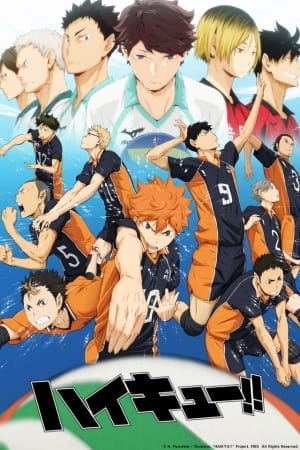
Haikyuu!!'s 8.27 on the Codex is not a mystery score. It's an 8.7 on character, a 9.0 on cultural impact, and an 8.5 on themes doing most of the load-bearing, with Production I.G's 8.3 animation clarifying the volleyball geometry enough that the rallies read as chess rather than choreography. The Hinata-Kageyama quick attack works as drama because the show earns the thesis it dramatizes: height doesn't matter without trust. Any recommendation for a Haikyuu!! fan that doesn't index on those specific criteria is a recommendation to a person who doesn't exist.
What the Consensus Gets Wrong About "Anime Like Haikyuu!!"
The standard recommendation carousel for anime like Haikyuu!! is a shape-matching exercise. Volleyball adjacent, sports adjacent, high-school adjacent — and the list gets generated. MyAnimeList's 8.43 on Haikyuu!! rewards the same feel-good ensemble energy the crowd rewards everywhere, and the ranking algorithms happily surface anything with a whistle in it. That's not analysis. That's tagging.
The Codex reads Haikyuu!! differently. Its story score sits at 8.0 — good, not great, because the underdog-ladder template is unoriginal even when executed with the discipline of the Seijoh loss. Its world score is 7.5, because volleyball-mechanical rigor is not the same as invented setting depth. What actually elevates the show is the character work — Asahi's fear-of-being-blocked arc paying off against Date Tech, Sugawara and Daichi's quiet senior leadership, Tsukishima's prickly detachment — and a cultural footprint that revived sports anime for a global audience. If you loved Haikyuu!!, the shows worth your time are the ones that hit those same criteria hard, in roughly that order of importance. Ranked by critical proximity, not tag overlap.
Slam Dunk (Codex 8.12): The Character-and-Culture Twin
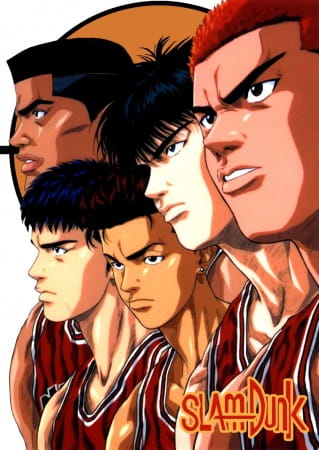
Toei Animation's 1993 basketball landmark is the closest critical sibling Haikyuu!! has, and the numbers make the case cleanly. Slam Dunk earns 9.5 on cultural impact and 9.0 on character against Haikyuu!!'s 9.0 and 8.7 — the same top-two criteria, tuned even higher. Sakuragi Hanamichi's arc from delinquent poser to genuinely obsessed rebounder is the ancestor of every ensemble sports drama Haikyuu!! belongs to, and Rukawa's rivalry-partnership with him is a rougher, hotter version of the Kageyama-Hinata engine.
Where the profile diverges is animation: Toei's 6.8 across 101 episodes is a hard cap, full of held frames and reused cuts that Production I.G would never let ship in 2014. If you can accept a production ceiling in exchange for a story and character engine that outclasses almost anything the genre has produced since, this is not a suggestion. It's the pick.
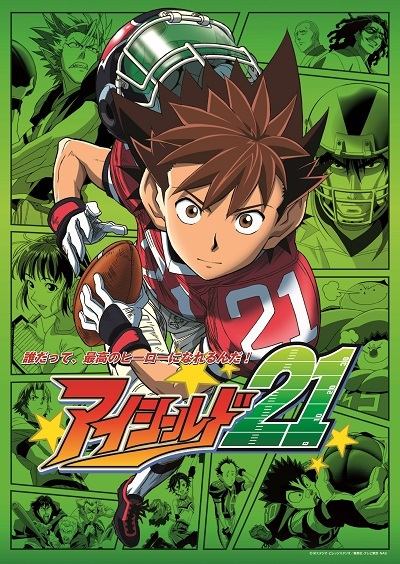
Eyeshield 21 (Codex 7.33): The Ensemble That Actually Earns Its Roster
Eyeshield 21 scores 8.0 on character and 7.5 on story — the closest match to Haikyuu!!'s ensemble discipline outside of Slam Dunk. Studio Gallop's 145-episode adaptation has time Haikyuu!!'s season one doesn't, and it uses that runway to develop the Deimon Devil Bats as a full roster rather than a protagonist and his supporting cast. Sena's speed-versus-strategy dynamic with Hiruma echoes the freak-quick partnership in structure — two incompatible temperaments forced to synchronize for a play that only works if both trust the other's read.
American football also gives it a world score of 7.5, matching Haikyuu!!'s. The rules-are-explained-without-condescension rigor is present. What it lacks is the cultural surge Haikyuu!! generated — the 7.33 overall reflects a show that did the ensemble work but never became a gateway title. For a Haikyuu!! fan who wants more of the ensemble specifically, this is where the rubric points.
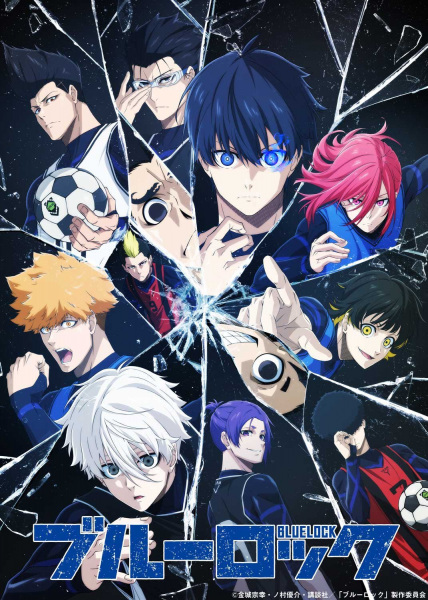
Blue Lock (Codex 7.48): The World-Building Counter-Thesis
Blue Lock is the most interesting recommendation on this list because it's an inversion. Haikyuu!! argues trust and connection make talent meaningful; Blue Lock argues ego is the only thing that makes a striker. 8bit's 2022 adaptation earns 8.0 on world — higher than Haikyuu!!'s 7.5 — because the Blue Lock facility itself is an invented premise, not a high-school gym. The elimination structure gives the show a genre-fluent world Haikyuu!! deliberately doesn't attempt.
Character sits at 7.8, story at 7.5, close enough to Haikyuu!!'s profile that the ensemble reading transfers. Animation caps at 6.5 — 8bit is not Production I.G, and the drop is visible in the match sequences — but the thematic argument between the two shows is the reason to watch. Haikyuu!! is about learning to swing blind because your setter has you. Blue Lock is about deciding you don't need a setter. Read them as a pair.
Kuroko's Basketball (Codex 7.13): The Production I.G Sibling
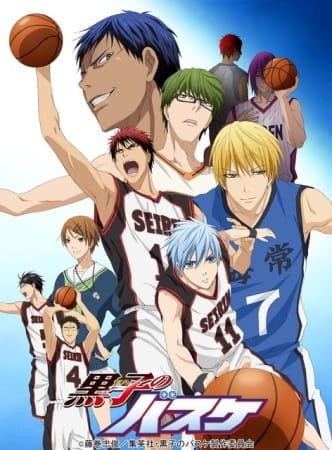
Same studio, same year window, adjacent genre — Kuroko's Basketball is the most obvious pick, and the Codex profile bears that out at 7.5 on animation and 7.5 on character. Production I.G's spatial clarity on the court, the slow-motion beats at decisive moments, the geometry of a pass that shouldn't work but does — the directorial vocabulary is shared. The Kuroko-Kagami partnership is a lighter, more stylized version of the freak-quick premise: the invisible playmaker and the frontcourt finisher who need each other to matter.
It scores lower overall because the story leans harder on the Generation of Miracles set-piece structure than on the Karasuno ladder discipline, and the themes stay closer to genre convention. But the criterion that matters for a Haikyuu!! recommendation — character partnership as engine — is present, and Production I.G's fingerprints make the transition frictionless.
Whistle! (Codex 6.50): The Underdog Template, Distilled
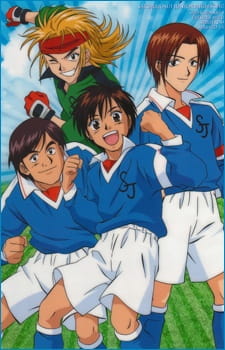
Whistle! is the deepest cut and the lowest-scored, and its inclusion is honest rather than generous. Studio Comet's 2002 soccer adaptation runs 39 episodes on the pure underdog-climbs-the-ladder template Haikyuu!! also uses — Shou Kazamatsuri is small, unremarkable, and out-worked by everyone until he isn't. The 6.0 on world reflects a show grounded in high-school realism without much premise ambition, and the overall 6.50 caps a modest production against modest storytelling.
What it delivers for a Haikyuu!! fan is the emotional grammar: earnestness, incremental improvement, teammates who see something before the protagonist does. It's a lesser show. It's also the closest tonal match on this list.
The Counter-Argument: These Aren't All Sports Anime Because Sports Anime Doesn't Matter
The obvious objection is that a Haikyuu!! recommendation list should be a sports anime list, full stop — that the sport is the point, and cross-genre picks miss what the fan actually wants. It's a real position. Haikyuu!! is a volleyball show; volleyball is not incidental to it.
The rubric disagrees, and here's why. The 9.0 cultural score isn't for volleyball — it's for how the show reframed sports anime as a global gateway, which is a criterion about form, not subject. The 8.7 on character isn't volleyball-specific either; Kageyama's arc would work in any competitive frame. If the criteria that make Haikyuu!! land are character partnership, ensemble discipline, and thematic clarity about trust, then the closest matches are the shows that hit those criteria hardest — and every recommendation here is a team sport. The rubric didn't need to reach.
Verdict
Slam Dunk is the pick if you want the same criteria tuned higher and can accept a 1993 production. Blue Lock is the pick if you want the thesis argued against. The other three are calibration — closer or further from Haikyuu!!'s scorecard, but all reading from the same rubric. Trust the numbers, not the tags.
Featured in the Codex
More from The Codex
The Seven Deadly Sins Is a 6.60 Wearing a 7.60 Costume: A One-Point Gap Earned by Groping Gags and Convenient Flashbacks
The Seven Deadly Sins scores 6.60 on the Codex against MyAnimeList's 7.60 because the crowd is grading a Netflix breakout and a Ban-and-King friendship, not the 24 episodes A-1 Pictures actually broadcast in 2014.
The 10.0 That Built a Sunday: How Sazae-san's Cultural Score Carries a 6.58 Scorecard
Sazae-san is a case study in how a single criterion — cultural — can define how a show is remembered, and the 10.0 the Codex hands Eiken's 1969 institution is doing every bit of the heavy lifting its other five scores refuse to.
The Sebastian Problem: Why Black Butler Sits 1.10 Below Its MAL Line and the Crowd Refuses to Notice
Black Butler (Kuroshitsuji) posts a 1.10-point gap between MyAnimeList's 7.65 and the Codex 6.55 because the crowd is grading Sebastian's silhouette and a Phantomhive aesthetic, not the anime-original finale A-1 Pictures actually shipped in 2009.
Discussion
Set a display name above to post.
Loading discussion…