The 6.70 That Bakes Under Its Own Reputation: Why Yakitate!! Japan Sits 1.21 Below the MAL Line
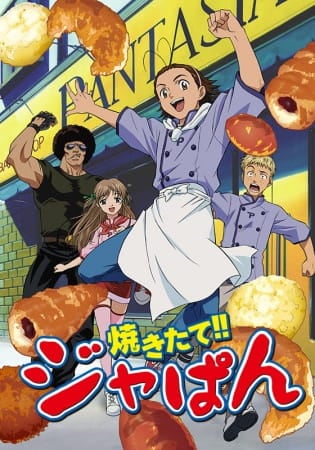
Yakitate!! Japan posts a 1.21-point gap between MyAnimeList's 7.91 and the Codex 6.70 because the crowd is grading a fermentation gag and a Kuroyanagi reaction shot, not the sixty-nine episodes Sunrise actually shipped between 2004 and 2006.
Yakitate!! Japan posts a 1.21-point gap between MyAnimeList's 7.91 and the Codex 6.70 because the crowd is grading a fermentation gag and a Kuroyanagi reaction shot, not the sixty-nine episodes Sunrise actually shipped between 2004 and 2006.
Kuroyanagi's face melts into a Moai statue, ascends to a bread-shaped heaven, and quotes a French pun on his way back down. This is the image people remember when they score Yakitate!! Japan. It is also, essentially, the entire critical case the show has been resting on for two decades — and the reason the rubric and the crowd cannot agree on what this thing actually is.
Is Yakitate!! Japan Overrated? The Crowd Grades a Highlight Reel
The MyAnimeList consensus lands at 7.91. The Anime Codex weighted score lands at 6.70. That 1.21-point gap is not a rounding error and it is not a matter of taste — it is the predictable outcome when a fanbase remembers a show by its four best gags and a rubric grades the sixty-nine-episode Sunrise broadcast that surrounds them. Takashi Hashiguchi's manga won the 49th Shogakukan Manga Award for shōnen in 2004, and the anime inherited that halo without inheriting the discipline of a shorter, tighter cut.
The question is not whether Yakitate!! Japan is enjoyable. It plainly is, in stretches. The question is what the 7.91 is actually rewarding, and whether those rewards survive contact with a criterion-by-criterion audit. They mostly don't. This is a familiar pattern on the site — KochiKame runs into the same 1.22-point wall when a beloved property gets graded on reputation instead of runtime, and Kekkaishi drops 0.87 points when the crowd remembers one arc and forgets the other forty.
The World-Building Carries a Weight It Was Never Meant to Carry
The strongest number on the Codex scorecard is the 8.0 for world. It is earned. A battle-shonen built on gluten development, fermentation temperature, and the actual comparative history of French, German, and English baking traditions is not a premise anyone else was writing in 2004. Azuma's "solar hands" are given a plausible internal logic — warm palms accelerate yeast activity — and the show mostly respects that logic during the Pantasia Newcomer Battle and the Monaco Cup, which is why those arcs still function as competitive drama and not just as setup for the next hallucination.
But an 8.0 on world does not rescue a scorecard by itself. It's a single leg holding up a table whose other five legs run between 6.0 and 7.0. When the crowd scores Yakitate!! Japan at 7.91, they are — consciously or not — treating the originality of the premise as a proxy for the execution of the show. The rubric does not permit that substitution. Originality is graded once, in the world column. It does not get to double-count as story, character, or theme.
The Story Score Falls Off a Cliff Called Yakitate!! 25
The Codex hands story a 7.0, and even that is generous to the back half. The Pantasia Newcomer Battle establishes the tournament grammar cleanly. The Monaco Cup escalates it — international stakes, real tension, Kai Suwabara's rolling-pin swordsmanship treated with a straight face long enough to matter. Katsuyuki Sumisawa's script credits across those early competitive stretches (episodes 1, 2, 9, 10, 14, 15, 19, 20, 27, 29) are the spine of the show's reputation.
Then the Yakitate!! 25 arc arrives and the series forgets what it is. A television-show-within-the-show premise that should have been a four-episode detour metastasizes into a self-parodying loop where the original "Ja-pan" quest — the entire thematic engine of the series — becomes background noise for gag escalation. Sixty-nine episodes is a long runway even for a well-plotted shonen. Yakitate!! Japan uses that runway to circle the airport. Sumisawa returns for the finale (episode 69), but by then the landing has been so long delayed that the arrival lands as relief, not resolution.
The MAL 7.91 is not grading episode 55. It is grading episode 15.
Azuma Doesn't Grow, and the Rubric Notices
Character sits at 6.5, and the ceiling is set by the protagonist. Azuma is warm, earnest, and functionally static from his first bake to his last. The solar hands are a gift, not an arc — he does not have to work for them, they do not fail him at a dramatically necessary moment, and his relationship to his own ambition never darkens or complicates. He is a delivery mechanism for bread puns and a moral center for other people's growth.
The supporting cast is where the character work actually happens. Kawachi's Gauntlet hands are earned rather than gifted, and his inferiority complex gives him the only sustained internal conflict the show is willing to commit to. Kuroyanagi's slow drift from imperious judge to comedic everyman is the most successful character arc in the series, and it happens almost entirely through reaction shots rather than dialogue — a genuinely clever piece of long-form character design. Kai Suwabara and the Yukino/St. Pierre corporate struggle add stakes to individual arcs but no rival ever develops past their function in the next contest. That is a rubric-legal weakness. It shows up in the number.
Sunrise Delivered Serviceable, Not Special
The animation score is 6.0, and it should not be higher. Sunrise routed the budget toward the elaborate tasting sequences — the Kuroyanagi hallucinations, the ascending-to-heaven cutaways, the surreal visual metaphors for flavor — and let the standard episode animation go flat. This was probably the correct triage. A show about a static activity needs its spectacle where the spectacle can happen. But it means that outside those set pieces, character art wobbles, cuts repeat, and the back stretch of a 69-episode run visibly strains against its budget. Taku Iwasaki's score does more heavy lifting than the key animation does, particularly in the Monaco Cup.
Compare this to what the crowd is remembering. When someone tells you Yakitate!! Japan is a great-looking show, they mean four minutes of Kuroyanagi. They do not mean the fill work in episode 47.
The Steelman: Comedy Anime Are Systematically Under-Rubric'd
The honest counter is that a six-criterion rubric weighted for shonen may be a poor instrument for a show whose primary genre tag on AniList is Comedy, not Shounen. Yakitate!! Japan is a gag machine first and a tournament shonen second, and a gag machine that lands its gags at the rate this one does — Kuroyanagi alone is a decade of comedic dividend — has a legitimate claim to being scored on hit-rate rather than on character arcs it never intended to write.
The rubric hears this argument and answers it with the cultural score of 6.5, which credits the show for founding the culinary-battle subgenre that Food Wars later industrialized and for making the exaggerated tasting reaction a permanent genre grammar. That is where comedy contribution is graded. It is not permitted to also erase the weak themes score (6.0), where the "national bread" concept keeps getting undercut by its own gags before it can resonate, or the character ceiling set by a static protagonist. A comedy defense explains the 6.5s. It does not close a 1.21-point gap.
Verdict
Yakitate!! Japan is a genuinely original premise, one great judge, and two strong arcs stretched across sixty-nine episodes that Sunrise could not consistently animate and Sumisawa could not consistently plot. The 7.91 is grading the highlight reel. The 6.70 is grading the show.
Featured in the Codex



More from The Codex
The Seven Deadly Sins Is a 6.60 Wearing a 7.60 Costume: A One-Point Gap Earned by Groping Gags and Convenient Flashbacks
The Seven Deadly Sins scores 6.60 on the Codex against MyAnimeList's 7.60 because the crowd is grading a Netflix breakout and a Ban-and-King friendship, not the 24 episodes A-1 Pictures actually broadcast in 2014.
The 10.0 That Built a Sunday: How Sazae-san's Cultural Score Carries a 6.58 Scorecard
Sazae-san is a case study in how a single criterion — cultural — can define how a show is remembered, and the 10.0 the Codex hands Eiken's 1969 institution is doing every bit of the heavy lifting its other five scores refuse to.
The Sebastian Problem: Why Black Butler Sits 1.10 Below Its MAL Line and the Crowd Refuses to Notice
Black Butler (Kuroshitsuji) posts a 1.10-point gap between MyAnimeList's 7.65 and the Codex 6.55 because the crowd is grading Sebastian's silhouette and a Phantomhive aesthetic, not the anime-original finale A-1 Pictures actually shipped in 2009.
Discussion
Set a display name above to post.
Loading discussion…