Tsue to Tsurugi no Wistoria at 6.71: Typical Shonen, Watchable, Never Great
Actas built a competent magic-academy show with surprisingly sharp fights and a sincere protagonist — and the rubric still can't pretend it escapes the shadow of every show it's quietly cribbing from.
Actas built a competent magic-academy show with surprisingly sharp fights and a sincere protagonist — and the rubric still can't pretend it escapes the shadow of every show it's quietly cribbing from.
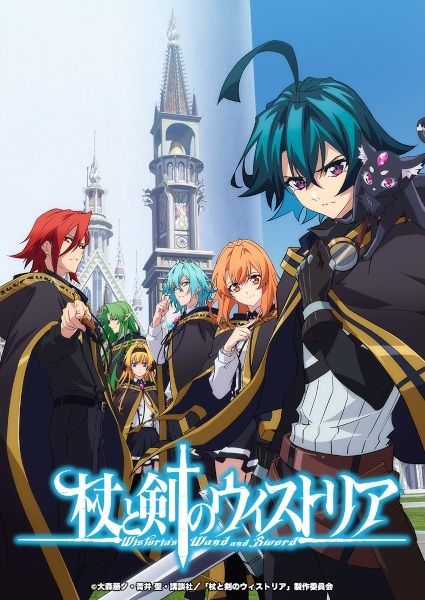
Tsue to Tsurugi no Wistoria is currently sitting at AniList trending rank 1, pulling 4.1k monthly Wikipedia pageviews, and generating five top-of-week Reddit threads as its second season airs in 2026 — and none of that changes the fact that the Codex landed it at 6.71, which is exactly where a show like this is supposed to land. Typical shonen. Good to watch. Will never reach greatness. The discourse has spent the last week pretending otherwise; the rubric has spent twelve episodes proving the point.
The Consensus Wants a Sleeper Hit. The Show Refuses to Be One.
AniList's community score of 79 is the giveaway. That's the universal number for "I had a nice time and I will not remember this in eighteen months." It's the score Mashle got. It's the score every magic-academy-underdog show gets when it competently executes a premise that was already exhausted by the time Black Clover hit episode 50. The Reddit threads this week are doing the predictable work of treating the Season 2 premiere as a vindication moment — finally the tower, finally the stakes — as if the first cour didn't end on twelve episodes of throat-clearing.
The Anime Codex position is unfashionable only because it's literal: this is a 6.71 show with a 7.5 in animation propping up a story score of 6.5 and a cultural score of 5.5. The numbers describe a show that is well-made, narratively unambitious, and already fading from the conversation it briefly entered in summer 2024. That isn't a takedown. It's a weather report.
The Premise Was Used Up Before Will Serfort Drew a Sword
A magicless boy in a magic academy. Fujino Ōmori — yes, that Ōmori, of DanMachi — writes the manga; Toshi Aoi illustrates it; Bessatsu Shōnen Magazine has serialized it since December 2020. The premise is so well-worn that the show's only structural option was to execute the beats more cleanly than its competitors, and to its credit, it does. Will's physical training as compensation for magical deficiency is rendered with more conviction than Mashle's gag-driven version of the same idea, and his duel with Julius in the early episodes is the kind of clean rivalry beat the genre has been doing well since the 1990s.
But the thematic engine — hard work overcomes innate talent — never gets interrogated. Will's physicality is, itself, an exceptional gift. The show notices this and then declines to do anything with it. My Hero Academia, for all its later structural problems, at least made Deku's situation a genuine ethical knot about inheritance and merit. Wistoria gestures at the tension and moves on, because moving on is what the format demands. Episodes 3 and 4, where Will defies the academy's gatekeeping, are the closest the show gets to actual argument, and they work — but they work the way a well-executed cover of a familiar song works.
The One Place the Show Outperforms Its Ceiling
Here is where the rubric tilts its head. Actas is not a studio anyone expected to deliver action. Their reputation is in mecha workhorse output, not character animation under pressure. And yet director Tamura Kouhei — working with monster and prop designer Ryou Akizuki across the first six episodes — gets genuinely strong fight choreography out of a co-production with Bandai Namco Pictures that, on paper, should look much worse than it does.
The crystallizing moment is exactly what the show's defenders keep pointing to: great action and fight scenes, great animation. The Will vs. Julius duel and the labyrinth boss encounter in episode 6 are the pivot of any honest evaluation of Wistoria, because they are the only sequences where the show stops being a competent assembly of genre parts and briefly becomes a thing worth watching for its own sake. Yuuki Hayashi's score does real work here too, the same kind of swelling orchestral heavy-lifting he brought to MHA.
The problem is that strong action animation has a known ceiling in the rubric. It's the criterion that lifts a show from 6.0 to 7.0. It does not lift a show into greatness. Demon Slayer has spent five years proving exactly this — that sakuga without a script underneath produces a show that's pleasurable, watchable, and structurally weightless. Wistoria has neither Ufotable's compositing budget nor Ufotable's manga to draw on, and the mid-season QUALITY dips in static dialogue scenes show the seams.
The Cast Is Doing the Minimum
Will Serfort is a likable protagonist. That's the whole sentence. Colette is the supportive girl. Sion is the rival aristocrat with a workshop subplot that exists primarily to give Will a non-combat venue. Elfie — the magical prodigy childhood friend whose promise is the entire engine of Will's motivation — is functionally absent across the twelve episodes, present as symbol rather than character. This is the central weakness the 6.8 character score is registering: the emotional throughline of the show is a girl we barely meet, and the show keeps cashing checks against a relationship it hasn't dramatized.
Compare this to the way even mid-tier shonen handle absent motivating figures. The genre has tools for this. Wistoria isn't using them. It's deferring them to a second season that, as of the 2026 premiere, the discourse is now asking to do the work the first cour declined to do.
The Worldbuilding Is Scaffolding, Not Architecture
The Magia Vander framework and the sealed Celestial Hosts mythology are the kind of proper-noun apparatus that suggest a deeper system without committing to one. Will's use of magical items as combat tools is genuinely clever — it distinguishes him from the standard "physical fighter in magic world" archetype by making his solutions resourceful rather than brute-force. But the magic system's rules remain vague, and the academy setting is Harry Potter-adjacent in the laziest sense: towers, houses, a hierarchy of instructors who exist to disapprove.
Hunter × Hunter set the bar for shonen worldbuilding by treating its systems as load-bearing. Wistoria treats its system as wallpaper. The tower itself — the actual narrative engine the show keeps promising — remains a distant silhouette across the entire first season. Season 2 may finally enter it. The rubric will grade that when it happens.
The Honest Case for the Defense
The strongest counter-argument is simply that not every show needs to reach for greatness, and that a 6.71 well-executed shonen with strong fights and a sincere protagonist is doing exactly what the genre asks of it. This is true. It's also why the score is 6.71 and not 5.5. The Codex isn't punishing Wistoria for being modest; it's refusing to inflate it for being competent. The trending rank 1 status is a function of Season 2 premiere week and the absence of stronger competition in its slot, not a referendum on lasting quality.
The 5.5 in cultural impact is the number that hurts most, and it's the most defensible. The show never broke into the seasonal conversation in 2024 the way Frieren did. It performed respectably on streaming and is already fading from active discourse outside the weekly thread cycle.
Tsue to Tsurugi no Wistoria is exactly what its rubric says it is: a watchable, well-animated, narratively familiar shonen that earns its 6.71 and will not move from it without a structural shift the second season has not yet demonstrated. Good to watch. Never great. The numbers were never going to lie about this one.
Featured in the Codex




More from The Codex
The Seven Deadly Sins Is a 6.60 Wearing a 7.60 Costume: A One-Point Gap Earned by Groping Gags and Convenient Flashbacks
The Seven Deadly Sins scores 6.60 on the Codex against MyAnimeList's 7.60 because the crowd is grading a Netflix breakout and a Ban-and-King friendship, not the 24 episodes A-1 Pictures actually broadcast in 2014.
The 10.0 That Built a Sunday: How Sazae-san's Cultural Score Carries a 6.58 Scorecard
Sazae-san is a case study in how a single criterion — cultural — can define how a show is remembered, and the 10.0 the Codex hands Eiken's 1969 institution is doing every bit of the heavy lifting its other five scores refuse to.
The Sebastian Problem: Why Black Butler Sits 1.10 Below Its MAL Line and the Crowd Refuses to Notice
Black Butler (Kuroshitsuji) posts a 1.10-point gap between MyAnimeList's 7.65 and the Codex 6.55 because the crowd is grading Sebastian's silhouette and a Phantomhive aesthetic, not the anime-original finale A-1 Pictures actually shipped in 2009.
Discussion
Set a display name above to post.
Loading discussion…