Anime Like Mob Psycho 100: 5 the Rubric Says You'll Love, Ranked by Critical Proximity
Fans of Mob Psycho 100 respond to its strongest criteria — 9.7 character work, 9.5 Bones animation, 9.2 themes — and these five picks deliver the same qualities, ranked by how close their critical profile sits to it, not by vibes.
Fans of Mob Psycho 100 respond to its strongest criteria — 9.7 character work, 9.5 Bones animation, 9.2 themes — and these five picks deliver the same qualities, ranked by how close their critical profile sits to it, not by vibes.
Mob Psycho 100 is not the best shonen of its decade because it has psychic powers. It is the best shonen of its decade because ONE wrote a protagonist whose central superpower is refusing to use his superpower, and Bones — through the direction of Yuzuru Tachikawa's team — animated that refusal in charcoal, paint-on-glass, and watercolor bursts that make interiority literally visible. The Codex has it at 9.05. Anyone hunting for anime like Mob Psycho 100 is really hunting for two things stacked on top of each other: a character rubric that treats a supporting cast as adults, and a thematic spine that dramatizes ethics instead of stating them.
What the Consensus Gets Wrong
The MyAnimeList aggregate lands Mob at 8.78 and calls it a day, filed next to One Punch Man as "the other ONE show." That framing flattens what makes the 2019 Bones cour — thirteen episodes, the Mogami arc, the Reigen mob episodes — the peak of the franchise. The Codex reads it differently: character at 9.7, animation at 9.5, themes at 9.2, story at 9.0. World-building sits lower at 7.8 because the psychic system is deliberately unsystematic, and cultural at 8.0 because the mainstream footprint never matched One Punch Man's meme velocity. Recommendations that only chase "psychic powers" or "underpowered protagonist" miss the point. The picks below are ranked by how close their critical profile sits to Mob's — character-forward, theme-serious, occasionally uneven in world or cultural weight — not by shared premise.
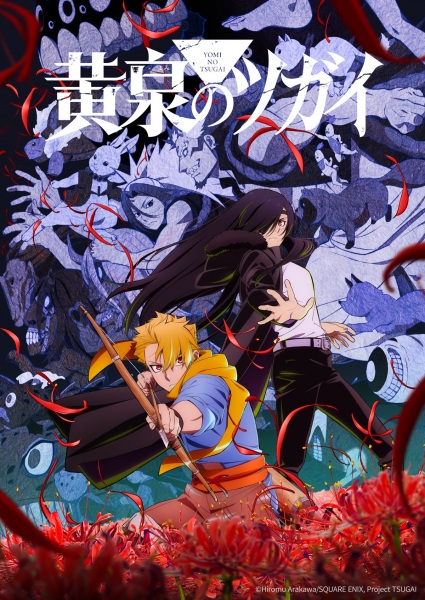
Daemons of the Shadow Realm — The Bones Film Inheritance
At Codex 7.35, Daemons of the Shadow Realm is the closest structural sibling on this list, and the reason is legible on the scorecard: animation at 8.0, world-building at 7.6, story at 7.4. It's a Bones Film production, 24 episodes, and it inherits the parent studio's willingness to let a sequence breathe into abstraction. It won't match Mob's 9.5 in animation — nothing on this list will — but it shares the criterion Mob leans hardest on when it wants to convert emotion into image. The character score is a more modest 7.0, which is where the gap opens: Mob's 9.7 is a Reigen-and-Mogami number, and this show doesn't have a Reigen. What it does have is a thematic seriousness in the 7.2 range that treats its premise as something to argue with rather than exploit. If Mob's animation-and-theme axis is what you responded to, start here. The Codex has broken this scorecard down in more detail in our full review.
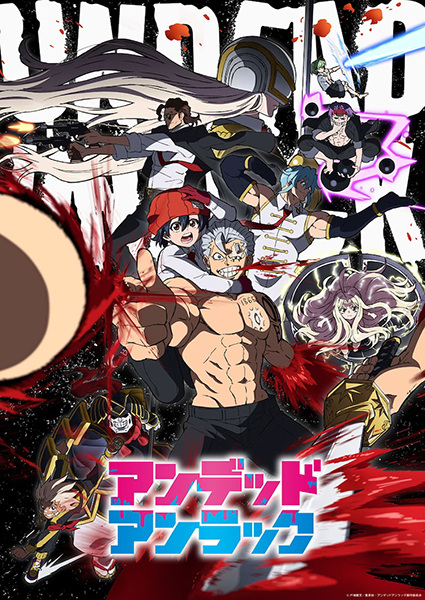
Undead Unluck — The Character-and-Theme Twin
Undead Unluck posts a Codex 7.64, and its scorecard is the most Mob-shaped of the five: character at 8.0, world at 8.3, animation at 7.8, themes at 7.5. David Production adapted 24 episodes of Yoshifumi Tozuka's manga in 2023, and the reason it belongs on this list is Fuuko Izumo. Her power — anyone who touches her dies from her Unluck — is functionally the inverse of Mob's, an emotion-linked ability she has to negotiate rather than deploy. That negotiation is the show's spine, and the 8.0 character number reflects it. The 7.5 themes score isn't Mob's 9.2 — few shonen touch that — but it's dramatizing power-as-curse in the same register ONE works in. World-building actually outperforms Mob here at 8.3 versus 7.8; the UMA hunt has more systematic scaffolding than Claw ever needed. Cultural sits at 6.0, and that's fair — the show's footprint is still narrow. But criterion-for-criterion, this is the closest match.
Assassination Classroom — The Mentor Arc, Extended
Assassination Classroom lands at Codex 7.53, and the specific criteria that pull it here are story at 7.5 and character at 8.0. Lerche's 22-episode 2015 adaptation is built around Koro-sensei — a mentor figure whose relationship to his students carries the entire dramatic weight of the premise. If the Reigen episodes were what hit hardest for you in Mob — the con man forced to earn back the trust of a student who already believed in him — then Yusei Matsui's structure is the extended-form version of that same argument. Koro-sensei is a mentor whose value is measured in what his students become, not what he can do himself. The animation criterion doesn't compete with Bones; Lerche is competent, not transcendent. But the character-and-story axis is where Mob does its heaviest lifting, and this is where Assassination Classroom pays out.
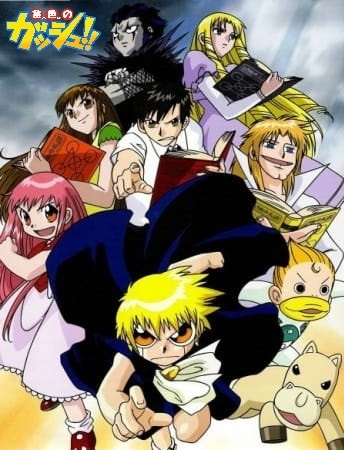
Konjiki no Gash Bell!! (Zatch Bell) — The Themes Number Nobody Talks About
Konjiki no Gash Bell!! posts Codex 7.48, and the criterion to notice is themes at 8.5 — the highest thematic score on this list, higher than Undead Unluck's 7.5 or Daemons' 7.2. Toei Animation's 150-episode 2003 adaptation of Makoto Raiku's manga is doing something Mob fans should recognize: a shonen that argues, seriously and repeatedly, that kindness is a discipline. Character sits at 8.0, story at 7.5. Animation is the weak point at 6.5 — this is Toei in 2003, and the seams show — and cultural is 6.0 in the West despite the manga's Shogakukan Manga Award pedigree. But if you loved Mob because ONE dramatized ethics rather than lectured on them, Gash Bell is the closest thematic cousin here. It is longer, older, and rougher-looking than anything else on the list. It is also the only pick whose themes score approaches Mob's 9.2.
Beelzebub — The Loosest Fit, and Why It's Still Here
Beelzebub is the outlier at Codex 6.20, with story at 6.2 and character at 6.8. Pierrot Plus produced 60 episodes in 2011, and structurally it has almost none of Mob's virtues — the animation isn't experimental, the themes aren't philosophically loaded, and the world-building is a delinquent-school gag engine. It's on this list because Tatsumi Oga's dynamic with Baby Beel operates in the same emotional register as Mob's with his brother Ritsu and, occasionally, with Dimple: a protagonist forced into responsibility for something smaller than him. If that specific beat carried you through Mob's quieter episodes, Beelzebub delivers it at length. The Codex is honest about the ceiling — 6.20 is a shonen middle-tier number and no amount of comic charm will drag it higher.
The Counter-Argument
The obvious objection: none of these clear 8.0 on the Codex, and Mob is a 9.05. Recommending a 6.20 to a viewer whose baseline is 9.05 looks indefensible. It would be, if the rubric graded a single number. It doesn't. Mob's 9.05 is a character-and-animation number carried by Bones and by two specific arcs in a single 2019 cour. Every recommendation here matches Mob on at least one criterion it genuinely leans on — animation for Daemons, character-and-world for Undead Unluck, mentor-structure for Assassination Classroom, themes for Zatch Bell, small-companion dynamic for Beelzebub. A show can share one Mob strength without inheriting all of them, and the ranking reflects proximity, not equivalence.
The five picks descend by how many Mob criteria they hit, not by absolute Codex score. Undead Unluck's 7.64 outranks Zatch Bell's 7.48, but Zatch Bell's 8.5 themes score is the closest single-criterion match to Mob's 9.2 anywhere on this list. Pick the one whose scorecard mirrors the reason you loved the parent show. That's what the rubric is for.
Featured in the Codex


More from The Codex
The Seven Deadly Sins Is a 6.60 Wearing a 7.60 Costume: A One-Point Gap Earned by Groping Gags and Convenient Flashbacks
The Seven Deadly Sins scores 6.60 on the Codex against MyAnimeList's 7.60 because the crowd is grading a Netflix breakout and a Ban-and-King friendship, not the 24 episodes A-1 Pictures actually broadcast in 2014.
The 10.0 That Built a Sunday: How Sazae-san's Cultural Score Carries a 6.58 Scorecard
Sazae-san is a case study in how a single criterion — cultural — can define how a show is remembered, and the 10.0 the Codex hands Eiken's 1969 institution is doing every bit of the heavy lifting its other five scores refuse to.
The Sebastian Problem: Why Black Butler Sits 1.10 Below Its MAL Line and the Crowd Refuses to Notice
Black Butler (Kuroshitsuji) posts a 1.10-point gap between MyAnimeList's 7.65 and the Codex 6.55 because the crowd is grading Sebastian's silhouette and a Phantomhive aesthetic, not the anime-original finale A-1 Pictures actually shipped in 2009.
Discussion
Set a display name above to post.
Loading discussion…