Is The Kindaichi Case Files Overrated? A 7.10 That Rides Locked Rooms and Detective Pedigree Into Numbers the 148-Episode Run Won't Defend
The Kindaichi Case Files posts a 0.95-point gap between MyAnimeList's 8.05 and the Codex 7.10 because the crowd is grading a fair-play formula and a genre legacy, not the static lead and Toei's late-90s corner-cutting the rubric has to actually watch.
The Kindaichi Case Files posts a 0.95-point gap between MyAnimeList's 8.05 and the Codex 7.10 because the crowd is grading a fair-play formula and a genre legacy, not the static lead and Toei's late-90s corner-cutting the rubric has to actually watch.
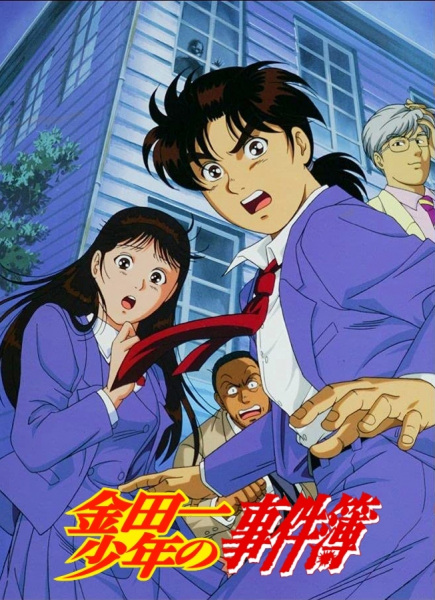
The question of whether The Kindaichi Case Files is overrated resolves the moment you stop grading the idea of a shonen detective series and start grading the 148 episodes Toei Animation shipped between 1997 and 2000. MyAnimeList lands it at 8.05. The Codex weighted rubric lands it at 7.10. That 0.95-point gap is not noise — it is the story, and it is the argument this post makes: name what the crowd is rewarding that the rubric won't.
What the 8.05 Is Actually Grading
The consensus position is easy to state. Kindaichi Shounen no Jikenbo is one of the earliest works in mystery manga, a Weekly Shonen Magazine institution serialized from 1992 to 2017 across 76 tankōbon, and the show that legitimized the whodunit inside a genre otherwise built on tournaments and power creep. The 8.05 is grading that footprint. It is also grading the format itself — fair-play mysteries where the clues really are on the page before Hajime does his reconstruction, closed-circle set-pieces on cursed islands and in snowbound mansions, and the recurring shadow of the Puppeteer from Hell (Jigoku no Kairaishi) providing serialized tissue over an episodic spine.
The Codex doesn't dispute any of that. Cultural impact scores an 8.0 in the rubric, and story scores 8.0 as well — the highest marks on the card. What the crowd score is quietly not doing is holding the show accountable for the two criteria where a 148-episode Toei production from 1997 has nowhere to hide: character work and animation. This is the same structural pattern that dragged Saint Seiya's numbers down once the Sanctuary arc stopped being the only thing on the scorecard, and the same one that ate into Naruto's rubric when the filler and the finale had to be counted alongside the Pain arc.
The Character Score Is a 6.5 for a Reason
Hajime Kindaichi is a likable protagonist and a static one. His entire identity is inherited — grandson of the fictional Kosuke Kindaichi, catchphrase "jiichan no na ni kakete" delivered at every accusation scene — and across 148 episodes he does not change. He is a delivery mechanism for solutions, not a person the show is interested in developing. Miyuki Nanase, positioned as the co-lead in the synopsis, functions as reaction shot and occasional hostage rather than a partner with her own arc. Inspector Kenmochi provides adult-in-the-room texture. Kengo Akechi provides a rival silhouette. None of them grow.
What actually carries the character rubric to a 6.5 rather than lower is the writing on the culprits. The one-off killers are where Shin Kibayashi's original story and Michiko Yokote's scripts do the real work — grief-driven motives, revenge for institutional injustice, the sympathetic framing of murderers whose "why" is more affecting than their "how." This is the show's genuine achievement and the reason the themes score lands at 7.0. But it is a per-arc achievement. Nothing accumulates. The recurring cast is fixed, and a crowd score that rewards Hajime's charm as if it were characterization is grading a mascot, not a character.
Toei's 1997 TV Production Cannot Carry a 6.0
The animation criterion scores 6.0, and honestly that is generous for a Toei TV production running 148 episodes on late-90s budgets. Limited animation is baseline. The reconstruction sequences — the visual grammar the show depends on to make locked rooms legible — are functional and often reused. Character designs are the modest, rounded shonen mold of the era. What direction earns is atmosphere in the accusation set-pieces: fog, shadow, the held beat before Hajime names the killer. That craft is real. It is also not enough to sustain 148 episodes of visual interest, and by the time you have watched the third snowbound mansion establishing pan you are watching a template, not a production.
This is where the crowd score is quietly generous. An 8.05 implies visual competence the show simply does not deliver. Compare it against the animation-forward middle-tier where Bones or Madhouse titles live, and Toei's Kindaichi is playing a different game — one where mood direction has to substitute for movement. The comparison the crowd number invites, Kindaichi against its stylistic descendants, is the comparison the rubric refuses to fake.
The World Is a Rotating Stage Set
World-building lands at 7.5, and it earns that number on premise originality — the detective-inheritance conceit, the Puppeteer-from-Hell antagonist framework, and the closed-circle logic of the isolated locations. The cursed islands, the opera houses, the hot-spring inns: these are internally consistent and they enforce the fair-play contract the mystery genre requires.
But the trade-off is repetition, and 148 episodes expose it. The remote-location-with-a-grudge template runs so often that by the back half of the show the world stops feeling like a coherent Japan and starts feeling like a stock of rotating stages Toei rented out per arc. The Puppeteer subplot papers over some of this, and standout arcs — the Kit Hotel murders, the Opera House case — are elaborate enough to justify the template on their own terms. But the aggregate is a setting that recycles because the format demands a new closed circle every three or four episodes, and originality of premise cannot indefinitely absorb that arithmetic.
The Counter-Argument: Cultural Weight Is Real
The strongest defense of the 8.05 is that Kindaichi is genuinely foundational. It preceded and shaped the explosion of Detective Conan. It legitimized whodunit fiction inside Weekly Shonen Magazine. Its fair-play template and recurring-antagonist structure became a genre grammar that everything from Case Closed to modern mystery light-novel adaptations still runs on. Twenty-five years of live-action dramas, films, sequels, and a 2014 anime continuation attest to a footprint the rubric already acknowledges at 8.0.
The Codex agrees with all of that. It just refuses to let one criterion overwrite the other five. The same structural mistake sinks a lot of legacy-property crowd scores — a show is remembered for what it built, and the memory quietly launders the parts that no longer play. Kindaichi's cultural pillar is real. The animation ceiling and the static protagonist are also real. A rubric that weights all six criteria will always score lower than a fandom score that lets the cultural pillar do the work for everything else, which is exactly the pattern the School Rumble gap exposes in a comedy register.
Verdict
The Kindaichi Case Files is not bad — it is the show that taught the genre how to plant a clue, and the 7.10 credits that honestly on story and cultural weight. It is also a Toei TV production from 1997 with a static lead, functional animation, and a template it wears out over 148 episodes, and the 8.05 pretends none of that is on the tape. The gap is what the crowd forgives. The rubric doesn't.
Featured in the Codex



More from The Codex
The Seven Deadly Sins Is a 6.60 Wearing a 7.60 Costume: A One-Point Gap Earned by Groping Gags and Convenient Flashbacks
The Seven Deadly Sins scores 6.60 on the Codex against MyAnimeList's 7.60 because the crowd is grading a Netflix breakout and a Ban-and-King friendship, not the 24 episodes A-1 Pictures actually broadcast in 2014.
The 10.0 That Built a Sunday: How Sazae-san's Cultural Score Carries a 6.58 Scorecard
Sazae-san is a case study in how a single criterion — cultural — can define how a show is remembered, and the 10.0 the Codex hands Eiken's 1969 institution is doing every bit of the heavy lifting its other five scores refuse to.
The Sebastian Problem: Why Black Butler Sits 1.10 Below Its MAL Line and the Crowd Refuses to Notice
Black Butler (Kuroshitsuji) posts a 1.10-point gap between MyAnimeList's 7.65 and the Codex 6.55 because the crowd is grading Sebastian's silhouette and a Phantomhive aesthetic, not the anime-original finale A-1 Pictures actually shipped in 2009.
Discussion
Set a display name above to post.
Loading discussion…