Is Saint Seiya Overrated? A 7.11 That Rides the 12 Houses and a Constellation Aesthetic Into Numbers the Other 90 Episodes Won't Support
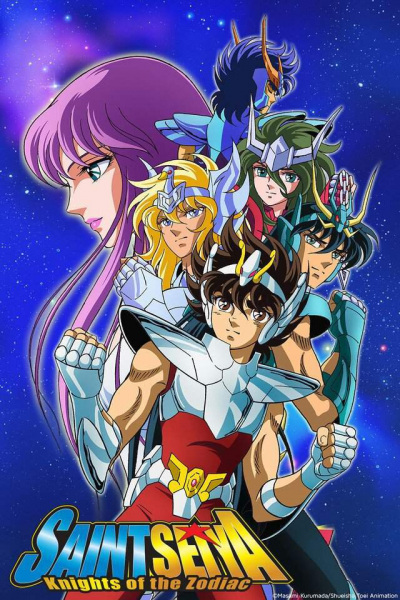
Saint Seiya posts a 0.67-point gap between MyAnimeList's 7.78 and the Codex 7.11 because the crowd is grading the Sanctuary arc and a merchandise legacy, not the 114-episode structure Toei Animation actually delivered.
Saint Seiya posts a 0.67-point gap between MyAnimeList's 7.78 and the Codex 7.11 because the crowd is grading the Sanctuary arc and a merchandise legacy, not the 114-episode structure Toei Animation actually delivered.
Say the name Saint Seiya to anyone raised on Toei's late-1980s output and they will tell you about the 12 Houses. They will not tell you about the Galaxian Wars tournament, the Black Saints, or the anime-original Asgard detour that pads the run between Sanctuary and Poseidon. That selective memory is the entire ratings gap in one sentence.
The consensus is grading a highlight reel
MyAnimeList's 7.78 is not an unreasonable number for a show whose peak is genuinely peak. It is an unreasonable number for a 114-episode series whose middle and back thirds visibly recycle the template that made its peak work. The gap between Saint Seiya's reputation and its rubric score is the story. Name what the crowd is rewarding that the rubric won't: a mythos, an aesthetic, a merchandise line, and roughly thirty episodes of the Sanctuary arc doing what nothing else in the run comes close to matching.
The Codex 7.11 reads the entire show. That is not a hostile posture — it is what a rubric applied evenly across a broadcast is supposed to do. Same posture we've taken with Naruto's filler problem and the way One Punch Man's Boros episode carries a scorecard the twelve-episode structure can't defend. Saint Seiya is a subtler version of the same distortion: fewer sins per episode, but far more episodes to commit them across.
The story score punishes what the crowd forgives
Story lands at 6.8, and it lands there for a specific reason. The Sanctuary arc's ascent through each Gold Saint's temple is legitimately one of the best-paced escalations in 1980s shonen — a race-against-time gauntlet with a ticking clock, a rotating cast of themed opponents, and a Pope whose identity provides the series' one genuinely powerful narrative reveal. That arc alone would score in the mid-eights.
What surrounds it will not. The Galaxian Wars opening is formulaic tournament scaffolding. The Black Saints arc is a mirror-match filler bridge. Then, once Sanctuary resolves and Kurumada's manga has not yet caught up, Toei improvises the Asgard arc — an anime-original detour that reruns the same "climb the tiered stronghold, defeat themed guardians one at a time" schematic Sanctuary already perfected. Poseidon, when it finally arrives, does the same thing again with underwater dressing. Yoshiyuki Suga's series composition holds the template together, but repetition of a structure is not the same as mastery of it. By the third climb-and-defeat cycle, the format is exposing itself.
The crowd remembers the 12 Houses. The rubric has to count the other eighty-plus episodes.
The Gold Saints are carrying protagonists who barely change
Character sits at 6.5, and that number is where the rubric gets most openly ungenerous with the show's reputation. The five Bronze Saints — Seiya, Shun, Hyoga, Shiryu, Ikki — are legibly designed. Seiya is stubborn. Shun is pacifist. Ikki is a lone wolf who arrives when the plot needs him. These are silhouettes, and they remain silhouettes for 114 episodes.
Growth in Saint Seiya is measured in Cosmo output, not in interior change. Seiya at episode 100 believes what Seiya at episode 20 believed, only louder and with more damage to his armor. The show substitutes backstory flashbacks — the orphan brotherhood, Shiryu's training under his master at Rozan — for the ongoing arc development that actual character work requires. Flashback is not development. It is retroactive filling.
What actually elevates the character score is that the Gold Saints, present for maybe a dozen episodes each, outshine the leads they're meant to obstruct. Gemini Saga's tragic duality is the most interesting psychological beat in the run. The dying Cancer and Aquarius confrontations inside the 12 Houses carry more weight in twenty minutes than Seiya carries across the series. When your antagonists' walk-on appearances outperform your protagonists' entire arcs, that is a diagnosis.
Themes and world are where the show earns its keep
Themes hit 7.0 and world hits 8.0, and both scores are honest. Brotherhood and self-sacrifice run through the fights with genuine stakes — Shiryu's willingness to sacrifice his sight, the recurring image of Bronze Saints burning their Cosmo past mortal limits to reach the seventh sense. When Saint Seiya commits to its emotional register, it earns the pathos. The recurring last-second revival undercuts that weight more often than the show can afford, but the thematic spine holds.
World is the strongest non-cultural score for a reason. Masami Kurumada's Cloth-and-Cosmo system is genuinely original for 1986 — armors keyed to the 88 constellations, a Bronze/Silver/Gold hierarchy with real internal logic, the Greco-mythological pantheon reframed as a martial order under Athena. This is the mythos that echoes through everything from later magical-boy armor tropes to modern gacha-game class systems. The Asgard arc dilutes the tightness of the mythos by grafting Norse iconography onto a Greek foundation, but the core framework survives it.
The animation score is where nostalgia lies to itself
Animation at 7.2 is generous, and it is generous specifically because of Shingo Araki and Michi Himeno's character design work and the Cloth designs themselves. The light-streaked Cosmo effects during the Sanctuary arc did in fact establish a visual language later battle anime spent decades quoting.
The actual moving image is another matter. This is 1980s Toei weekly production at its most economical — recycled attack cuts, freeze-frame budget saves, still panels held past the point of stylistic choice and into the point of pure cost-cutting. When Seiya launches Pegasus Ryu Sei Ken for the hundredth time, the animation is not new. When Hyoga freezes an opponent, the cel work is often identical to the previous freeze. The peaks are real; the floor is where the score gets pulled down.
The strongest defense: cultural weight is doing real work
The steelman is straightforward. Cultural impact lands at 9.0, and that number is not inflation. Saint Seiya is a foundational pillar of 1980s shonen with a footprint across Europe and Latin America that dwarfs its Japanese reception in raw cultural persistence — Les Chevaliers du Zodiaque in France, Los Caballeros del Zodiaco across Spanish-speaking markets, decades of Myth Cloth figures still moving units in 2024. If your rubric weights cultural impact heavily enough, 7.78 starts to look defensible.
The Codex weighting does not. Shonen scoring here treats story and character as load-bearing criteria, not as courtesy checks against the mythos and the merchandise. The Lupin III Part 1 review works through the same tension from a different angle — a 9.0 cultural score does not automatically drag the composite into the eights when the writing beneath it is uneven. Saint Seiya's 9.0 lifts the composite meaningfully. It does not lift it to where the crowd sits.
Verdict
Saint Seiya at 7.11 is a show whose peak is legitimately elite and whose average is ordinary, remembered by the peak and priced by the average. The 12 Houses, the Gemini Saga reveal, and Kurumada's constellation mythos are the reasons the score isn't lower. The Asgard padding, the plateau-locked protagonists, and Toei's recycled cel economy are the reasons it isn't higher. The crowd is grading a memory. The rubric is grading a broadcast.
Featured in the Codex






More from The Codex
The Seven Deadly Sins Is a 6.60 Wearing a 7.60 Costume: A One-Point Gap Earned by Groping Gags and Convenient Flashbacks
The Seven Deadly Sins scores 6.60 on the Codex against MyAnimeList's 7.60 because the crowd is grading a Netflix breakout and a Ban-and-King friendship, not the 24 episodes A-1 Pictures actually broadcast in 2014.
The 10.0 That Built a Sunday: How Sazae-san's Cultural Score Carries a 6.58 Scorecard
Sazae-san is a case study in how a single criterion — cultural — can define how a show is remembered, and the 10.0 the Codex hands Eiken's 1969 institution is doing every bit of the heavy lifting its other five scores refuse to.
The Sebastian Problem: Why Black Butler Sits 1.10 Below Its MAL Line and the Crowd Refuses to Notice
Black Butler (Kuroshitsuji) posts a 1.10-point gap between MyAnimeList's 7.65 and the Codex 6.55 because the crowd is grading Sebastian's silhouette and a Phantomhive aesthetic, not the anime-original finale A-1 Pictures actually shipped in 2009.
Discussion
Set a display name above to post.
Loading discussion…