The 8.5 That Made Zatch Bell Unforgettable: How One Themes Score Rewrote a 7.48 Scorecard
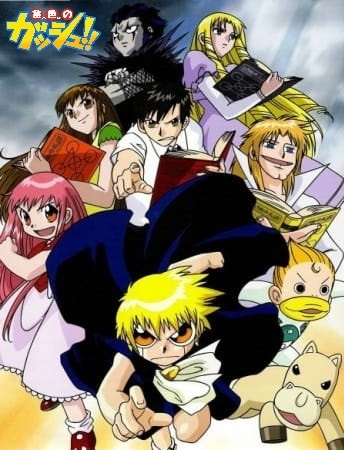
Konjiki no Gash Bell!! is a case study in how a single criterion — themes — can define how a show is remembered, and the burned-spellbook farewells are the reason a modest Toei production still holds a room.
Konjiki no Gash Bell!! is a case study in how a single criterion — themes — can define how a show is remembered, and the burned-spellbook farewells are the reason a modest Toei production still holds a room.
Every anime that outlives its production values does it on one axis, and for Konjiki no Gash Bell!! (Zatch Bell) themes are that axis — an 8.5 sitting a full point and a half above the animation floor, doing the work of memory while the rest of the scorecard shuffles along at Toei-in-2003 speeds. The Anime Codex overall lands at 7.48. The themes number is what keeps the show speaking twenty years later.
The Consensus, and Where It Misreads the Show
The MyAnimeList crowd scores it 7.58 — a number that reads Zatch Bell as a solid mid-tier shonen from the Shonen Sunday golden era, filed next to a hundred other 150-episode Toei productions with recycled cut-ins and a bright color palette. That's not wrong, exactly. It's just flat. The 7.58 registers general affection without isolating what's actually being remembered, and the Codex 7.48 is close enough in aggregate to look like agreement while disagreeing sharply on where the value lives.
Because the value doesn't live in the animation (6.5), and it doesn't live in the cultural footprint (6.0), and it doesn't live in a demon world that stays a rumor until the back end of a 150-episode run (world 7.0). It lives in a themes score of 8.5 anchored by two things: a moral thesis the show refuses to hedge on, and a structural mechanic — the burned spellbook — that turns every farewell into permanence. That's the argument. Everything else is context.
Konjiki no Gash Bell!! (Zatch Bell) Themes: Kindness Treated as a Weapon, Not a Mood
"Kindness is strength" is the kind of line a lesser shonen would deliver as a bumper sticker and then undercut two episodes later with a power-of-friendship escalation that has nothing to do with kindness at all. Konjiki no Gash Bell!! doesn't do this. The show routes the thesis directly through its magic system: Baou Zakeruga, the ultimate spell in Gash's arsenal, is not accessible through rage or trauma or a training arc — it's accessible through Kiyomaro's commitment to a specific ethical goal, Gash's promise to be a kind king. The mechanic and the moral are the same object. That's not a common design choice in mid-2000s shonen; the closer parallel is how Assassination Classroom welds its pedagogy thesis to its plot engine rather than treating theme as decoration.
And the show tests the thesis. Zeon exists for exactly this reason. Gash's twin, raised in resentment of Gash's supposedly privileged birth, is the show's structural argument that the moral proposition has to survive contact with someone who rejects it on principle — not a generic villain, but a mirror. The Zeon confrontation isn't just a rivalry payoff; it's the show asking whether kindness holds up when the person weaponizing cruelty has legitimate grievance behind it. The answer is yes, but the question is real, and that's what a themes 8.5 buys you.
The Burned Book: A Structural Choice That Does More Work Than the Animation
The rubric flags the burned-book rule as unusually weighty for its era, and the reason is mechanical rather than sentimental. When a mamodo loses, the book burns, the mamodo returns to the demon world, and — crucially for the show's emotional grammar — the human partner forgets nothing. The loss is fixed. There is no reset. Kolulu's early departure lands because the book is burned and stays burned. Wonrei and Li-en's parting lands because the show has spent dozens of episodes building a bond that the rule will not allow to continue. This is the same structural discipline that lets a story arc feel earned instead of extended, and it's rarer than it looks: contemporaries were still using resurrection as a first-draft solution.
The story score of 7.5 acknowledges this while docking for the mid-run sag — the repetitive find-the-next-book-owner beats before the Faudo arc pulls the show back into shape. Fair. But the burned-book rule is what makes the sag survivable, because even a middling episode-of-the-week fight ends with something a battle royale usually refuses to grant: consequence. The rule is a themes-delivery device disguised as a plot mechanic.
Sherry and Koko: The Show's Best Argument, and It's Not About Gash
The Brago–Sherry pairing is where the themes score stops being a claim and becomes evidence. Sherry's arc is grounded in her bond with Koko, a friend corrupted by Zofis's manipulation of resurrected ancient mamodo, and her partnership with Brago — the show's most ruthless, gravity-wielding rival — is the vehicle for a rescue mission the show treats with total moral seriousness. This is the character 8.0 doing its job, but it's also where themes and character braid. Sherry isn't kind in the Gash sense; Brago isn't kind in any sense. The show still routes them through the same thesis, and it works because the writing refuses to treat kindness as a personality trait. It's a choice you make about who you fight for.
This is where Zatch Bell separates from its era's default. The Sherry–Koko backstory is the darker counterweight the rubric credits — the reason the friendship-and-courage register doesn't collapse into saccharine. Compare the way JoJo's Stardust Crusaders posts a themes 6.5 and gets remembered as a meme reel despite better animation: the axis matters more than the aggregate.
The Steelman: Is 8.5 Enough to Carry 6.5 Animation Across 150 Episodes?
The strongest opposing case is a runtime argument. 150 episodes is a lot of Toei-2003 production compromise — still frames, recycled spell cut-ins, limited motion in every fight that isn't Clear Note or Zeon. The animation 6.5 isn't a slander; it's an accurate reading of a show that saves its budget for two or three set pieces and rides the score and the voice performances the rest of the way. If you're grading visual craft, Zatch Bell has a ceiling, and the ceiling shows.
The rubric's answer is that themes and character carry longitudinal shonen better than animation does — the same reason Yawara! survives 124 episodes on a protagonist worth watching rather than sakuga. Zatch Bell's 8.5 on themes is doing exactly this work: it's the reason viewers who couldn't tell you what happened in episode 74 can still describe Kolulu's farewell in specific detail. Memory follows meaning, not motion.
The 7.48 is honest. The 8.5 inside it is the reason anyone still cares. Konjiki no Gash Bell!! is remembered because it took kindness seriously enough to build a magic system around it and burned the book every time it lost a friend.
Featured in the Codex

More from The Codex
The Seven Deadly Sins Is a 6.60 Wearing a 7.60 Costume: A One-Point Gap Earned by Groping Gags and Convenient Flashbacks
The Seven Deadly Sins scores 6.60 on the Codex against MyAnimeList's 7.60 because the crowd is grading a Netflix breakout and a Ban-and-King friendship, not the 24 episodes A-1 Pictures actually broadcast in 2014.
The 10.0 That Built a Sunday: How Sazae-san's Cultural Score Carries a 6.58 Scorecard
Sazae-san is a case study in how a single criterion — cultural — can define how a show is remembered, and the 10.0 the Codex hands Eiken's 1969 institution is doing every bit of the heavy lifting its other five scores refuse to.
The Sebastian Problem: Why Black Butler Sits 1.10 Below Its MAL Line and the Crowd Refuses to Notice
Black Butler (Kuroshitsuji) posts a 1.10-point gap between MyAnimeList's 7.65 and the Codex 6.55 because the crowd is grading Sebastian's silhouette and a Phantomhive aesthetic, not the anime-original finale A-1 Pictures actually shipped in 2009.
Discussion
Set a display name above to post.
Loading discussion…