The 9.5 That Built Chibi Maruko-chan: How a Single Cultural Score Carries a 7.51 Scorecard
Nippon Animation's 1990 adaptation is a case study in how one criterion — cultural — can rewrite the memory of a show whose other five scores sit politely in the middle.
Nippon Animation's 1990 adaptation is a case study in how one criterion — cultural — can rewrite the memory of a show whose other five scores sit politely in the middle.
Chibi Maruko-chan scores 9.5 on cultural weight and nothing else on its rubric card touches an 8.1. That is not an accident of measurement — that is the show's entire load-bearing wall. Every other criterion sits comfortable and unremarkable in the 6.5-to-8.0 band, which is exactly what a 142-episode kodomomuke slice-of-life ought to score, and yet the show is remembered like a canon text because 'Odoru Pompokorin' won the Japan Record Award and because Sunday-evening households treat Maruko the way they treat Sazae-san — as furniture that talks back.
The Chibi Maruko-chan Cultural Case, Against the MyAnimeList 7.71
The MyAnimeList crowd scores it 7.71, which is a number that says almost nothing about the show and quite a lot about the demographic doing the scoring. Global anime databases are populated by viewers who came to the medium through late-night seinen and mid-2000s shonen, not through Fuji TV's Sunday 6pm block in 1990. What that 7.71 captures is a foreigner's polite shrug at a domestic institution: the animation is flat, the plots are small, the humor is often untranslatable, and the nostalgia is for a Shizuoka childhood in 1974 that a MAL user in São Paulo or Munich cannot access. The Codex score of 7.51 lands slightly under the crowd — a rare inversion — because the rubric refuses to inflate the criteria the crowd is quietly grading in aggregate (charm, comfort, longevity) and instead forces each of the six axes to stand on its own. The result is a show whose real greatness lives almost entirely in one column.
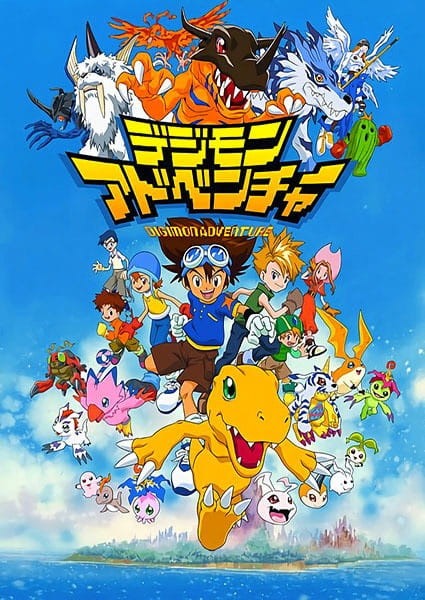
This is a familiar Codex pattern. It's the same shape that made Digimon Adventure's 9.0 cultural score carry a 7.60 scorecard — a workmanlike production whose footprint on a generation outsized every technical merit it could claim. Maruko-chan runs the same play, only from a Japanese domestic angle rather than a global one, and the play works because the footprint is genuinely that large.
What the 9.5 Is Actually Measuring
The cultural criterion is not a popularity metric. It measures the depth to which a show has embedded itself in the language, iconography, and viewing rituals of its home audience, and by that measure Maruko-chan is close to unmatched inside its demographic. The 1990 Nippon Animation broadcast turned Sakura Momoko's autobiographical Ribon strips into a Sunday-evening ritual that has now outlasted the Showa era, the bubble economy, and multiple generations of children who watched it, aged into parents, and put their own children in front of it. 'Odoru Pompokorin' — the second ending, which took the Japan Record Award — is not a good anime song remembered by fans; it is a song that Japanese elementary schools teach and karaoke machines default to. The vertical gloom-lines that streak down Maruko's face when she is embarrassed or defeated are not a signature gag inside the fandom; they are a shorthand that has migrated into other manga, other anime, and everyday text messaging.
None of that is animation quality. None of that is narrative ambition. It is cultural saturation, and it is the one axis where the show is legitimately world-class.
The Rest of the Card, In Its Actual Register
Around that 9.5, the scorecard is honest about what the show is. Story lands at 7.0 because the format is by design low-tension — a forgotten homework assignment, the anxiety of a school health checkup, the arithmetic of otoshidama, a missed Momoe Yamaguchi broadcast — and vignettes that resolve in a gag or a shrug cap what the criterion can reward. Character comes in higher at 7.8, and rightly so: Maruko herself is a lazy, scheming, procrastinating protagonist rather than the idealized good child that kodomomuke usually installs at its center, and the ensemble around her — Tama-chan's loyalty, Hanawa-kun's oblivious wealth, the Maruo/Migiwa class-rep rivalry, and Grandpa Tomozo's indulgence set against a household that has stopped indulging him — is differentiated with real craft.
Themes at 7.5 accepts that the show's central proposition — that the small textures of Showa-era family life are worthy of sustained attention — is delivered sincerely and with a faint melancholy, particularly in the Grandpa Tomozo material and the seasonal-passage episodes, but rarely pushes into anything uncomfortable. World-building at 8.0 is where the show quietly overperforms: the Shimizu, Shizuoka setting of 1974 is rendered with a consistency that most slice-of-life shows do not bother with, from the Sakura household's layout to the neighborhood shops to the specifics of Momoe Yamaguchi fandom and period manga culture. And animation at 6.5 is exactly what it should be — flat, rounded, warm, deliberately unambitious in frame-to-frame terms, distinguished only by comedic timing and the pastel color palette. Masaaki Yuasa's key-animation credits on opening and ending sequences are the one production footnote that reads like a sakuga-forum bookmark, and they belong to the openings, not the show.
Whether The 9.5 Is Enough
Here is where the celebratory register has to hold the line: yes. It is enough. But not enough to make the show a technical achievement — enough to make it a text worth taking seriously, which is a different claim.
A show that scores 7.0 on story and 6.5 on animation and 9.5 on cultural is a show that will outlive better-animated, better-plotted contemporaries because it did the one thing the industry cannot manufacture at will — it became load-bearing to a national viewing habit. Nippon Animation's 1990 broadcast is not a candidate for a best-directed-episode conversation. It is a candidate for a most-consequential-domestic-anime-of-its-decade conversation, and it wins that one against a very short list.
The Strongest Case Against
The steelman: cultural weight is a lagging indicator, not a merit criterion. A show can be culturally embedded because of scheduling luck, network placement, and generational inertia — Sunday-evening comfort viewing rewards the incumbent, not the excellent. By this reading, the 9.5 is measuring Fuji TV's slot decision in 1990 and Sakura Momoko's Ribon readership more than any editorial achievement of the anime itself, and a 7.51 that leans on that column is a scorecard propped up by a variable the show did not control. It's the same complaint that Trigun's silhouette-and-Toonami-slot reputation invites — cultural memory rewarding placement more than craft.
The rubric's answer is that placement without substance does not survive 142 episodes on a top-rated timeslot. Sazae-san is the only comparable fixture, and Sazae-san is a lesser show on character and world. What Maruko-chan did with the slot — sustain a lazy, flawed, autobiographical protagonist across three decades of viewership — is the merit. The 9.5 measures the outcome; the 7.8 and 8.0 explain why the outcome held.
The scorecard is 7.51. The show is a national institution. Both of those facts are true, and the rubric is the reason you can hold them at once.
Featured in the Codex


More from The Codex
The Seven Deadly Sins Is a 6.60 Wearing a 7.60 Costume: A One-Point Gap Earned by Groping Gags and Convenient Flashbacks
The Seven Deadly Sins scores 6.60 on the Codex against MyAnimeList's 7.60 because the crowd is grading a Netflix breakout and a Ban-and-King friendship, not the 24 episodes A-1 Pictures actually broadcast in 2014.
The 10.0 That Built a Sunday: How Sazae-san's Cultural Score Carries a 6.58 Scorecard
Sazae-san is a case study in how a single criterion — cultural — can define how a show is remembered, and the 10.0 the Codex hands Eiken's 1969 institution is doing every bit of the heavy lifting its other five scores refuse to.
The Sebastian Problem: Why Black Butler Sits 1.10 Below Its MAL Line and the Crowd Refuses to Notice
Black Butler (Kuroshitsuji) posts a 1.10-point gap between MyAnimeList's 7.65 and the Codex 6.55 because the crowd is grading Sebastian's silhouette and a Phantomhive aesthetic, not the anime-original finale A-1 Pictures actually shipped in 2009.
Discussion
Set a display name above to post.
Loading discussion…