The Best Anime of 2022, Ranked by the Codex Rubric: Five Shows, One Scoring System, No Recency Bias
Year-end lists are usually recency-biased popularity polls. This one applies one consistent rubric to everything 2022 produced — story, character, themes, world, animation, cultural impact — and lets the numbers settle the order.
Year-end lists are usually recency-biased popularity polls. This one applies one consistent rubric to everything 2022 produced — story, character, themes, world, animation, cultural impact — and lets the numbers settle the order.
2022 was the year MAPPA stopped pretending it had infrastructure and Wit Studio quietly produced the most polished comedy of the decade. Neither show ended up where the discourse predicted. The Codex top five for the year reflects that gap between what aired loudest and what actually held up against six criteria weighted by genre.
What 2022 Actually Was
The consensus story of 2022 is a MAPPA story. Chainsaw Man dominated pre-release coverage for eighteen months and then underperformed expectations on Twitter the moment it aired, which a certain strand of discourse treated as a failure of the adaptation rather than a failure of the audience's frame. Spy × Family did the inverse — it was supposed to be a charming side dish and instead became the year's mainstream crossover hit. Blue Lock arrived as the post-Haikyuu sports show and built its own constituency. Urusei Yatsura returned as a David Production legacy project nobody asked for and few rewarded. Tomodachi Game came and went.
MyAnimeList settled the year roughly the way you'd expect: Chainsaw Man at 8.43, Spy × Family right behind at 8.42, Blue Lock at 8.11, Tomodachi Game at 7.71, Urusei Yatsura at 7.43. Read those numbers as a popularity poll filtered through completion bias and you get the standard rankings every aggregator publishes. The Codex rubric — explained in our methodology piece — produces a different order, because story and character carry weight that hype cannot fake and animation budget cannot patch.
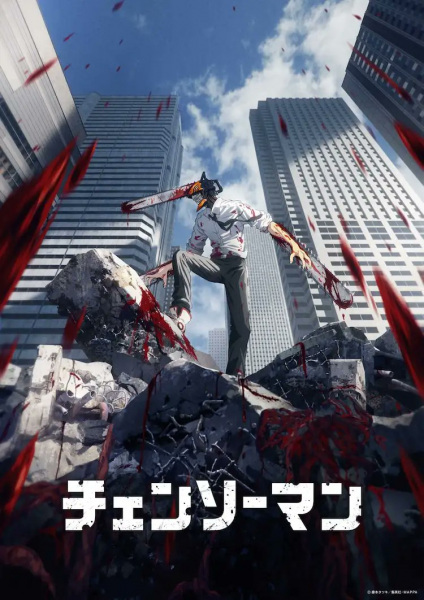
1. Chainsaw Man — Codex 7.90
MAPPA's adaptation lands at 7.90, the highest 2022 score in the catalogue, and it gets there on character (8.0) and cultural impact (8.5) rather than on the criterion the studio leaned on hardest. Story scores 7.5, which is the rubric's polite way of noting that the Bomb Girl arc is the only sustained narrative payoff the twelve episodes deliver, and that the show ends mid-sentence in a way that depends entirely on a Season 2 the studio is now visibly struggling to deliver.
What earns the placement is Denji. Fujimoto wrote one of the few shonen protagonists this decade whose desires are legible, embarrassing, and dramatically productive — bread, a girlfriend, a hand on a chest — and Ryu Nakayama's direction respects that the character is the show. Aki and Power do work the manga's first volumes barely sketch. The cultural footprint, regardless of whether you found the rotoscoped sakuga overcorrected or evocative, reshaped the conversation about what a MAPPA flagship looks like. That this places Chainsaw Man below Codex shows it shares a studio with — see how Jujutsu Kaisen's writing-vs-spectacle problem reads under the same rubric — is itself the point.
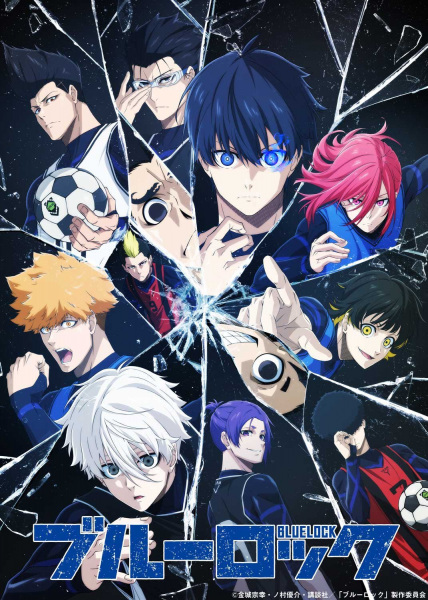
2. Blue Lock — Codex 7.48
8bit's adaptation scores 7.48, and the criterion breakdown is the most internally argumentative on this list:
- story 7.5
- character 7.8
- themes 7.0
- world 8.0
- animation 6.5
World-building at 8.0 is the load-bearing wall. Kaneshiro and Nomura built a closed-system ego incubator with rules tight enough to function as actual strategy rather than sports-anime gesture, and the Second Selection bracket structure rewards that rigor. Character at 7.8 belongs almost entirely to Isagi's selfishness curve and Bachira's monster — Rin and Nagi are sketches the second cour begins to color in. Animation at 6.5 is the honest grade: 8bit's CG football sequences are functional, occasionally ugly, and never approach what Production I.G did for Haikyuu. The show ranks here because the underlying design survives the production ceiling, not because the production meets the design.
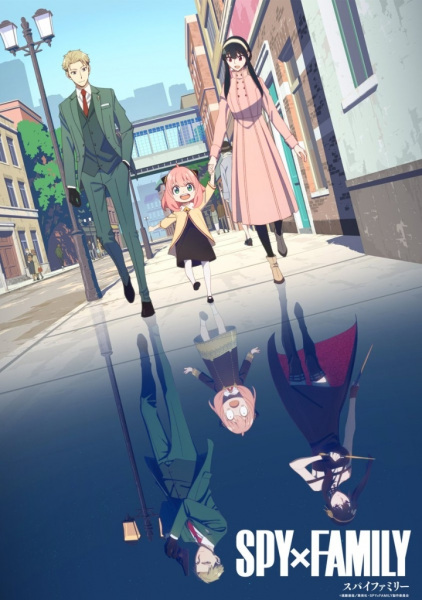
3. Spy × Family — Codex 7.45
Wit Studio's adaptation lands at 7.45, separated from Blue Lock by 0.03 points, and the rubric is doing something specific with that gap. Animation scores 8.3 and cultural impact scores 8.5 — the two highest non-Chainsaw-Man marks for animation on this list and a cultural footprint that put Anya on every merchandise rack in Akihabara by Q3. Character at 7.8 is the Forger family ensemble doing exactly what Endo's manga designed them to do.
World-building, however, scores 6.5. The Westalis–Ostania cold-war frame is set dressing the show refuses to interrogate; Yor's assassin work and Loid's espionage rarely intersect with stakes that aren't sitcom-shaped. Themes at 7.0 reflect a show that gestures at the cost of constructed family without committing to it. This is a comedy adaptation operating at the top of its craft on a script that doesn't demand the rubric's heaviest criteria carry weight. The placement is precise.
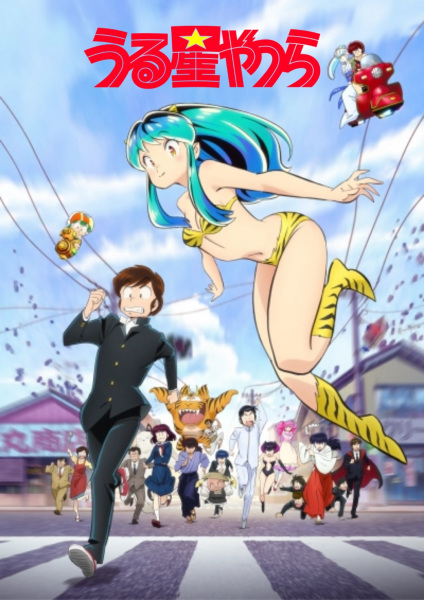
4. Urusei Yatsura — Codex 6.93
David Production's revival scores 6.93 and contains the highest single criterion mark on this list: cultural impact at 9.0. That number is doing forty years of work. Takahashi's original is foundational to the romantic-comedy genre's grammar, and the 2022 production — animation at 8.0, world-building at 7.5 — is a faithful, handsome, and structurally inert exercise in heritage adaptation. Story at 6.5, character at 6.8, themes at 5.5: the rubric is recording that the show is content to stage Takahashi's vignettes without arguing for their relevance to a 2022 audience.
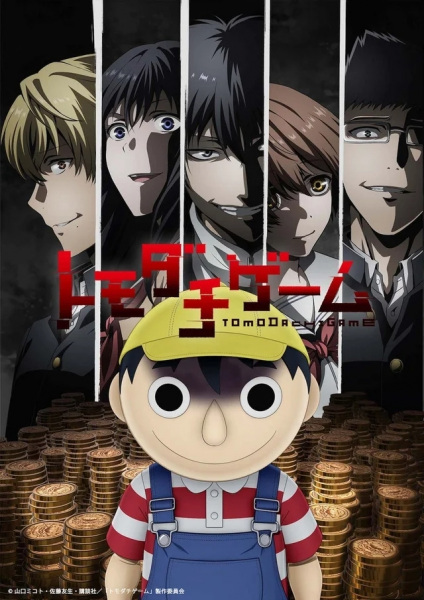
5. Tomodachi Game — Codex 6.44
Okuruto Noboru's adaptation scores 6.44, the lowest entry here, and the breakdown — story 6.8, character 6.5, themes 6.7, world 6.4, animation 5.8, cultural 5.5 — describes a death-game show whose premise outpaces its execution on every front. The puzzles are sharper than Kakegurui's; the animation is worse than Kaiji's; the cast is thinner than either. It earns its position by being legitimately interested in the trust mechanics its title promises, then runs out of episodes before the manga's most productive betrayals.
The Counter-Argument
The strongest opposing read is that Chainsaw Man should not be at the top — that an adaptation which alienated its core readership, undersold its comedy, and ended without the Katana Man payoff is not a 7.90 show. There is a version of this argument grounded in the gap between MyAnimeList's 8.43 and the Codex 7.90, and it has a point: the rubric is punishing the show for narrative incompleteness it would have forgiven if Season 2 had aired on schedule.
The rubric reads it differently because cultural impact is a measured criterion, not a popularity proxy, and Denji's character work in those twelve episodes is dense enough to carry an 8.0 even without resolution. The numbers describe what aired, not what was promised.
Verdict
The 2022 catalogue, scored consistently, produces an order the discourse did not predict: MAPPA's flagship on top by character and cultural weight, 8bit's strategy show above Wit's prestige comedy by 0.03 points of world-building, and a legacy revival outscoring a death-game also-ran on forty-year-old cultural credit alone. The rubric doesn't care which show trended. It cares which show holds up across six criteria. These five did, in this order.
Featured in the Codex


More from The Codex
The Seven Deadly Sins Is a 6.60 Wearing a 7.60 Costume: A One-Point Gap Earned by Groping Gags and Convenient Flashbacks
The Seven Deadly Sins scores 6.60 on the Codex against MyAnimeList's 7.60 because the crowd is grading a Netflix breakout and a Ban-and-King friendship, not the 24 episodes A-1 Pictures actually broadcast in 2014.
The 10.0 That Built a Sunday: How Sazae-san's Cultural Score Carries a 6.58 Scorecard
Sazae-san is a case study in how a single criterion — cultural — can define how a show is remembered, and the 10.0 the Codex hands Eiken's 1969 institution is doing every bit of the heavy lifting its other five scores refuse to.
The Sebastian Problem: Why Black Butler Sits 1.10 Below Its MAL Line and the Crowd Refuses to Notice
Black Butler (Kuroshitsuji) posts a 1.10-point gap between MyAnimeList's 7.65 and the Codex 6.55 because the crowd is grading Sebastian's silhouette and a Phantomhive aesthetic, not the anime-original finale A-1 Pictures actually shipped in 2009.
Discussion
Set a display name above to post.
Loading discussion…