Anime Like The Promised Neverland: 5 the Rubric Says You'll Love, Ranked by Critical Proximity
Fans of The Promised Neverland respond to its strongest criteria — story at 8.8, animation at 8.3, themes at 8.2 — and these picks deliver the same qualities, ranked by how close their critical profile sits to it, not by vibes.
Fans of The Promised Neverland respond to its strongest criteria — story at 8.8, animation at 8.3, themes at 8.2 — and these picks deliver the same qualities, ranked by how close their critical profile sits to it, not by vibes.
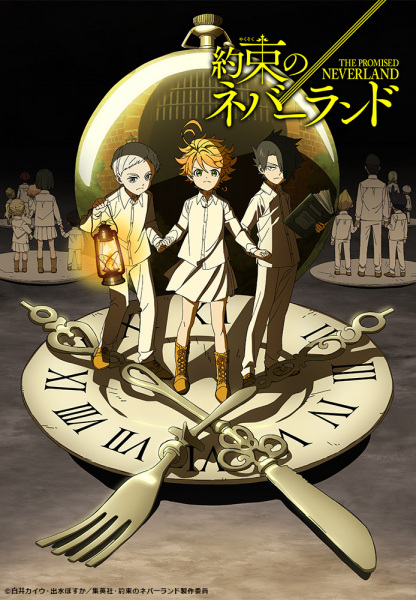
The reason CloverWorks' 2019 first season still holds its 8.18 on the Codex is not the demons, not the twist, not Emma. It's Mamoru Kanbe's willingness to shoot Isabella's smile from a low angle in episode one and trust the audience to feel the wrongness before Conny's body confirms it. That is what people mean when they say they want more anime like The Promised Neverland — the discipline of a thriller that respects its viewer's pattern recognition — and it's the axis this list is built on.
What the Codex actually rewards in The Promised Neverland
Discourse around the show has calcified into two camps: the MAL 8.47 crowd who treat season one as an untouchable modern classic, and the backlash contingent who let the season-two collapse retroactively poison the original twelve episodes. Neither reading is honest. The Codex 8.18 is a story-and-direction score — 8.8 on plot mechanics, 8.3 on animation, 8.2 on themes — with a deliberate 7.5 cap on world-building because season one intentionally withholds the demon economy, and a 7.5 on cultural impact because the second season torched the goodwill the first had earned.
That means the useful recommendations aren't "kids in peril" shows or found-family orphan dramas. They're psychological thrillers with airtight plotting, morally slippery antagonists, and directors who understand that dread is a framing decision. The five below are ordered by how close their critical fingerprint sits to Kanbe's — not by tag overlap, not by MAL adjacency, and not by anyone's Reddit thread.
1. Death Note — the plotting benchmark The Promised Neverland was measured against
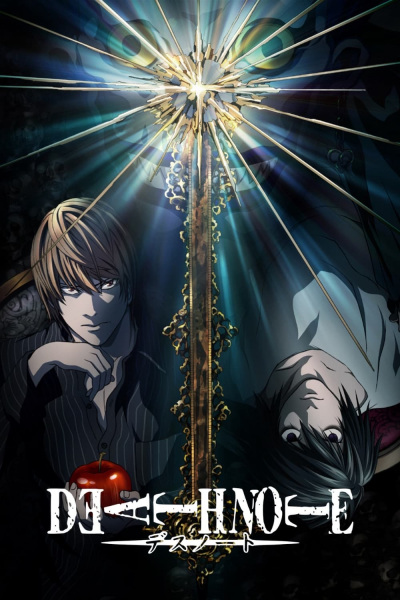
Death Note is the closest structural sibling on the shelf, and its Codex 8.28 sits ten hundredths above The Promised Neverland's 8.18 for a reason: Madhouse's 37-episode 2006 adaptation is the modern shonen thriller that Kaiu Shirai's manga was working in the shadow of. The Emma-Norman-Ray triangle against Isabella is a direct descendant of the Light-L chessboard, and the escape-room escalation of season one — the tracker discovery, Norman's faked shipment — is unimaginable without the notebook rules, the potato-chip scene, the Yotsuba arc's forensic patience.
The Codex scores back the resemblance. Death Note posts an 8.5 story to The Promised Neverland's 8.8, an 8.3 character to Neverland's 8.0, and the same 8.0-region thematic weight. Where Death Note pulls ahead is character durability: Light and L can carry 25 episodes of interrogation-room stalemate; Emma and Norman have twelve episodes of momentum and then hand the baton to a second season that couldn't lift it. If the appeal of Neverland was watching smart people out-think each other in real time, this is the ceiling of that pleasure.
2. Tomodachi Game — the death-game descendant that inherits the tension without the polish
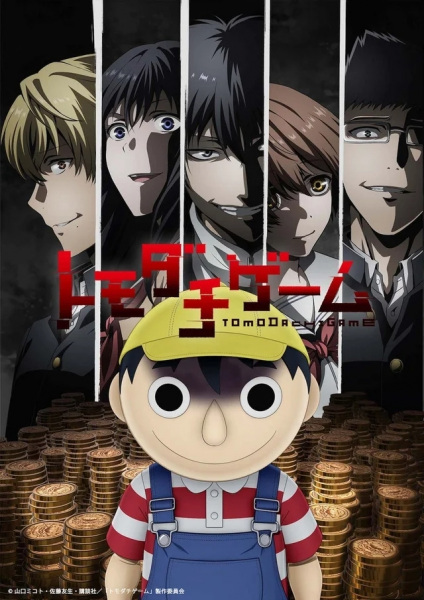
Tomodachi Game is the least critically accomplished pick on this list — a Codex 6.44 against Neverland's 8.18 — and it's here specifically because its story score of 6.8 and thematic 6.7 are doing the exact work Neverland's plotting does, just with a smaller budget and Okuruto Noboru instead of CloverWorks behind the camera. The premise (five friends coerced into psychological games to clear a debt) is the escape-room grammar of Grace Field House transposed into a debt-collection thriller, and the Yuichi reveal is a lineal descendant of the Ray-as-mole disclosure.
The gap between the two shows is entirely on the production side: 5.8 animation, 5.5 cultural. If you loved Neverland for the plotting mechanics and can absorb the visual downgrade — and if you want the same trick with different mechanisms — this is the recommendation. It's the one on this list where you're consciously trading polish for pattern.
3. Beastars — the shonen that shares the ethics-of-survival thesis
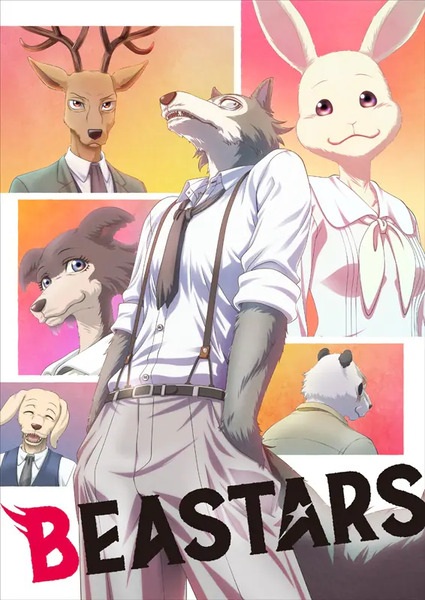
Beastars is the pick people don't expect on a Neverland list, and it's the one that most rewards the Codex's per-criterion reading. Orange's 2019 CG production scores 7.85 on the Codex, with story at 7.5, and it earns that on the same axis as Neverland's 8.2 themes — a shonen willing to ask what it means to survive inside a system that is designed to eat you. Legoshi's carnivore biology maps onto Isabella's complicity with unsettling precision: both are characters trying to negotiate an ethical position inside a food chain they didn't choose.
Our longer read on Beastars unpacks why Orange's CG grammar is doing thematic work rather than compensating for a budget. For a Neverland fan, the specific hook is the show's refusal to let its cast off the hook morally. Louis's stag pragmatism, Haru's exhausted agency, Legoshi's self-surveillance — this is the register in which Isabella's late flashback operates, extended across a full ensemble.
4. The Kindaichi Case Files — the classical mystery whose story score matches Neverland's mechanics
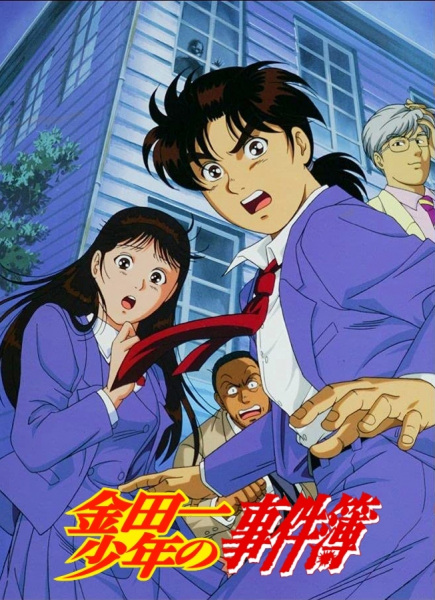
The Kindaichi Case Files is a Codex 7.10, and the number to focus on is the 8.0 story — the second-highest on this list after Death Note, and closer to Neverland's 8.8 than anything else here except that entry. Toei's 148-episode 1997 run is a locked-room mystery machine, and the appeal for a Neverland viewer is the same fair-play plotting discipline: clues placed early, revelations that reframe the premise, a detective (or an Emma) who solves the puzzle in real time rather than being handed answers.
The 7.10 is dragged down by 6.0 animation and 6.5 character — Toei's 1997 production values are what they are, and Kindaichi himself is a functional protagonist rather than a psychological one. But the 8.0 cultural score is meaningful: this is the show that codified an entire mystery-shonen lineage, the way Neverland briefly looked like it might codify psychological horror in Jump. If you watched Neverland for the puzzles, this is 148 episodes of puzzles.
5. Attack on Titan — the tied-8.18 that shares Neverland's opening-episode reframing
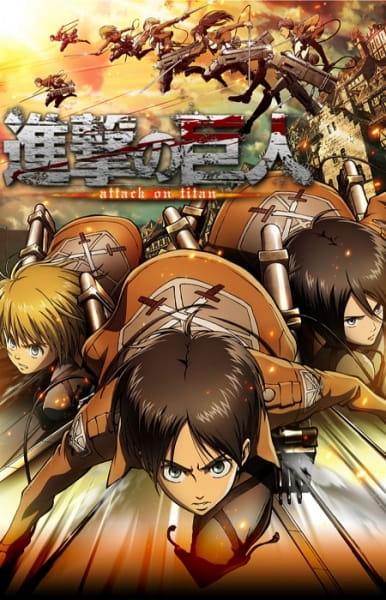
Attack on Titan is the recommendation whose Codex score is literally tied with Neverland's — 8.18 flat — and the shared DNA is not just "children discover the horror outside the wall." It's the specific narrative move of an episode-one worldview collapse. Wit Studio's 2013 opening 25 episodes deliver the same recontextualization Neverland pulls with Conny's body: a comfortable premise is revealed as a lie, and the show has to earn the rest of its runtime by escalating that reveal.
The story scores confirm the resemblance — Attack on Titan's 8.5 against Neverland's 8.8 — and the 9.5 cultural is the number where the two diverge hardest. Where Neverland's cultural footprint was capped at 7.5 by the second-season collapse, Attack on Titan compounded across a decade into one of the defining anime of the 2010s. For a Neverland fan, this is the version of the show where the promise of episode one was kept.
The counter-argument: none of these are "found family orphan horror"
The honest objection is that a genuine Neverland superfan wants the specific texture of Grace Field House — the sibling ensemble, the maternal antagonist, the horror hidden inside domesticity — and none of the five above deliver that exact tonal package. Fair. Made in Abyss and Shadows House sit closer on the vibe axis, and a recommendation list optimized for atmosphere would include them.
The rubric doesn't optimize for atmosphere. It optimizes for the criteria that produced Neverland's 8.18: story, animation, themes. Vibe-matching gives you shows that feel similar for two episodes and diverge; criteria-matching gives you shows that reward the same kind of viewer attention across their full runtime. The five above are what that discipline produces.
Death Note is the ceiling, Attack on Titan is the tied sibling, Beastars is the thematic peer, Kindaichi is the plotting throwback, and Tomodachi Game is the honest budget descendant. Watch them in that order and the reason The Promised Neverland worked will be legible in five different registers.
Featured in the Codex
More from The Codex
The Seven Deadly Sins Is a 6.60 Wearing a 7.60 Costume: A One-Point Gap Earned by Groping Gags and Convenient Flashbacks
The Seven Deadly Sins scores 6.60 on the Codex against MyAnimeList's 7.60 because the crowd is grading a Netflix breakout and a Ban-and-King friendship, not the 24 episodes A-1 Pictures actually broadcast in 2014.
The 10.0 That Built a Sunday: How Sazae-san's Cultural Score Carries a 6.58 Scorecard
Sazae-san is a case study in how a single criterion — cultural — can define how a show is remembered, and the 10.0 the Codex hands Eiken's 1969 institution is doing every bit of the heavy lifting its other five scores refuse to.
The Sebastian Problem: Why Black Butler Sits 1.10 Below Its MAL Line and the Crowd Refuses to Notice
Black Butler (Kuroshitsuji) posts a 1.10-point gap between MyAnimeList's 7.65 and the Codex 6.55 because the crowd is grading Sebastian's silhouette and a Phantomhive aesthetic, not the anime-original finale A-1 Pictures actually shipped in 2009.
Discussion
Set a display name above to post.
Loading discussion…