Anime Like JoJo's Bizarre Adventure: 5 the Rubric Says You'll Love, Ranked by Critical Proximity
Fans of JoJo's Bizarre Adventure respond to its strongest criteria — a 9.0 world, a 9.0 cultural footprint, David Production's 8.0 direction — and these five picks deliver the same qualities, ranked by how close their critical profile sits to it, not by vibes.
Fans of JoJo's Bizarre Adventure respond to its strongest criteria — a 9.0 world, a 9.0 cultural footprint, David Production's 8.0 direction — and these five picks deliver the same qualities, ranked by how close their critical profile sits to it, not by vibes.
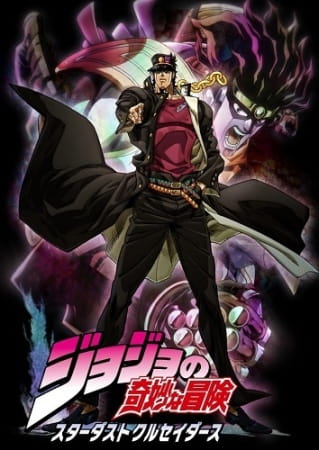
Stardust Crusaders is not carried by Joutarou Kuujou. He is one of the most emotionally inert leads in the genre's canon, and the Codex character score of 6.8 says so plainly. What actually elevates the 2014 David Production adaptation to a weighted 7.55 is the Stand system — a 9.0 world — and the meme-tier cultural gravity of ZA WARUDO, which the rubric marks at 9.0 and the culture at large has already conceded. Any honest recommendation list for anime like JoJo's Bizarre Adventure has to start there: not with "vampires" or "muscle men," but with the two criteria that make the show a 7.55 instead of a 6.9.
What the Codex Actually Rewards in JoJo
The MyAnimeList 8.11 rating on the 24-episode Stardust Crusaders adaptation aggregates a lot of things — Hirohiko Araki's poses, Joseph Joestar's veteran wit, Kakyouin's dying clock-message — but the discourse rarely names which criteria are doing the work. The Codex rubric names them. Story lands at 7.5, dragged by the monster-of-the-week pacing dips (Tower of Gray, the orangutan ship Stand) before the Cairo assassins tighten the screws. Themes land at a modest 6.5 because Joutarou's flatness blunts the bloodline-destiny throughline. What's genuinely elite is Araki's power framework — bespoke, condition-locked Stands like Hanged Man in mirrors or Death Thirteen in dreams — and the cultural cornerstone status that popularized an entire vocabulary. So the picks below are ranked by how tightly their own Codex profiles line up with those exact strengths, in ascending order of proximity.
Bleach (2004) — Codex 6.55
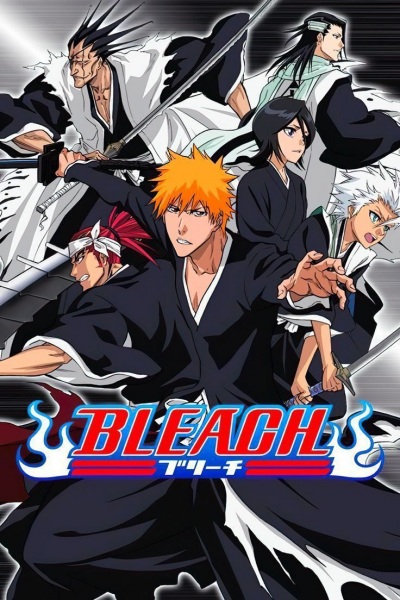
Bleach sits at 6.55 on the Codex against a MyAnimeList 8.00, and it earns the recommendation for one specific reason: Studio Pierrot's 366-episode run built a shonen combat vocabulary that runs parallel to the Stand system. Zanpakutou releases, bankai reveals, and Hollow taxonomies are Bleach's answer to condition-locked abilities — each shinigami's sword is a bespoke rule set, not a strength tier. The Codex marks story at 6.5 and character at 6.0, and both numbers are honest about the 366-episode bloat; JoJo fans who already tolerate Stardust's monster-of-the-week dips will recognize the pattern. What they will also recognize is the cultural weight — Ichigo's mask, Aizen's betrayal, the Soul Society arc — that made Bleach a touchstone the way Stardust made Stands one. It's the lowest-proximity pick because its critical profile is softer across the board, but the world-building instinct is the same instinct.
Fairy Tail (2009) — Codex 6.25
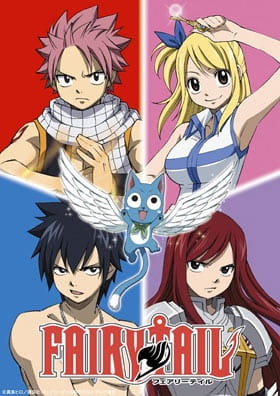
Fairy Tail lands at a Codex 6.25 against a MyAnimeList 7.57, and the recommendation is narrower than the others: it's here for the ensemble-adventure DNA. Satelight's 175-episode run leans on the same road-and-arc structure that made Stardust Crusaders a travelogue of Stand puzzles, with each Magic — Natsu's Dragon Slayer, Erza's Requip, Gray's Ice-Make — following a rule set instead of a power tier. Story at 6.0 admits the pacing dips and the tournament padding, and that's fair. But if what you loved about Stardust was Joseph, Avdol, Polnareff, and Kakyouin bantering their way across continents, Fairy Tail's guild is the closest ensemble-chemistry echo on this list. It scores below Bleach because the world-building isn't as rigorous, but the party dynamic is more affectionate.
Magi: The Labyrinth of Magic (2012) — Codex 7.40
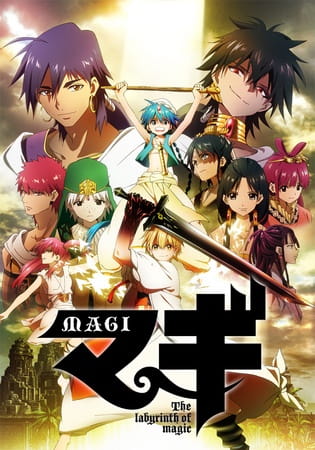
Magi is where the proximity tightens. A-1 Pictures' 25-episode 2012 adaptation posts a Codex 7.40 against a MyAnimeList 8.01, with the strongest single criterion being an 8.5 world — the closest match on this list to JoJo's 9.0. The dungeons, Djinn equips, and Shindria/Kou geopolitics are the same instinct Araki brought to Tarot-named Stands and Egyptian-god finales: a globe-trotting, mythically-tinged framework where powers are contracted, ruled, and named rather than scaled. Story at 7.5 mirrors JoJo's exactly. Character at 7.0 clears Joutarou's 6.8 — Aladdin, Alibaba, and Morgiana carry real interior arcs that the Stardust ensemble mostly gestures at. Themes at 7.5 outperform JoJo's 6.5 by taking colonialism and fate seriously in a way Stardust's bloodline-destiny motif never quite commits to. Animation at 7.0 is a step below David Production's 8.0, and that's the honest gap. This is the pick for JoJo fans who wanted the world to matter more than the poses did — the same instinct that drives our Bungo Stray Dogs list toward literary-fantasy frameworks with real rule sets.
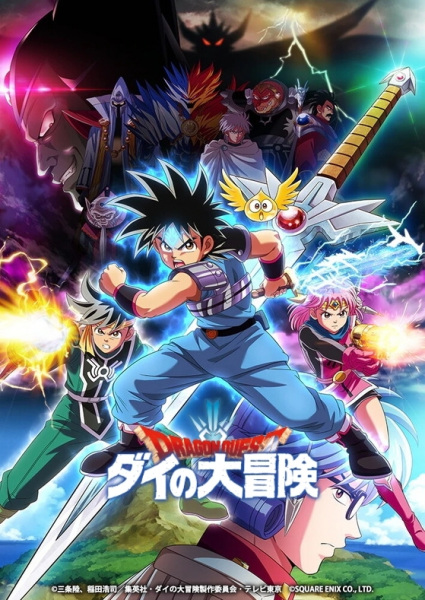
Dragon Quest: The Adventure of Dai (2020) — Codex 7.40
Toei Animation's 100-episode Dai adaptation also lands at Codex 7.40, and its proximity to JoJo comes from a different vector: character. Dai's 8.0 on characters is the highest on this list and comfortably outperforms Stardust's 6.8, which is exactly the fix a lot of JoJo fans didn't know they were looking for. Popp's cowardice-to-courage arc is what Joutarou never gets; Hyunckel's redemption is what Kakyouin's antagonist-to-ally beat would look like extended across a full run. Story at 7.5 matches JoJo's identically. Themes at 7.3 clear JoJo's 6.5 by committing to a stoic-resolve motif — the veteran mentor, the sacrificial party member — that Stardust hits only in flashes (Avdol's returns, Kakyouin's clock). The world score of 6.8 is where Dai falls behind: a Dragon Quest tie-in doesn't have Araki's condition-locked inventiveness. But if the emotional peaks of the Cairo stretch were what stuck with you, Dai delivers those peaks on a curve, not in isolated episodes.
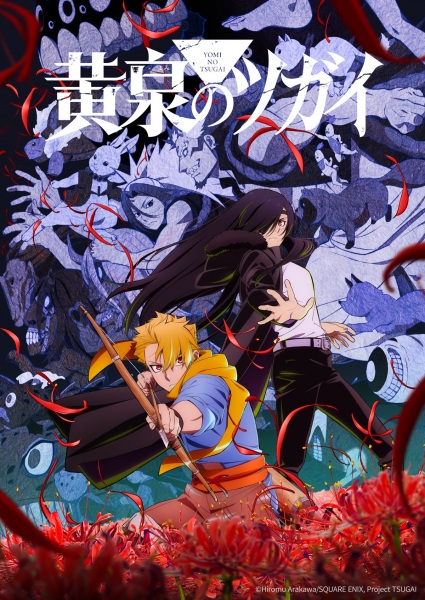
Daemons of the Shadow Realm (2026) — Codex 7.35
The closest critical match on this list is Bones Film's 24-episode Daemons of the Shadow Realm at Codex 7.35. Same episode count as Stardust. Same 8.0 animation score. A 7.6 on world that sits closer to JoJo's 9.0 than anything short of Magi. Hiromu Arakawa's supernatural-family framework runs on paired-daemon rule sets — bespoke, condition-locked, named — which is the Stand system's core instinct translated into a shadow-realm register. Story at 7.4 tracks JoJo's 7.5 within a rounding error. Character at 7.0, themes at 7.2 — both clear Stardust's numbers on those criteria, which is the point. The one gap is cultural at 6.5, because a 2026 broadcast hasn't had time to build the meme literacy JoJo took a decade to accumulate; culture is where Stardust's 9.0 is genuinely uncatchable in the short term. Everything else is the tightest fit on the list.
The Counter-Argument: JoJo Fans Want Vibes, Not Rubric Proximity
The strongest objection is that JoJo fandom is aesthetic before it is critical. People love Stardust for the color-shift standoffs, the ゴゴゴ menace, the ORA barrages, the Yare yare daze — for style, not for a 9.0 world score. By that logic, a recommendation list should surface stylists first: Trigger, Imaishi, anything that poses. Fair objection. But aesthetic response is itself a criterion — animation, at 8.0 for JoJo — and the Codex already weights it. The reason Magi and Dai edge out flashier candidates is that JoJo's total profile is a world-and-culture show with strong direction, not a direction show with a world attached. Rank by the whole rubric, the way we did for Jujutsu Kaisen, and the picks that look boring on paper turn out to be the ones that actually hold up on rewatch.
Verdict
Rank the five by critical proximity and Daemons of the Shadow Realm wins on shape, Dai wins on character, Magi wins on world, Fairy Tail wins on ensemble warmth, and Bleach wins on cultural reach — each covering a different edge of what Stardust's 7.55 actually is. Pick the criterion you loved most and the list tells you which one to start. That's the whole point of grading by rubric instead of by vibe.
Featured in the Codex
More from The Codex
The Seven Deadly Sins Is a 6.60 Wearing a 7.60 Costume: A One-Point Gap Earned by Groping Gags and Convenient Flashbacks
The Seven Deadly Sins scores 6.60 on the Codex against MyAnimeList's 7.60 because the crowd is grading a Netflix breakout and a Ban-and-King friendship, not the 24 episodes A-1 Pictures actually broadcast in 2014.
The 10.0 That Built a Sunday: How Sazae-san's Cultural Score Carries a 6.58 Scorecard
Sazae-san is a case study in how a single criterion — cultural — can define how a show is remembered, and the 10.0 the Codex hands Eiken's 1969 institution is doing every bit of the heavy lifting its other five scores refuse to.
The Sebastian Problem: Why Black Butler Sits 1.10 Below Its MAL Line and the Crowd Refuses to Notice
Black Butler (Kuroshitsuji) posts a 1.10-point gap between MyAnimeList's 7.65 and the Codex 6.55 because the crowd is grading Sebastian's silhouette and a Phantomhive aesthetic, not the anime-original finale A-1 Pictures actually shipped in 2009.
Discussion
Set a display name above to post.
Loading discussion…