Anime Like Bungo Stray Dogs: 5 the Rubric Says You'll Love, Ranked by Critical Proximity
Fans of Bungo Stray Dogs respond to its strongest criteria — Bones' 8.0 animation, an 8.0 literary-fantasy world, and Dazai-tier character work — and these five picks deliver the same qualities, ranked by how close their critical profile sits to it, not by vibes.
Fans of Bungo Stray Dogs respond to its strongest criteria — Bones' 8.0 animation, an 8.0 literary-fantasy world, and Dazai-tier character work — and these five picks deliver the same qualities, ranked by how close their critical profile sits to it, not by vibes.
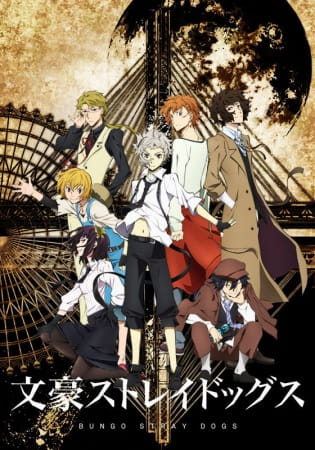
Bungo Stray Dogs works because Bones drew it and Kafka Asagiri named its ability users after dead novelists. That's not reductive — it's the scorecard. The Codex has the 2016 twelve-episode run at 7.45, and the two criteria doing the heaviest lifting are world-building at 8.0 and animation at 8.0, with character at 7.5 riding on Dazai's slow-drip Port Mafia reveal and Atsushi's right-to-exist spiral. Story sits at 7.0 because season one is exposition wearing a trench coat.
What the consensus gets wrong about recommending anime like Bungo Stray Dogs
The standard recommendation post for anime like Bungo Stray Dogs is a vibe-sort: bishonen ensemble, urban supernatural, sardonic mentor figure, done. That gets you a stack of shows with matching aesthetics and mismatched craft. MyAnimeList has Bungo Stray Dogs at 7.80 — a respectable mid-tier number that reflects the ensemble's cult devotion more than the structural unevenness the Codex flags in season one. If you're recommending on that number, you're recommending on the fandom's affection for Dazai, not on what Bones actually built.
The Codex reads the show differently. Bungo's ceiling is its world (a literary-allusion power system that's genuinely original, even when the references are cosmetic) and its animation (Nobuhiro Arai's direction, the Atsushi-versus-Akutagawa tiger-and-Rashomon choreography). Its floor is story cohesion — the tonal whiplash between slapstick and thriller. So the right recommendation set matches the ceiling, understands the floor, and gets ranked by critical proximity to the 7.45 profile. That's what this list is.
Katekyo Hitman Reborn! — the ensemble-and-slow-burn parallel
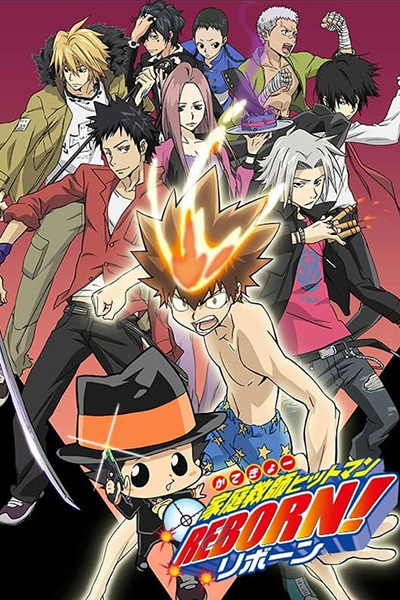
Katekyo Hitman Reborn! sits at Codex 6.98, and the criterion overlap with Bungo Stray Dogs is precise. Both shows lean on a 7.5 character score built the same way: a mentor figure whose flippant surface hides a violent professional past (Dazai's Port Mafia era; Reborn's hitman lineage) and a protagonist whose self-worth is the actual engine (Atsushi's orphanage trauma; Tsuna's no-good-Tsuna arc). Both run the mafia-adjacent urban fantasy frame, both build out a faction structure over time, both take a long runway before the tonal register stabilizes.
Where Reborn drops below Bungo is animation — Artland's 6.0 on the Codex reflects a 203-episode television budget stretched across a decade, and the Daily Life arc is exactly the exposition-heavy opening season Bungo apologists learned to defend. If you accepted that Bungo's first season is a hook-planting exercise, you have the patience Reborn's Kokuyo and Varia arcs reward.
Sakamoto Days — the slapstick-thriller tonal twin
Sakamoto Days at Codex 6.70 is the closest tonal analogue in the current landscape to what Bungo Stray Dogs actually does on a scene level: a lethal professional in an urban crime frame whose show is willing to whiplash between comedy and thriller inside a single cut. The Codex flags this exact quality in Bungo's themes score of 7.0 — dramatic tension deflated by comedic tonal shifts before it lands — and Sakamoto Days runs the same tightrope, TMS animating the retired-hitman convenience-store premise across eleven episodes.
Sakamoto's character score of 7.0 and world of 7.0 track Bungo's Agency-and-Mafia faction structure at a smaller scale, and its story at 6.8 is a cleaner version of the same problem — episodic setup burning runway against future payoffs. If you liked that Bungo could pivot from Dazai's suicide gags to Akutagawa's Rashomon in the same episode, Sakamoto Days is aiming at the same target with a lighter touch.
Undead Unluck — the world-building peer that clears Bungo's ceiling
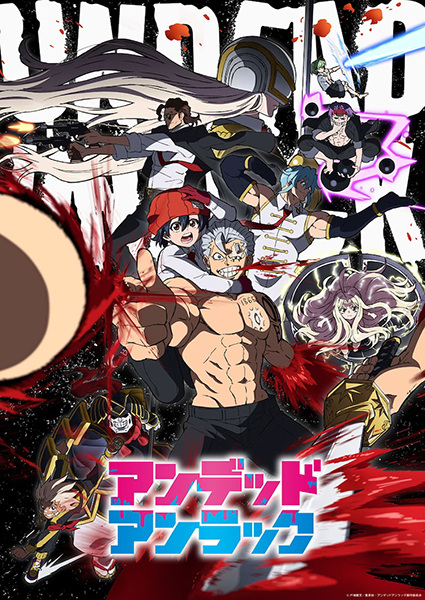
Undead Unluck is the highest-scoring recommendation on this list at Codex 7.64, and the reason is that it does what Bungo does on world-building and does it better. Bungo's 8.0 world score comes from ability users named after literary figures with powers keyed to their bibliographies — Dazai's No Longer Human, Atsushi's Beast Beneath the Moonlight. Undead Unluck runs the same conceit at a higher rigor: ability users whose powers are literal negation concepts (Unluck, Undead, Unrepair) inside a rule system David Production actually treats as internally consistent.
Undead Unluck's world scores 8.3, character 8.0, animation 7.8. That's a scorecard that clears Bungo across the criteria Bungo fans actually care about, and it does so because the literary-allusion premise Bungo sometimes treats as cosmetic naming is, in Undead Unluck, load-bearing mechanics. The only place it trails is cultural at 6.0 — it has not yet built the bishonen-devoted fanbase Bungo's 7.5 cultural score reflects.
MARRIAGETOXIN — the Bones lineage pick
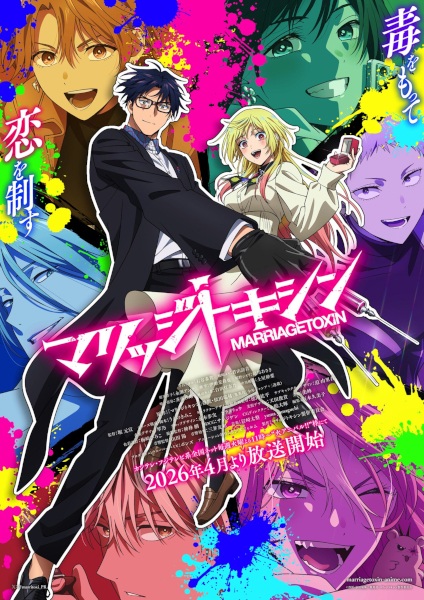
MARRIAGETOXIN at Codex 7.08 is Bones Film — the same studio family that gave Bungo its 8.0 animation floor — running an assassin-brothers-and-marriage-consulting premise across thirteen episodes in 2026. The criterion match is on animation at 7.4 and character at 7.3, and if you're curious how the scorecard actually breaks down criterion by criterion, the back-half predictability problem is real but not fatal.
What MARRIAGETOXIN inherits from the Bones house style is what Bungo inherits: expressive comedic exaggeration cohabiting with clean action choreography, stylish high-contrast palettes, character designs distinctive enough to carry a fandom. Its themes score at 6.8 sits almost exactly on Bungo's 7.0 — both shows want to say something serious about the right to exist and both undercut themselves with tonal pivots.
JoJo's Bizarre Adventure — the world-and-culture ceiling
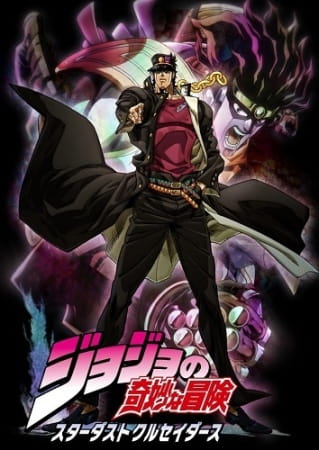
JoJo's Bizarre Adventure at Codex 7.55 is the 2014 David Production adaptation, and it is on this list because it is the recommendation that most fully rewards the reasons Bungo Stray Dogs works. Bungo's world-building at 8.0 is about an ability system with cultural referents that reward literate viewers; JoJo's world at 9.0 is the maximal version of that instinct, a Stand system whose references (musicians, tarot, Egyptian gods depending on the part) are baked into the mechanics rather than pasted on. Animation at 8.0 matches Bungo's ceiling exactly. Cultural at 9.0 is where JoJo transcends the tier Bungo occupies — a franchise footprint Bungo, for all its 1.5 million MAL members, never approached.
The trade is character at 6.8, which trails Bungo's 7.5. Jonathan and Joseph are archetypes with charisma; they are not Dazai. If you're recommending on the ensemble-devotion axis, JoJo underperforms Bungo. If you're recommending on world and craft, it clears it.
The counter-argument: none of these give you the Agency
The strongest opposing view is that Bungo Stray Dogs' appeal is inseparable from its specific ensemble — Dazai, Kunikida, Atsushi, Akutagawa, the Agency-Mafia dyad — and that no recommendation ranked by rubric proximity captures the parasocial pull of that cast. Fair. The Codex acknowledges this: character sits at 7.5, dragged down by quirk-defined caricatures like Kenji and Naomi, but Dazai alone is doing tenth-percentile work.
The rubric answer is that character is one criterion of six, and Bungo's other five criteria are what determine whether a viewer stays past the tiger reveal. Recommending on Dazai gets you shows with a sardonic mentor. Recommending on the full scorecard — animation, world, themes, story, cultural — gets you shows a Bungo fan will still be watching in episode ten.
Bungo Stray Dogs is a 7.45 because Bones and Asagiri built a literary-fantasy Yokohama that clears the world and animation bar the shonen genre rarely does, and these five recommendations are ordered by how closely their scorecards track that specific achievement. Take Undead Unluck first if you want the ceiling; take Katekyo Hitman Reborn! if you want the ensemble slow-burn. Everything else on this list is defensible on the rubric, and nothing off it is.
Featured in the Codex

More from The Codex
The Seven Deadly Sins Is a 6.60 Wearing a 7.60 Costume: A One-Point Gap Earned by Groping Gags and Convenient Flashbacks
The Seven Deadly Sins scores 6.60 on the Codex against MyAnimeList's 7.60 because the crowd is grading a Netflix breakout and a Ban-and-King friendship, not the 24 episodes A-1 Pictures actually broadcast in 2014.
The 10.0 That Built a Sunday: How Sazae-san's Cultural Score Carries a 6.58 Scorecard
Sazae-san is a case study in how a single criterion — cultural — can define how a show is remembered, and the 10.0 the Codex hands Eiken's 1969 institution is doing every bit of the heavy lifting its other five scores refuse to.
The Sebastian Problem: Why Black Butler Sits 1.10 Below Its MAL Line and the Crowd Refuses to Notice
Black Butler (Kuroshitsuji) posts a 1.10-point gap between MyAnimeList's 7.65 and the Codex 6.55 because the crowd is grading Sebastian's silhouette and a Phantomhive aesthetic, not the anime-original finale A-1 Pictures actually shipped in 2009.
Discussion
Set a display name above to post.
Loading discussion…