Anime Like Gintama: 5 the Rubric Says You'll Love, Ranked by Critical Proximity
Fans of Gintama respond to its strongest criteria — a 9.2 ensemble, a 9.0 cultural footprint, an 8.7 thematic spine about samurai clinging to bushido in a world that outlawed it — and these five picks deliver the same qualities, ranked by how close their critical profile sits to Gintama's, not by vibes.
Fans of Gintama respond to its strongest criteria — a 9.2 ensemble, a 9.0 cultural footprint, an 8.7 thematic spine about samurai clinging to bushido in a world that outlawed it — and these five picks deliver the same qualities, ranked by how close their critical profile sits to Gintama's, not by vibes.
Gintama is not funny because Sorachi is funny. Gintama is funny because the 201 episodes Sunrise shipped in 2006 spend a year teaching you to underestimate Gintoki Sakata, then weaponize the Benizakura arc, the Yoshiwara in Flames arc, and the Shogun Assassination stretch against every cheap laugh you cashed in the first cour. That's what an 8.51 on the Codex is buying: the tonal whiplash is the machine.
What Gintama Actually Scores On
The Codex has Gintama at 8.51 — MyAnimeList sits it at 8.93, and the gap is smaller than most Jump long-runners because the rubric can see what the crowd sees. Character posts a 9.2: Katsura, Takasugi, Hijikata, Okita, even Hasegawa-Madao get dimensional arcs that lesser shonen would build a whole series around. Cultural lands a 9.0 on the strength of over a decade as a Jump fixture and a parody density so specific it locked out casual Western viewers. Themes hit 8.7 because the alt-history conceit — Edo colonized by Amanto, samurai stripped of swords — is not backdrop, it's argument. Story is an 8.5 that would be higher if the first stretch weren't genuinely flabby. Animation, at 7.5, is the honest number: Sunrise built a workhorse, not a showcase, and only the serious arcs pull sakuga.
That's the profile to match. Not "funny samurai show." Ensemble depth, cultural staying power, a genre-mash world, and a story willing to punish its own comedic register for stakes. Ranked by how close each pick sits to that shape, in descending proximity:
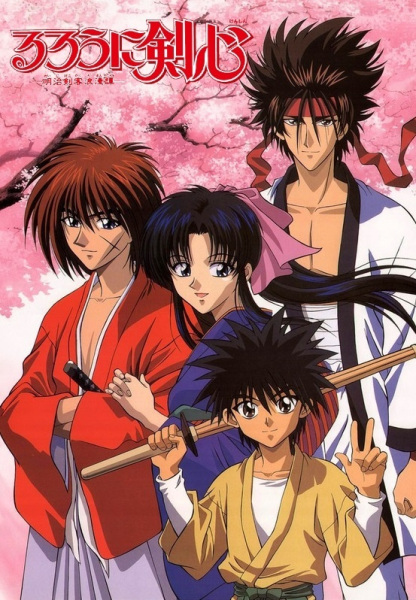
Rurouni Kenshin: The Samurai-Stripped-of-His-Sword Thesis, Played Straight
Rurouni Kenshin at Codex 7.77 is the closest critical neighbor Gintama has on this list, and the reason is thematic. Both shows are about a swordsman who survived a war he can't stop grieving, working odd jobs in a Japan that no longer wants his kind. Gintama coded that as Joui-war trauma under the Amanto occupation; the 1996 Gallop production codes it as Kenshin Himura's Bakumatsu ledger and the reverse-blade oath. Kenshin's 8.3 on character sits directly under Gintama's 9.2 — the Shishio arc across the middle stretch of the 94-episode run is the reason, giving Saitou, Aoshi, and Sanosuke arcs that carry, the same way the Shinsengumi cast carry Gintama. Themes at 8.0 against Gintama's 8.7 are the same argument in a different key: what does a killer do when the killing is over. If you responded to the Farewell Shinsengumi register, this is the show that runs at that register full-time.
World Trigger: The Ensemble Show That Refuses to Center Its Protagonist
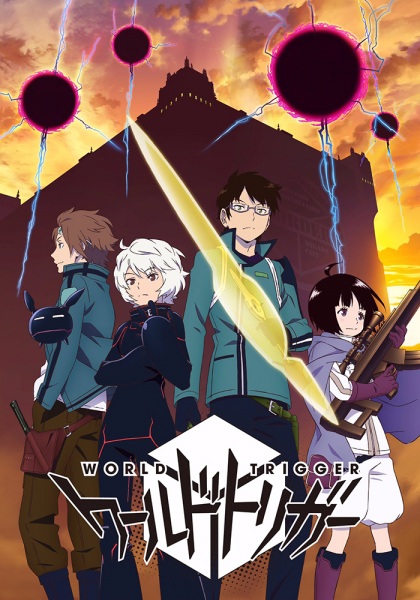
World Trigger posts a Codex 7.30 and its case is structural. Gintama's 9.2 character score is built on the fact that the Yorozuya are surrounded by an army of dimensional side characters, and the show is willing to spend entire arcs off Gintoki. World Trigger does the same thing — Toei's 73-episode run gives you Osamu Mikumo as nominal lead and then routinely benches him for Jin, Kuga, Chika, or entire B-rank squads you didn't know you needed to care about. That's a 7.8 character score doing recognizable work under Gintama's 9.2. The 8.5 world score is the other hook: the trigger system, the border organization, the ranked-battle economy — this is the most rigorously engineered sandbox on this list, and it sits above Gintama's own 8.0 world number. Animation at 6.0 is the tradeoff Toei made to serialize the tactical density, and the Codex is honest about it, the same way it's honest about Sunrise's baseline output on Gintama.
Dr. Slump: The Cultural-Footprint Comrade
Dr. Slump lands at Codex 6.88, and its argument is cultural and structural. Toriyama's 243-episode Toei run from 1981 is what Gintama's 9.0 cultural score is descended from — the gag-shonen-with-a-village-of-recurring-freaks template that Penguin Village invented and Kabuki-cho inherited. Dr. Slump's own 8.5 cultural score sits close under Gintama's 9.0, and its 8.0 world score matches Gintama's exactly: both build a specific, absurd, internally consistent geography that the parody depends on. This is the picks-and-shovels answer to the question of why Gintama's meta jokes land — because Toriyama drew the map first. If you want to see the DNA, the parallel to draw is what Dragon Ball's cultural spine looks like when it's grading properly; Dr. Slump is that spine one show earlier.
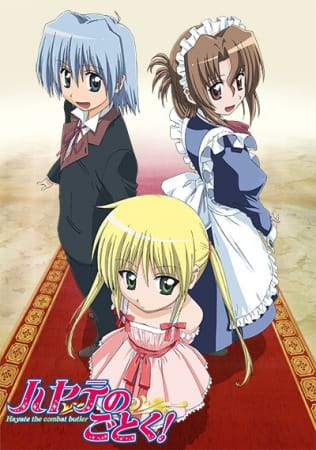
Hayate the Combat Butler: The Parody-Density Comrade
Hayate the Combat Butler at Codex 5.98 is a smaller show doing one specific thing Gintama does: burying the frame in referential, fourth-wall-conscious parody so dense it becomes a language. SynergySP's 52-episode 2007 production is the closest structural sibling to Gintama's meta register — the "we'll get cancelled" gag, the industry in-jokes, the constant awareness of being a Jump product. Hayate's 6.5 character and 6.5 world scores are honest — this is not a show that punches at Gintama's ensemble weight, and the Codex is not pretending it does. But if what you loved about Gintama was specifically the Owee arc, the New Year's specials, the meta-comedy layer where Sorachi refuses to let you forget you're watching a cartoon, this is the picks that shares that DNA most directly. It's a lower Codex number because it doesn't have the serious arcs to pivot into.
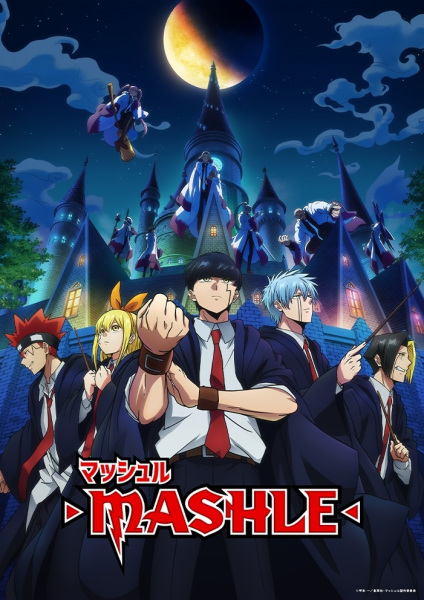
Mashle: Magic and Muscles: The Genre-Parody Comrade
Mashle at Codex 5.63 is the furthest pick from Gintama on this list and I'm not going to pretend otherwise — the rubric doesn't. Story 5.5, character 5.0, themes 5.0. What A-1 Pictures' 12-episode 2023 production shares with Gintama is one specific muscle: genre parody as engine. Mashle sends up shonen-magic-school the way Gintama sent up historical samurai drama, and the 7.0 animation score is A-1 doing legitimate work on the fight comedy. This is the pick for the register, not the depth. If you want more on how the rubric grades this kind of surface-level polish, the Kaiju No. 8 verdict is instructive on where Production I.G's polish meets the same ceiling.
The Counter-Argument: Gintama Is Sui Generis
The strongest objection to this whole list is that Gintama doesn't have neighbors — that the specific chemistry of Sorachi's parody density plus Sunrise's willingness to green-light Benizakura-tier serious arcs plus a 201-episode runway is a one-time event that no recommendation methodology can replicate. That's partly true. None of these five shows is going to give you the Shogun Assassination arc's emotional weight because none of them spent a hundred episodes teaching you to underestimate their cast first. But the rubric isn't looking for a clone. It's looking for critical-profile proximity — which criteria does the show score on, and how do those overlap with what Gintama's 8.51 is actually made of. Kenshin gives you the thematic spine. World Trigger gives you the ensemble discipline. Dr. Slump gives you the cultural bedrock. Hayate gives you the parody muscle. Mashle gives you the genre-send-up posture. That's the map.
Verdict
Gintama's 8.51 is a specific alloy — ensemble, culture, theme, story — and the five shows above are ranked by how much of that alloy they carry, not by how they feel on a Sunday. Start with Rurouni Kenshin if you came for the samurai grief; end with Mashle if you came for the send-up. The rubric doesn't hedge, and neither should you.
Featured in the Codex


More from The Codex
The Seven Deadly Sins Is a 6.60 Wearing a 7.60 Costume: A One-Point Gap Earned by Groping Gags and Convenient Flashbacks
The Seven Deadly Sins scores 6.60 on the Codex against MyAnimeList's 7.60 because the crowd is grading a Netflix breakout and a Ban-and-King friendship, not the 24 episodes A-1 Pictures actually broadcast in 2014.
The 10.0 That Built a Sunday: How Sazae-san's Cultural Score Carries a 6.58 Scorecard
Sazae-san is a case study in how a single criterion — cultural — can define how a show is remembered, and the 10.0 the Codex hands Eiken's 1969 institution is doing every bit of the heavy lifting its other five scores refuse to.
The Sebastian Problem: Why Black Butler Sits 1.10 Below Its MAL Line and the Crowd Refuses to Notice
Black Butler (Kuroshitsuji) posts a 1.10-point gap between MyAnimeList's 7.65 and the Codex 6.55 because the crowd is grading Sebastian's silhouette and a Phantomhive aesthetic, not the anime-original finale A-1 Pictures actually shipped in 2009.
Discussion
Set a display name above to post.
Loading discussion…