The Gintama Watch Order: Fifteen Entries, One 8.51 Spine, and the Specials You Can Skip Without Guilt
Franchise watch-order confusion is real; this lays out the Gintama entries in release order with what actually matters — the Sunrise TV spine, the one movie that closes a chapter, and eleven side items of variable value.
Franchise watch-order confusion is real; this lays out the Gintama entries in release order with what actually matters — the Sunrise TV spine, the one movie that closes a chapter, and eleven side items of variable value.
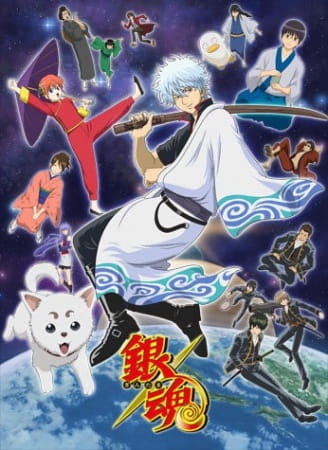
Gintama's release history looks intimidating because it is: fifteen distinct entries across thirteen years, four TV seasons that rename themselves mid-run, a movie that pretends to be a finale, and a handful of Jump Festa shorts that exist mainly as fan-service artifacts. The show earns its complexity — Gintama sits at 8.51 on the Anime Codex, one of the highest shonen figures in the catalogue — but the ordering does not clarify itself. This guide walks the fifteen entries in release order and names, for each, whether the rubric considers it load-bearing or optional.
What the Consensus Gets Wrong About the Gintama Watch Order
The prevailing advice online is either "watch everything" or "start with episode one and figure it out." Neither survives contact with the actual release list. MyAnimeList scores the 2006 Sunrise run at 8.93, and the later seasons post similar or higher aggregate numbers, which encourages the assumption that every entry is essential. The Codex disagrees. The 8.51 attaches to the original 201-episode TV run — Sunrise, 2006, shonen — and reflects a scorecard carried by character (9.2) and cultural weight (9.0), with story at 8.5 and animation held down at 7.5. That profile is not evenly distributed across the franchise. The Jump Festa shorts and the Dai Hanseikai recap do not accrue rubric value; they are marketing objects. Treating them as canonical is what turns a watchable long-form comedy into a fifteen-item homework assignment.
The other error is treating Be Forever Yorozuya as a series finale. It closes a specific arc's emotional beat, then the TV production resumes for two more seasons and a final war. Watch order matters here because the movie's weight depends on having finished Season 2 Part 2 first, and the seasons that follow it depend on the viewer understanding the movie was not the end.
The Spine: Where the 8.51 Actually Lives
The rubric score attaches to the 2006 Sunrise TV run of 201 episodes, and everything else in the franchise inherits its scorecard by proximity. Sorachi Hideaki's writing is what pushes character to 9.2 — Gintoki, Katsura, Takasugi, and the Shinsengumi trio (Kondo, Hijikata, Okita) each get arcs that reshape their comic register into something the drama can actually use. The Benizakura arc (episodes 58-61) is the first proof of concept that the show can pivot from parody to blade work without losing tonal control. The Yoshiwara in Flames arc (episodes 139-146) is the second. Cultural weight at 9.0 is Sorachi's parody density — the Shonen Jump editorial jokes, the Hollywood send-ups, the fourth-wall breaks — and it is not reproducible outside Japanese comics fluency, which is exactly why the score rewards it.
Animation at 7.5 is the honest number. Sunrise's television budget shows in the standing-and-talking scenes; it disappears when the show wants to animate a sword fight, and the swing between the two modes is part of the texture. This is a shonen scorecard shape that shows up elsewhere in the Codex catalogue — the pattern of character-and-culture carrying a modest production is what makes Zatch Bell memorable at 7.48, and it is worth noting Gintama is doing the same trick with better material and a longer runway.
Entries 1-4: The Pre-Season-2 Stretch, and What You Can Skip
The Jump Festa 2005 Special is a seven-minute pilot that predates the TV series. It is a curiosity, not a prerequisite. Skip it or watch it after finishing the franchise as a footnote. Gintama (TV, 201 eps) is the spine. This is where the 8.51 lives, and this is where a first-time viewer starts. The Jump Festa 2008 Special and Dai Hanseikai (2010) are both non-canonical: the former is a short comedic sketch, the latter is a clip-show recap framed as the cast reviewing their own series. Skippable without loss. If you are on a first watch, do not stop the momentum of the 201-episode run to detour into either.
Entries 5-7: The Second-Series Rebrand and the Movie That Closes a Chapter
Gintama Season 2 (2011, 51 eps) is the continuation after the 2010 production hiatus, and it is essential — this is where the Kabukichou Four Devas arc and the Renho arc live, and where the show demonstrates it can sustain its dramatic register across a second full season. Gintama Season 2 Part 2 (2012, 13 eps) covers the Thorny arc and Otose's backstory, and it feeds directly into the movie. Essential. Be Forever Yorozuya (2013, movie) is the one non-TV entry the rubric actually endorses. It adapts the Future arc with Sunrise giving the production the theatrical budget the animation criterion has been asking for, and its emotional weight depends on Season 2 Part 2 sitting immediately behind it. Watch it in release order. Do not save it for last.
Entries 8-15: The Post-Movie Run and the Silver Soul Endgame
The 2014 Futon special is a five-minute short. Skippable. Gintama Season 3 (2015, 51 eps) — sometimes billed as Gintama° — is essential. This is the Shogun Assassination arc and the Farewell Shinsengumi arc, and it is where the show commits to ending itself. Character work at the 9.2 level is doing most of the work here. The Jump Festa 2015 Special is a short; skippable. The Love Incense Arc OVA (2016, 2 eps) is a comedic side story bundled with the manga; watchable, not required.
Gintama Season 4 (2017, 12 eps) and Gintama.: Slip Arc (2017, 13 eps) are the same production era covering the Rakuyou arc and the Shogun's assassination fallout. Both essential. Silver Soul Arc (2018, 12 eps) and Silver Soul Arc - Second Half War (2018, 14 eps) are the endgame — the TV production's actual finale, animated by Bandai Namco Pictures (the studio that inherited the property after Sunrise's involvement wound down), and the reason the character score sits where it does. The final war arc is not optional. If you have watched everything else in this list, you have watched it for this.
The essential path, then, is: entry 2, entries 5-7, entries 9, 12, 13, 14, and 15. Nine items. Everything else is marketing, recap, or side material. For readers who want a shorter model of how a spine-plus-optionals watch order works, the Fullmetal Alchemist: Brotherhood guide applies the same logic to a smaller franchise.
The Counter-Argument: That the Specials Are Part of the Texture
The strongest opposing view is that Gintama is a show about its own scaffolding — the Jump Festa shorts, the recap episodes, and the meta jokes are the register, and to skip them is to misunderstand what the franchise is. This is not wrong. The Codex's 9.0 cultural score is built partly out of exactly this kind of paratextual noise. But the rubric distinguishes between texture that reinforces the main scorecard and texture that exists for the completionist. The Jump Festa 2005 pilot does not teach a first-time viewer what Gintama is; the first Sunrise cour does. Watch the specials on rewatch, when you already know why the jokes work.
Verdict
Nine of the fifteen Gintama entries carry the 8.51 — the 201-episode Sunrise run, both parts of Season 2, the 2013 movie, Season 3, Season 4, and the three Slip Arc / Silver Soul productions that finish it. The other six are optional in the strict sense that removing them does not weaken the scorecard. Watch the spine in release order, watch Be Forever Yorozuya exactly where it falls, and treat the specials as bonus material rather than prerequisites.
Featured in the Codex
More from The Codex
The Seven Deadly Sins Is a 6.60 Wearing a 7.60 Costume: A One-Point Gap Earned by Groping Gags and Convenient Flashbacks
The Seven Deadly Sins scores 6.60 on the Codex against MyAnimeList's 7.60 because the crowd is grading a Netflix breakout and a Ban-and-King friendship, not the 24 episodes A-1 Pictures actually broadcast in 2014.
The 10.0 That Built a Sunday: How Sazae-san's Cultural Score Carries a 6.58 Scorecard
Sazae-san is a case study in how a single criterion — cultural — can define how a show is remembered, and the 10.0 the Codex hands Eiken's 1969 institution is doing every bit of the heavy lifting its other five scores refuse to.
The Sebastian Problem: Why Black Butler Sits 1.10 Below Its MAL Line and the Crowd Refuses to Notice
Black Butler (Kuroshitsuji) posts a 1.10-point gap between MyAnimeList's 7.65 and the Codex 6.55 because the crowd is grading Sebastian's silhouette and a Phantomhive aesthetic, not the anime-original finale A-1 Pictures actually shipped in 2009.
Discussion
Set a display name above to post.
Loading discussion…