Is Black Lagoon Worth Watching? A 7.75 That Earns Its Time on Roanapur, Not on Rock's Arc
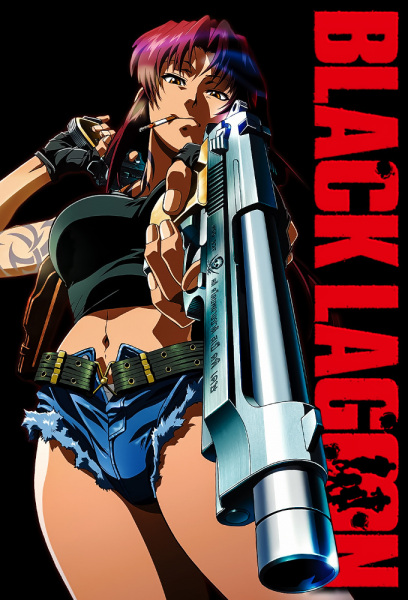
Madhouse's 2006 seinen scores 7.75 on the Codex against MyAnimeList's 8.04 — worth twelve episodes for the world-building and Revy, not for a story that never commits to a destination.
Madhouse's 2006 seinen scores 7.75 on the Codex against MyAnimeList's 8.04 — worth twelve episodes for the world-building and Revy, not for a story that never commits to a destination.
The Lagoon Company doesn't have an arc. It has a payroll, a boat, and a city — and that's the honest frame for deciding whether to spend twelve episodes here. Most people just want to know: is Black Lagoon worth my time, and for whom? Answer that fast, then back it with the rubric. Yes, if you came for Roanapur and Revy. No, if you came for the long-form seinen throughline that Berserk or Monster promises on the tin.
The Consensus, and Where It Overshoots
The MyAnimeList crowd scores it 8.04. The Codex has it at 7.75. That gap isn't a rejection — it's a correction. The 8.04 reads Black Lagoon as a top-tier action seinen because it delivers on the two things the aggregate score rewards most reliably: kinetic set-pieces and a lead who is fun to quote. Both are real. Neither is enough to carry the show past its structural problem, which is that Sunao Katabuchi's 2006 adaptation, produced at Madhouse across 12 episodes, is a series of escalating vignettes rather than a season with a destination.
The consensus also tends to flatten Rock's recruitment into a triumph of characterization. It isn't. His conversion from Asahi Industries salaryman to Lagoon crew member resolves inside the opening arc and then sits static for the rest of the run. What the rubric can defend — and what the community score obscures — is that Black Lagoon is a world-building achievement wearing a character drama's clothes. Once you accept that, the twelve episodes make sense.
Roanapur Is the Reason to Watch
World-building scores 8.5, and it is the single number that decides the recommendation. Roanapur — Rei Hiroe's fictional Thai port city, run by an equilibrium between Hotel Moscow, the Triad, and the Italian mafia — is one of the most internally consistent criminal settings the medium has produced. The syndicates don't exist as flavor. They exist as a functioning power balance, which is why episodes can hand off between factions without the setting feeling like a theme park of gangster archetypes. The violence is ammunition-counted, the mercenaries have plausible service histories, and the show refuses every fantasy crutch available to it. No supernatural override, no chosen-one framing, no genre softening in the back half.
This is where Black Lagoon separates itself from the Western-inflected action anime that came before it. It commits. The English-heavy dialogue and profanity-laden register aren't affectations — they're the texture that lets Roanapur read as a real port rather than a Japanese studio's idea of one. When the show flags, it flags in transitions and quiet scenes. When it works, it works because the city underneath the shootout is doing the load-bearing.
Revy Carries the Character Score, Not Rock
Character scores 8.0, and the number is generous specifically because of Revy. Her two-handed shooting stance and the acrobatic gunplay Madhouse animates around her are the surface. The engine underneath is her bar monologue about her past — a scene that gestures at a full interior life the first season declines to excavate. The Rock-Revy dynamic works because their moral frames are genuinely incompatible: his residual corporate-salaryman ethics against her nihilistic survivalism, colliding most usefully during the yacht confrontation in the Nazi U-boat treasure-hunt arc. That's not easy chemistry. It's actual friction, and the show is smart enough not to resolve it.
Dutch and Benny, meanwhile, are texture. They have voices and stances and functional roles on the boat, but neither gets an arc in these twelve episodes. That's a legitimate limitation, and it's why the character score sits at 8.0 rather than the 9.0 a show like Gungrave earns for building an entire antagonist's slow rot into its spine. Black Lagoon has one great character, one strong dynamic, and a supporting cast held in reserve.
The Story Is Situational, Not Directional
Story scores 7.5, and the justification is structural. The Nazi U-boat treasure hunt and the Hansel and Gretel arc — the latter unquestionably the show's thematic peak, using its child assassins to interrogate whether anyone in Roanapur deserves saving — are tightly built as individual set-pieces. Both would function as standalone OVAs. What they don't do is accumulate. Rock's recruitment resolves in the opening episodes, and from there the season is a sequence of escalating jobs rather than a narrative moving toward anything. This is the seinen tradition's oldest tension: episodic mastery versus long-form ambition, and Black Lagoon chooses the former.
The thematic register — moral relativism, the futility of civilized ethics inside a lawless economy — is sharp when stated but rarely resolved on screen. Rock's refusal to abandon his humanity functions as a permanent counterweight rather than a position the show tests to breaking. Compare the way Parasyte: The Maxim forces Shinichi's ethics to actually deform under pressure across its run. Black Lagoon prefers to hold Rock's position steady and let Roanapur break against it, which is a valid choice but a less demanding one.
Madhouse Delivers, With Caveats
Animation scores 8.0. The gunplay has weight, the boat-versus-helicopter chase in the pilot is genuinely kinetic, and Katabuchi's noir palette holds across the season. Tetsurou Araki's storyboards and episode direction on the Hansel and Gretel arc (episodes 8–10) are where the show's visual identity is most fully expressed — the aesthetic distance between the arc's violence and its child performers is a directorial choice, not an accident. Where the production falters is in the static talking scenes and the budget-conscious shortcuts in quieter beats. It's not top-tier polish. It's top-tier action polish surrounded by adequate connective tissue.
The Case for the 8.04
The steelman is straightforward: if you weight seinen for atmosphere, action craft, and iconic character design, Black Lagoon lands higher than 7.75. Revy is a genre icon. The Hansel and Gretel arc is unforgettable. Roanapur has outlived most of its contemporaries as a setting. All of that is defensible on its own terms.
The rubric reads it differently because cultural impact scores 7.0 — real cult devotion, limited genre-shaping reach — and because the story score refuses to reward vignettes as if they were a season. Black Lagoon is a very good show that a consistent rubric cannot promote to a great one without either inventing weight the twelve episodes don't earn, or ignoring the structural gap between what the show does brilliantly and what it declines to attempt.
Watch it for Roanapur. Watch it for Revy. Watch it knowing the season ends where a stronger seinen would be starting its second act. That's the trade, and at 7.75 it's a trade worth making.
Featured in the Codex


More from The Codex
The Seven Deadly Sins Is a 6.60 Wearing a 7.60 Costume: A One-Point Gap Earned by Groping Gags and Convenient Flashbacks
The Seven Deadly Sins scores 6.60 on the Codex against MyAnimeList's 7.60 because the crowd is grading a Netflix breakout and a Ban-and-King friendship, not the 24 episodes A-1 Pictures actually broadcast in 2014.
The 10.0 That Built a Sunday: How Sazae-san's Cultural Score Carries a 6.58 Scorecard
Sazae-san is a case study in how a single criterion — cultural — can define how a show is remembered, and the 10.0 the Codex hands Eiken's 1969 institution is doing every bit of the heavy lifting its other five scores refuse to.
The Sebastian Problem: Why Black Butler Sits 1.10 Below Its MAL Line and the Crowd Refuses to Notice
Black Butler (Kuroshitsuji) posts a 1.10-point gap between MyAnimeList's 7.65 and the Codex 6.55 because the crowd is grading Sebastian's silhouette and a Phantomhive aesthetic, not the anime-original finale A-1 Pictures actually shipped in 2009.
Discussion
Set a display name above to post.
Loading discussion…