Anime Like Soul Eater: 5 the Rubric Says You'll Love, Ranked by Critical Proximity
Fans of Soul Eater respond to its strongest criteria — Bones' 8.0 animation, a 7.0 gothic-carnival world, and a 7.0 cultural footprint — and these five picks deliver the same qualities, ranked by how close their critical profile sits to it, not by vibes.
Fans of Soul Eater respond to its strongest criteria — Bones' 8.0 animation, a 7.0 gothic-carnival world, and a 7.0 cultural footprint — and these five picks deliver the same qualities, ranked by how close their critical profile sits to it, not by vibes.
Death City's laughing sun does not exist because Atsushi Ohkubo wrote a good ending — it exists because Bones drew one, and because a Meister-and-Weapon premise gave the studio something worth drawing. That is the honest reading of why Soul Eater endures. The Codex 6.38 is not a mediocrity verdict; it is a scorecard where animation (8.0), world (7.0), and cultural footprint (7.0) carry a story (5.5) that abandoned the manga after the Brew arc and resolved Asura with a courage speech.
What the Consensus Misses About Soul Eater
MyAnimeList parks Soul Eater at 7.86, and the crowd conversation reliably centers the ending — did Maka's finale land, did the anime-original divergence ruin the show, was the black blood thread ever going to pay off. That framing treats the series as a narrative object that failed. The Codex reads it differently. Soul Eater is an aesthetic object that succeeded: a gothic-Tim-Burton silhouette, Death the Kid's symmetry-OCD staging, the Kid-versus-Mosquito choreography, Bones' 2008-era art direction operating at a level most of that season's shonen could not match. Story is the 5.5 the rubric will not wave through. Animation is the 8.0 that made the show a cosplay fixture for a decade.
Which means the useful question is not "what other shonen has a similar plot to Soul Eater" — it is "what other show delivers on the criteria Soul Eater actually delivers on." Ranked by how close each pick sits to that critical profile, here are the five.
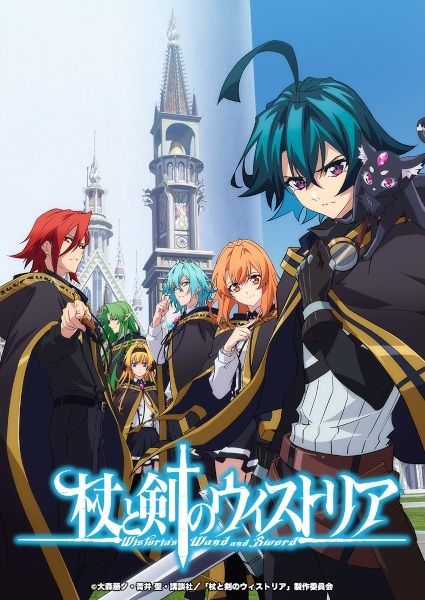
1. Tsue to Tsurugi no Wistoria — The Closest Structural Match
Actas' 2024 twelve-episode magic-school adaptation lands at Codex 6.27, the tightest numerical proximity to Soul Eater's 6.38 on this list, and the resemblance is not accidental. Both shows are Shibusen-shaped: a magical academy, a protagonist who is out-classed by design, a hierarchy that rewards specific ranks of achievement, an ensemble of specialists slotted around the lead. Wistoria's scorecard reads story 6.3, character 6.5, themes 6.4, world 6.2 — a flatter, more even distribution than Soul Eater's, but hitting the same shonen-academy register.
The trade is animation. Actas cannot match what Bones delivered in 2008, and Wistoria's 6.0 on that axis is the reason it does not close the gap entirely. What it does share is the fundamental promise: a school, a system, a lead who has to prove he belongs. If Maka's competence-under-insecurity read as the emotional spine of Soul Eater for you, Colette's protagonist inherits that same posture.
2. Assassination Classroom — The School-as-Ensemble Read
Lerche's 2015 adaptation, twenty-two episodes, Codex 7.53 — the highest-scoring pick here, and the one that clarifies what Soul Eater's academy premise could have become with tighter narrative control. Character lands at 8.0, story at 7.5. Where Soul Eater builds three duos and lets Black☆Star's arc from ego to humility trail off in the back half, Assassination Classroom takes a full class of students and gives each of them a beat that pays.
The shared criterion is ensemble character work under a mentor-figure headmaster. Koro-sensei is a tonal cousin to Lord Death — goofy-yet-menacing, a comic silhouette hiding a serious stake. If the Death the Kid symmetry gags occasionally deepening into real fragility was your favorite Soul Eater texture, Karma and Nagisa deliver more of it, more consistently, over a runtime that does not sag.
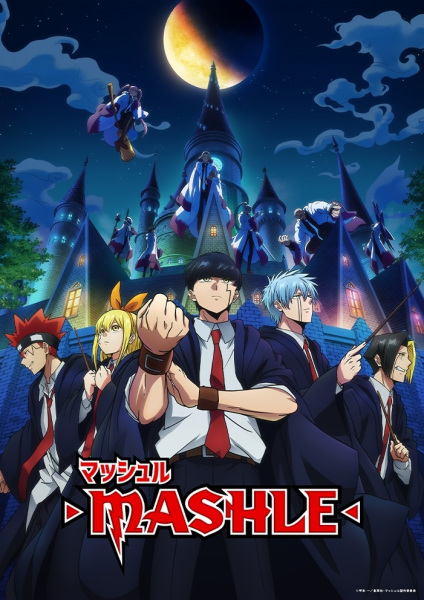
3. Mashle: Magic and Muscles — The Visual Cousin
A-1 Pictures' 2023 twelve-episode adaptation posts Codex 5.63, lower than Soul Eater overall, and the reason it earns this slot is specific: animation 7.0, world 6.0, cultural 6.0. Mashle is where the rubric locates a spiritual heir to Soul Eater's visual instinct — a magic academy rendered with confident direction, a comic aesthetic that trusts silhouette over exposition, and character designs built for merchandise and cosplay in a way that echoes what Soul's headband and Kid's stripes did in the late 2000s.
Story (5.5) and character (5.0) drag the total, and honestly they should — Mash Burnedead is a one-joke lead, and the gag runs thin. But the show is a case study in how a shonen premise can carry itself on style. If Soul Eater's Bones-tier art direction is what you actually go back for, this is the closest recent match. The Fairy Tail companion piece sketches an adjacent map for readers who want the same aesthetic pleasure in a longer format.
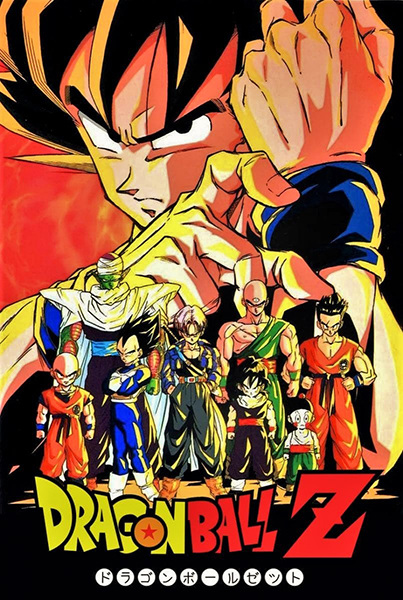
4. Dragon Ball — The Cultural-Footprint Match
Toei Animation's 1989 run, 291 episodes, Codex 6.93. Story lands at 7.5, character at 6.5, themes at 6.0 — but the criterion that matters here is the one the scorecard does not fully capture in a single line: cultural weight. Soul Eater's 7.0 cultural is aesthetic, iconographic, a decade of recognizable silhouettes. Dragon Ball's is foundational. Same category, different scale.
The structural rhyme is tighter than it looks. A young protagonist collects things (souls, dragon balls) under a comically eccentric mentor's guidance, escalates into martial-arts choreography, and builds a supporting cast whose designs outlive the plots that contained them. If you responded to Soul Eater's ability to make a collection-quest premise carry fifty-one episodes, the ur-text of that structure is here. And Toei's episodic charm covers the same tonal ground Soul Eater's first-half missions did before Medusa's assault on Shibusen shifted the register.
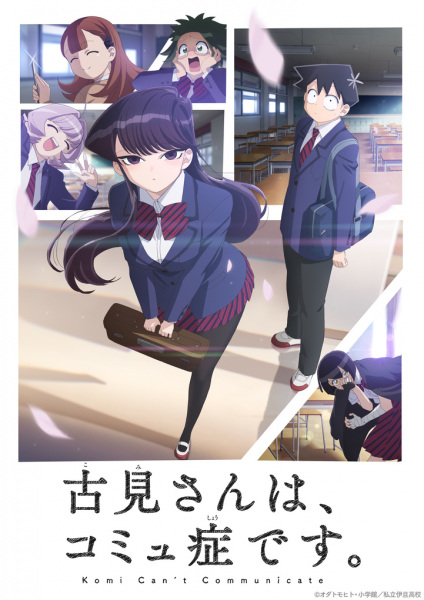
5. Komi Can't Communicate — The Aesthetic Outlier
OLM's 2021 twelve-episode series, Codex 6.85, and the pick that will surprise anyone reading only for genre. Animation 7.5, themes 7.0, character 7.3 — a scorecard that hits three of the criteria Soul Eater hits, in a completely different mode. What Komi shares is a distinctive visual identity that studios rarely commit to at this level: chalkboard interstitials, silent-film title cards, expressive character-design work that treats silhouette as characterization.
The deeper connection is Crona. Soul Eater's most affecting figure was underused loneliness given a body, and Komi Shouko is what happens when a show centers exactly that. If the black blood thread's dangling emotional resonance was what stayed with you, Komi commits to the material Soul Eater dropped. It also proves the rubric is not genre-locked — critical proximity crosses lines the shelf label will not.
The Counter-Argument: These Aren't Shonen-Battle Enough
The fair objection is that a reader searching "anime like Soul Eater" wants the fight-choreography-and-supernatural-weapons combination, and half this list — Komi in particular, arguably Dragon Ball at its early-episode scale — does not deliver that. Fine. If your Soul Eater is the Kid-versus-Mosquito set piece and only that, this list underweights animation-forward battle shonen. The Vinland Saga rubric-proximity piece handles adjacent territory for the action-first reader.
The rubric reads it differently because Soul Eater's own scorecard reads it differently. The show's 5.5 story means the fight choreography is not what the criteria say you loved — the criteria say you loved the world Bones built to stage those fights in, and the cast that populated it. These five picks deliver on that reading.
Wistoria is the closest structural match, Assassination Classroom the highest-scoring on shared axes, Mashle the visual heir, Dragon Ball the cultural anchor, Komi the outlier that honors the show's most underused instinct. Watch in that order and the rubric will have kept its promise.
Featured in the Codex



More from The Codex
The Seven Deadly Sins Is a 6.60 Wearing a 7.60 Costume: A One-Point Gap Earned by Groping Gags and Convenient Flashbacks
The Seven Deadly Sins scores 6.60 on the Codex against MyAnimeList's 7.60 because the crowd is grading a Netflix breakout and a Ban-and-King friendship, not the 24 episodes A-1 Pictures actually broadcast in 2014.
The 10.0 That Built a Sunday: How Sazae-san's Cultural Score Carries a 6.58 Scorecard
Sazae-san is a case study in how a single criterion — cultural — can define how a show is remembered, and the 10.0 the Codex hands Eiken's 1969 institution is doing every bit of the heavy lifting its other five scores refuse to.
The Sebastian Problem: Why Black Butler Sits 1.10 Below Its MAL Line and the Crowd Refuses to Notice
Black Butler (Kuroshitsuji) posts a 1.10-point gap between MyAnimeList's 7.65 and the Codex 6.55 because the crowd is grading Sebastian's silhouette and a Phantomhive aesthetic, not the anime-original finale A-1 Pictures actually shipped in 2009.
Discussion
Set a display name above to post.
Loading discussion…