Anime Like The Disastrous Life of Saiki K.: 5 the Rubric Says You'll Love, Ranked by Critical Proximity
Fans of The Disastrous Life of Saiki K. respond to its strongest criteria — a 7.0 ensemble, a 6.5 conceit, a 6.5 cultural footprint — and these five picks deliver the same qualities, ranked by how close their critical profile sits to it, not by vibes.
Fans of The Disastrous Life of Saiki K. respond to its strongest criteria — a 7.0 ensemble, a 6.5 conceit, a 6.5 cultural footprint — and these five picks deliver the same qualities, ranked by how close their critical profile sits to it, not by vibes.
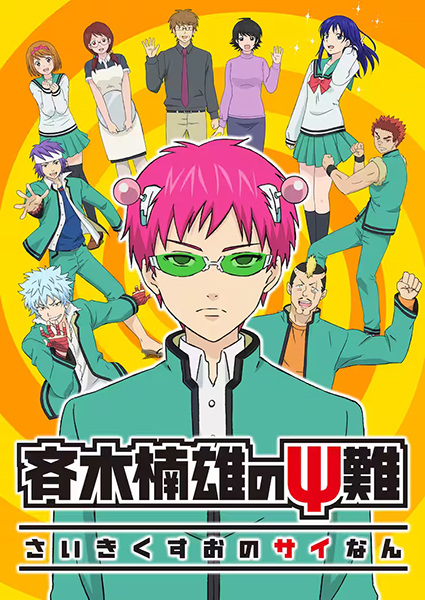
Kusuo Saiki's pink hair is a red herring. The reason 120 J.C.Staff episodes work is not the psychic gimmick — it's Nendou's amiable stupidity bouncing off Kaidou's chuunibyou delusions bouncing off Kokomi Teruhashi's inner monologue, in vignettes cut to the tempo of Saiki's deadpan telepathic narration. That's a 7.0 character score powering a 6.40 overall, and it's the criterion any recommendation has to respect.
What Saiki K. Actually Scores On
The catalogue reads Saiki K. at 6.40 with an 8.41 on MyAnimeList — a comedy priced above its rubric because pure gag anime rarely test well on story (6.5, by design; the format refuses forward momentum) or themes (5.5; the loneliness-of-omnipotence idea keeps getting punctured before it breathes). What holds the scorecard up is the ensemble at 7.0, the inverted-shonen conceit at 6.5, and a 6.5 cultural footprint carried by memes (coffee jelly, Nendou) and the Netflix Reawakened revival. Animation lands at 6.0 because J.C.Staff is spending its budget on editing rhythm and Hiroshi Kamiya's motormouth delivery, not motion.
Most "anime like Saiki K." lists you'll find rank by surface — psychic power, deadpan protagonist, school setting. That's a vibes match, not a critical one. Rank by which criteria overlap with Saiki's actual strengths — ensemble comedy, high-concept school premise, gag construction, cultural staying power — and the list reorders itself. Here's what the rubric returns, in order of proximity.
1. Sket Dance — the ensemble match
Sket Dance sits at a Codex 7.47 against Saiki's 6.40, and the reason it opens this list is a single criterion: it clears Saiki's 7.0 character score with an 8.5. Bossun, Himeko, and Switch are exactly the kind of tightly written comedic engine Saiki relies on — three functions that pay off through repetition, sharpened over 77 Tatsunoko Production episodes into something the shorter show can't quite reach. It matters that Kenichi Suzumura, Ryōko Shiraishi, and Tomokazu Sugita's Switch (typed through a laptop, deadpan by necessity) rhyme structurally with Saiki's monotone narration — comedy carried by voice and rhythm over sakuga. Sket Dance also flexes into sincerity more often than Saiki lets itself, which is why its themes score at 7.8 clears Saiki's 5.5 by a country mile. If you loved the Kaidou-Nendou-Teruhashi dynamic, this is the show that treats that dynamic as the main course for three full years.
2. Assassination Classroom — the high-concept school premise, done richer
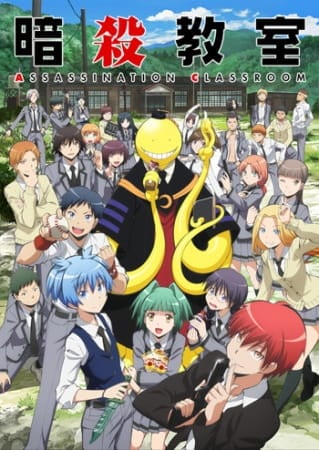
Assassination Classroom posts a Codex 7.53 to Saiki's 6.40, and the overlap is the conceit. Saiki's world scores 6.5 because "omnipotent teenager treats godhood as inconvenience" is a genuinely original inversion of shonen power fantasy; Koro-sensei's classroom of student assassins is the same trick — a premise the demographic hasn't seen, dropped into a generic school frame and mined for both gags and sincerity. Lerche's 22-episode first cour matches Saiki's episodic instinct (a class of thirty needs vignette structure) while committing to the emotional beats Saiki keeps deflecting. The 7.5 story and 8.0 character scores clear Saiki's numbers because Yūsei Matsui's manga lets Nagisa and Karma grow where Saiki, by design, stays static — the omnipotent straight man's frozen arc is the price of the joke. If you wanted Saiki's brief thaws (the parents' backstory, the Kuusuke rivalry) sustained for a full season, this is where you find them.
3. School Rumble — the ensemble gag comedy without the psychic engine
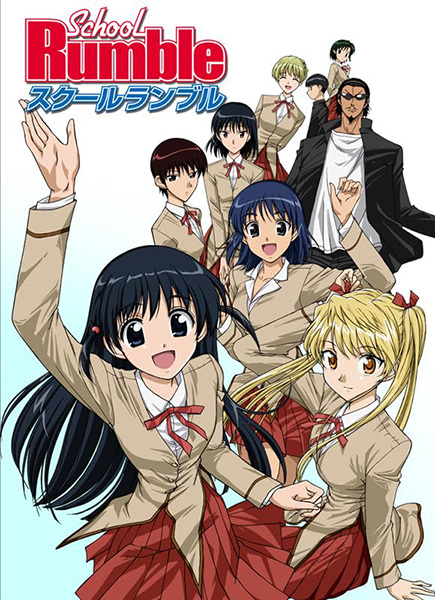
School Rumble scores a Codex 7.20 against Saiki's 6.40, and it earns the third slot on a straight character-plus-story match: 8.0 on ensemble, 7.5 on story construction across 26 Studio Comet episodes. Jin Kobayashi's rotation — Tenma's oblivious crush on Karasuma, Harima's escalating misreadings, Eri's tsundere pivots — runs the same repetition-with-variation engine Saiki uses on Teruhashi's inner monologue. The premise is quieter (no telepathy, no time reversal) so the world score sits at 6.5 like Saiki's, but the gag construction is sharper on a per-scene basis than the rubric usually credits a 2004 romcom for. It's the closest structural cousin to Saiki that isn't Sket Dance, and the 7.89 MAL average is a fair read on a show that never needed a supernatural crutch to hold a punchline.
4. Komi Can't Communicate — the deadpan protagonist, the school-vignette structure
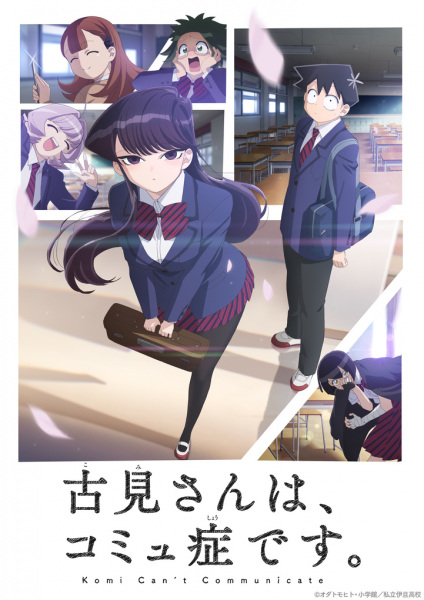
Komi Can't Communicate at a Codex 6.85 is the closest overall-score neighbor to Saiki's 6.40 on this list, and the parallels are structural. OLM builds Komi around vignette pacing — Tadano's internal narration functions the way Saiki's telepathic monologue does, glossing scenes and controlling tempo — and the 7.5 animation score buys the show the expressive close-ups (Komi's trembling eyes, that blackboard scene) Saiki doesn't try to compete on. The 7.0 themes score edges Saiki's 5.5 because Komi lets its "isolation of the exceptional" premise breathe where Saiki punctures it every time. There's a real critical case that OLM's episodic gimmick parade doesn't earn its reputation, which the full Komi rubric read unpacks, but for a Saiki fan looking for the same deadpan-narrator-plus-eccentric-classmates architecture, the fit is exact.
5. Mashle: Magic and Muscles — the shonen parody, priced correctly
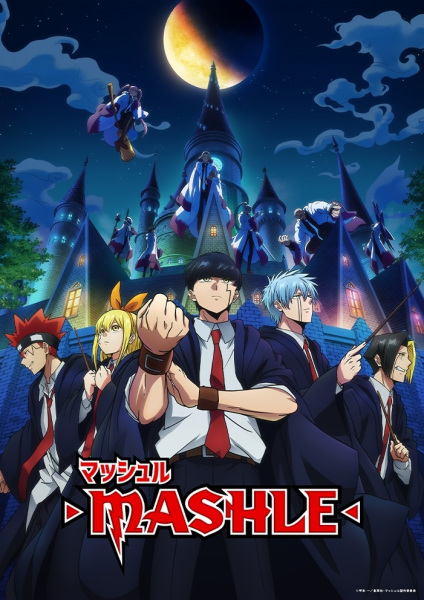
Mashle scores a Codex 5.63 — lower than Saiki's 6.40, and honest about why. It shares Saiki's core move: parody of a demographic from inside the demographic. Where Saiki inverts psychic power fantasy, Mashle inverts Harry Potter–style magic-school fantasy by making the protagonist immune to the entire premise via biceps. A-1 Pictures gives it a 7.0 animation score that outperforms Saiki's 6.0 — the show can actually animate its punchlines, which J.C.Staff largely couldn't afford to. The tradeoff is a 5.0 character score against Saiki's 7.0: Mash Burnedead is a one-note joke and his classmates never gel into anything like Nendou-Kaidou-Teruhashi. Ranked last because it delivers the parody instinct without the ensemble depth, but the parody instinct is real and it's what Saiki fans keep asking for.
The Counter-Argument
The obvious pushback: if you're recommending by critical proximity, why not lead with Assassination Classroom, which has the highest Codex score and the strongest character work? Because proximity isn't just overall score — it's criterion overlap. Assassination Classroom is a more ambitious show than Saiki K., which makes it a better anime and a slightly worse match. Sket Dance is the tighter recommendation because it runs the same ensemble-gag engine at a scale Saiki fans have already trained on. The rubric ranks by what you're actually responding to, not by which show would score highest at a critic's dinner.
Saiki K.'s 6.40 is what a great gag comedy scores when the format refuses depth by design. These five clear that ceiling in different directions — Sket Dance by extending the ensemble, Assassination Classroom by committing to the premise, Mashle by staying honest about the parody. Watch in that order and the shape of what you loved about Saiki gets clearer, not diluted.
Featured in the Codex

More from The Codex
The Seven Deadly Sins Is a 6.60 Wearing a 7.60 Costume: A One-Point Gap Earned by Groping Gags and Convenient Flashbacks
The Seven Deadly Sins scores 6.60 on the Codex against MyAnimeList's 7.60 because the crowd is grading a Netflix breakout and a Ban-and-King friendship, not the 24 episodes A-1 Pictures actually broadcast in 2014.
The 10.0 That Built a Sunday: How Sazae-san's Cultural Score Carries a 6.58 Scorecard
Sazae-san is a case study in how a single criterion — cultural — can define how a show is remembered, and the 10.0 the Codex hands Eiken's 1969 institution is doing every bit of the heavy lifting its other five scores refuse to.
The Sebastian Problem: Why Black Butler Sits 1.10 Below Its MAL Line and the Crowd Refuses to Notice
Black Butler (Kuroshitsuji) posts a 1.10-point gap between MyAnimeList's 7.65 and the Codex 6.55 because the crowd is grading Sebastian's silhouette and a Phantomhive aesthetic, not the anime-original finale A-1 Pictures actually shipped in 2009.
Discussion
Set a display name above to post.
Loading discussion…