Anime Like Spy × Family: 5 the Rubric Says You'll Love, Ranked by Critical Proximity
Fans of Spy × Family respond to its strongest criteria — Anya's character work, Wit and CloverWorks' comic direction, and a cultural footprint bigger than the plot — and these five picks deliver the same qualities.
Fans of Spy × Family respond to its strongest criteria — Anya's character work, Wit and CloverWorks' comic direction, and a cultural footprint bigger than the plot — and these five picks deliver the same qualities.
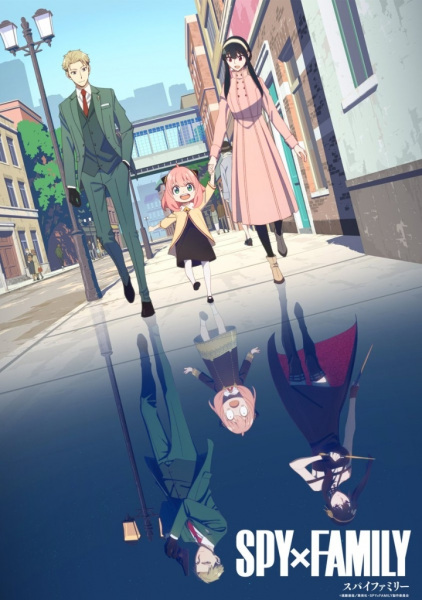
Spy × Family isn't a spy thriller. It's a sitcom in a trench coat, and the Codex 7.45 says so out loud — the numbers that carry it are character (7.8), animation (8.3), and cultural weight (8.5), while the espionage spine sits at a modest 7.2 because Operation Strix keeps pausing for school-of-the-week vignettes. Recommend by vibes and you land readers on any found-family show with a cute kid. Recommend by rubric and the shortlist tightens fast.
What Spy × Family Is Actually Good At
The MyAnimeList 8.42 grades a phenomenon — Anya's "waku waku" face, the Shonen Jump+ merchandising wave, the cross-demographic pull that made Wit Studio and CloverWorks' 12-episode 2022 cour one of the year's defining releases. The Codex 7.45 grades the writing underneath, and it's more selective. The Desmond plot stalls. Yor is underserved outside the assassin choreography. The Ostania/Westalis Berlin-Wall pastiche is atmospheric backdrop, not geopolitics — world lands at 6.5 for a reason. The reason to watch is Anya, the reason to keep watching is the comic timing of the reaction shots, and the reason it broke containment is that Wit and CloverWorks made a premium-looking family comedy that non-shonen viewers could pick up cold. If you want the deeper accounting on that gap, we've argued the Codex 7.45 case against the 8.42 crowd elsewhere.
So the shortlist below isn't "shows with spies." It's shows that hit at least two of Spy × Family's three load-bearing criteria — character eccentricity, comic-forward animation direction, or the specific shonen-with-crossover-appeal cultural profile — ranked by how close the critical shape sits to Spy × Family's, not by which one has the most assassins.
1. Undead Unluck — Codex 7.64
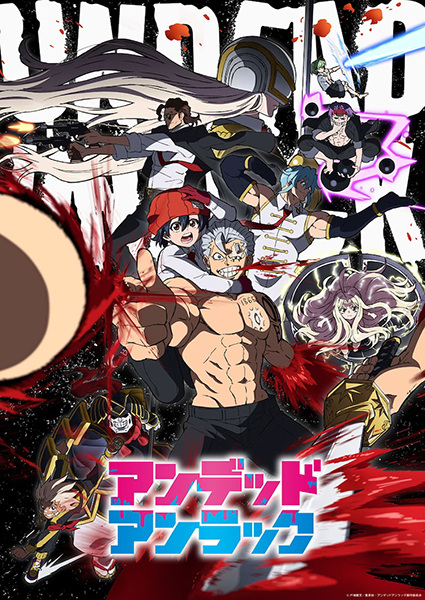
The closest critical profile on the list, and the reason it opens the ranking. David Production's 24-episode 2023 adaptation posts a 7.64 that sits within striking distance of Spy × Family's 7.45, and the criterion shape rhymes. Character lands at 8.0, matching Spy × Family's 7.8 — Fuuko's negation-luck curse and Andy's undead body play the same odd-couple engine that Loid and Yor's mutual concealment runs on, except the incompatibility is literal. Story clocks the same 7.2. Where Undead Unluck actually beats Spy × Family is world (8.3 versus 6.5): the UMA hierarchy and the rules governing each Negator's power are load-bearing in a way Ostania never bothers to be. If Spy × Family's central pleasure was watching two secret-keepers accidentally build a family, Undead Unluck is the same premise where the secrets kill people if you touch them wrong. Cultural at 6.0 is the trade — this one never broke containment the way Anya did.
2. Assassination Classroom — Codex 7.53
Lerche's 2015 adaptation posts a 7.53 that lands almost exactly where Spy × Family does, and the two shows share the same premise if you squint: a lethally competent adult pretends to be something else in front of children, and the emotional payoff comes from the pretence turning sincere. Character at 8.0 tracks with Spy × Family's 7.8 — Koro-sensei is doing the Loid job, running a cover identity while genuinely investing in the kids he's supposed to be manipulating. Story at 7.5 clears Spy × Family's 7.2 because the countdown structure actually escalates instead of drifting into episodic school gags. The full case for the 7.53 is worth reading, but the short version: this is what Spy × Family looks like when the thriller half is load-bearing instead of decorative. Same warmth, sharper spine.
3. My Hero Academia — Codex 8.40
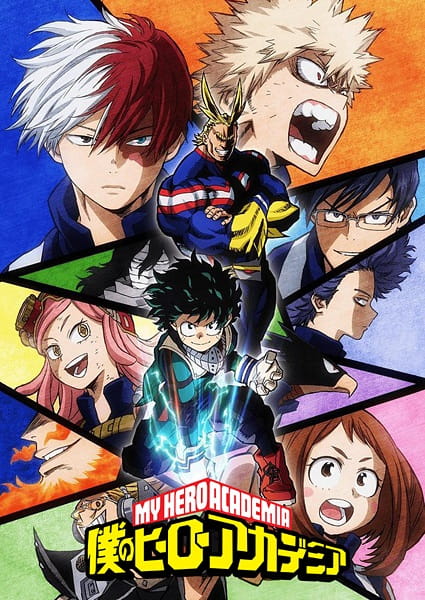
The highest-scoring recommendation on the list, and the one that answers the "I want the crossover-hit version" impulse behind Spy × Family fandom. Bones' 2016 debut cour — the 25-episode entry the Codex 8.40 attaches to — is the modern shonen that most closely mirrors Spy × Family's specific cultural footprint: a Shueisha property that pulled non-shonen viewers in on the strength of character writing (9.0 versus Spy × Family's 7.8) and animation direction (8.7 versus 8.3). Cultural weight ties at 8.5. The parallel that matters is Anya-and-Loid, which is the same shape as Deku-and-All Might — a small figure carrying a secret alongside a mentor whose public identity is a construction. If you loved Anya's Eden entrance interview, you'll love the U.A. entrance exam for exactly the same reason: a child pretending to be qualified in a room that would eat them alive if they weren't lucky.
4. Katekyo Hitman Reborn! — Codex 6.98
Artland's 203-episode 2006 adaptation is the deep-catalogue pick, and the 6.98 tells you what you're trading. Animation at 6.0 is a real cost — this is not a show you put on for the direction. But character at 7.5 and world at 7.5 are doing exactly what Spy × Family fans respond to, dressed as mafia farce instead of Cold War farce. Tsuna is a Loid-inverse: an unwilling civilian dragooned into an assassin's world by a small figure (Reborn, the infant hitman) who runs circles around him the way Anya runs circles around Loid. The tonal register — comic incompetence colliding with genuine competence, the family that shouldn't work but does — is Spy × Family's exact register, sustained across a runtime that eventually earns a story score Spy × Family's episodic first cour never reaches for.
5. Beelzebub — Codex 6.20
The furthest pick, and the one whose fit is narrowest. Pierrot Plus' 60-episode 2011 adaptation lands at 6.20 — story 6.2, character 6.8 — and it's on the list for one reason: it is the purest distillation of Spy × Family's central joke, the tough adult stuck raising a small chaotic being who shouldn't exist in a normal domestic setting. Oga carrying the Demon Lord's infant son on his back is the Loid-and-Anya dynamic played entirely for delinquent-comedy rather than espionage stakes. The character score sits below Spy × Family's 7.8, and the production doesn't have Wit's polish. But if what hooked you was Anya's raw comic presence in an adult's world, Beelzebub is running the same engine with the volume turned up and the varnish stripped off.
The Counter-Argument
The obvious pushback: none of these are actually about a spy pretending to have a family, so the recommendation set is thematically loose. Fair. Spy × Family's premise is genuinely singular — the three-way mutual deception is not something Undead Unluck or My Hero Academia is replicating, and pretending otherwise would be dishonest. But the rubric's argument is that premise isn't why Spy × Family works. The premise underdelivers — that's what world at 6.5 and story at 7.2 mean. What works is Anya, the comic direction, and the crossover cultural weight, and those qualities are portable. Recommending on the portable qualities beats recommending on a premise the show itself doesn't fully exploit.
The Codex reads Spy × Family as a character-and-direction show wearing a spy-thriller costume, and these five pay off the character-and-direction half in descending order of critical proximity. Start with Undead Unluck if you want the closest match, jump to My Hero Academia if you want the ceiling. The vibes recommendation would send you to a dozen family comedies. This one sends you to five shows the rubric can actually defend.
Featured in the Codex





More from The Codex
The Seven Deadly Sins Is a 6.60 Wearing a 7.60 Costume: A One-Point Gap Earned by Groping Gags and Convenient Flashbacks
The Seven Deadly Sins scores 6.60 on the Codex against MyAnimeList's 7.60 because the crowd is grading a Netflix breakout and a Ban-and-King friendship, not the 24 episodes A-1 Pictures actually broadcast in 2014.
The 10.0 That Built a Sunday: How Sazae-san's Cultural Score Carries a 6.58 Scorecard
Sazae-san is a case study in how a single criterion — cultural — can define how a show is remembered, and the 10.0 the Codex hands Eiken's 1969 institution is doing every bit of the heavy lifting its other five scores refuse to.
The Sebastian Problem: Why Black Butler Sits 1.10 Below Its MAL Line and the Crowd Refuses to Notice
Black Butler (Kuroshitsuji) posts a 1.10-point gap between MyAnimeList's 7.65 and the Codex 6.55 because the crowd is grading Sebastian's silhouette and a Phantomhive aesthetic, not the anime-original finale A-1 Pictures actually shipped in 2009.
Discussion
Set a display name above to post.
Loading discussion…